
Displaying items by tag: Chicago events
Opera Festival of Chicago Delivers an Assured, Full‑Hearted La Bohème
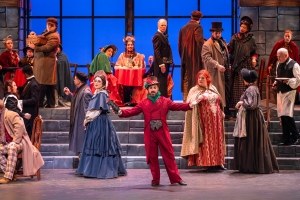
Opera Festival of Chicago continues its season with two mainstage productions - La Bohème and Adriana Lecouvreur - each featuring the Opera Festival of Chicago Orchestra and Chorus and performed at the George Van Dusen Theatre at the North Shore Center for the Performing Arts in Skokie.
I had the chance to see Giacomo Puccini’s La Bohème, directed by Festival General Director Sasha Gerritson and conducted by Sir Emanuele Adrizzi, and it proved to be an outstanding, deeply felt evening of music and drama.
Giacomo Puccini’s La Bohème unfolds in the chilly garrets and bustling cafés of 1830s Paris, where a group of young artists survive on charm, wit, and the fragile hope that beauty might be enough to sustain them. The opera begins in a drafty attic shared by the poet Rodolfo and the painter Marcello, whose playful banter masks the hunger and hardship of their bohemian life. Everything shifts when Mimì, a shy, dreamy seamstress with a failing candle and failing health, knocks on their door. Her tender connection with Rodolfo ignites instantly, carrying them into the vibrant chaos of Café Momus, where Marcello’s fiery former lover Musetta steals the spotlight with her flirtations and razor‑sharp instincts.
But as winter settles in, the opera’s warmth gives way to harsher truths. Only the rich are safe and well fed in this cold bleak landscape of artistic poverty. Mimì’s illness worsens, and Rodolfo’s fear of losing her fractures their love, even as they cling to moments of sweetness. Both Mimì and Rodolfo are swept up in the sudden, poetic rush of feeling that sparks between them during their first meeting over her extinguished candle, a moment Puccini shapes with irresistible warmth. Their ensuing duet, “O soave fanciulla,” is written as a rush of idealized, almost dreamlike love - sung here with such radiance that it feels too perfect to endure, and tragically it doesn’t, as the briefness of their time together becomes one of the opera’s most heartbreaking truths.
By the final act, the bohemians reunite in their attic, trying to conjure laughter out of scarcity, until Musetta arrives with the gravely weakened Mimì. What follows is one of opera’s most devastating endings: a quiet, intimate vigil as Rodolfo realizes too late that the love he tried to protect has slipped beyond saving. Puccini shapes this world with music that aches, soars, and ultimately reminds us how fiercely we hold on to joy, even as life insists on its fragility. Puccini also paints a world in which artists of every stripe are routinely exploited by the comfortable classes - the dull rich, who commission work and then pay only sporadically, as if deprivation were somehow a necessary ingredient of genius. In reality, it is the indifference of these wealthy patrons that forces the bohemians into constant hardship, driving them to beg, borrow, and even steal simply to keep food on the table and have their housing bills covered.
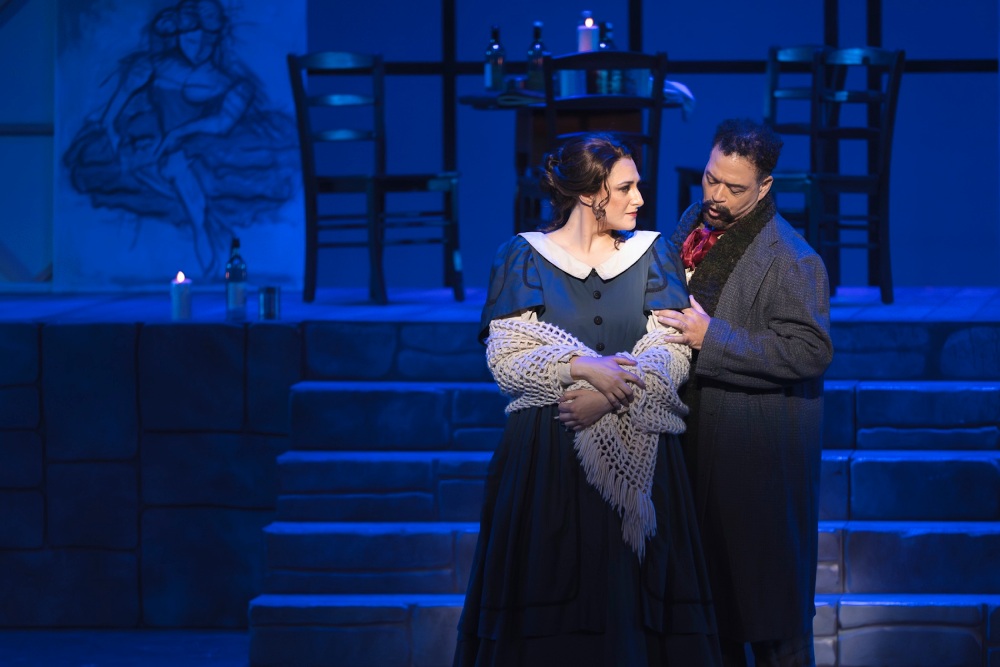
(L to R) Alexandra Razskazoff, “Mimi” and Nathan Granner, “Rodolfo” in LA BOHÈME. Photos by A.Deran Photography.
This La Bohème features a cast whose vocal and dramatic instincts sharpen Puccini’s world into something immediate and deeply felt. Alexandra Razskazoff’s Mimì is nothing short of luminous - her soprano glowing with warmth yet edged with delicacy, embodying a young woman whose softness hides a life lived perilously close to the margins. A rising artist with an increasingly international footprint, Razskazoff traces Mimì’s arc with such emotional transparency that her final moments land with quiet, devastating force. Opposite her, tenor Nathan Granner brings a beautifully burnished tone and an instinctive musicality to Rodolfo. Long admired for his expressive phrasing and crossover versatility, Granner sings with a poet’s sensitivity; his Rodolfo is impulsive, romantic, and heartbreakingly human, especially as love and fear begin to pull him apart.
Catherine Antonia Samartin lights up the stage as Musetta, her bright, agile soprano and irresistible charisma making every entrance feel like a spark catching fire. Musetta is also the victim of this us versus them world where her beauty and charms are commodified on the older wealthy man she is forced to keep company with in order to receive her beautiful wardrobe and warm home to live in. Her scenes with Kenneth Stavert’s Marcello are especially electric. Stavert, with his rich, grounded baritone and wonderfully lived‑in ease, brings both humor and heart to the painter whose bravado barely conceals his vulnerability. Anthony Reed’s Colline provides a beautifully resonant counterweight to the lovers’ volatility - his “Vecchia zimarra” delivered with a quiet, dignified ache that speaks volumes about loyalty and sacrifice. Jonathan Wilson brings quicksilver energy and crisp comedic timing to Schaunard, shaping the role with warmth and buoyancy, while veteran bass William Powers steals scenes with effortless charm as both Benoit and Alcindoro, reminding audiences why he remains one of American opera’s most reliable character treasures. David Greene adds a welcome burst of color as Parpignol, enriching the Act II bustle with a touch of whimsy. This ensemble shapes a Bohème that feels vividly inhabited and emotionally true, a testament to what Puccini’s world becomes when every performer contributes with such specificity, generosity, and heart.
One of the production’s most striking assets is its massive, 50‑plus‑member chorus, whose sheer presence reshapes the entire world of La Bohème. Their sound adds a thrilling sweep to Puccini’s score, amplifying the emotional stakes and giving the bustling Parisian scenes a vivid, lived‑in texture. In Act II especially, the sheer size and vocal richness of the ensemble create a sense of overwhelming festivity, making the Christmas Eve Café Momus tableau feel like a city bursting with life. But the chorus also deepens the opera’s more intimate moments, surrounding the central lovers with a sonic landscape that underscores both the joy and the fragility of their world. It’s a rare gift to hear a chorus of this scale in a production of Bohème, and here it elevates the performance into something grander, more immersive, and undeniably unforgettable.
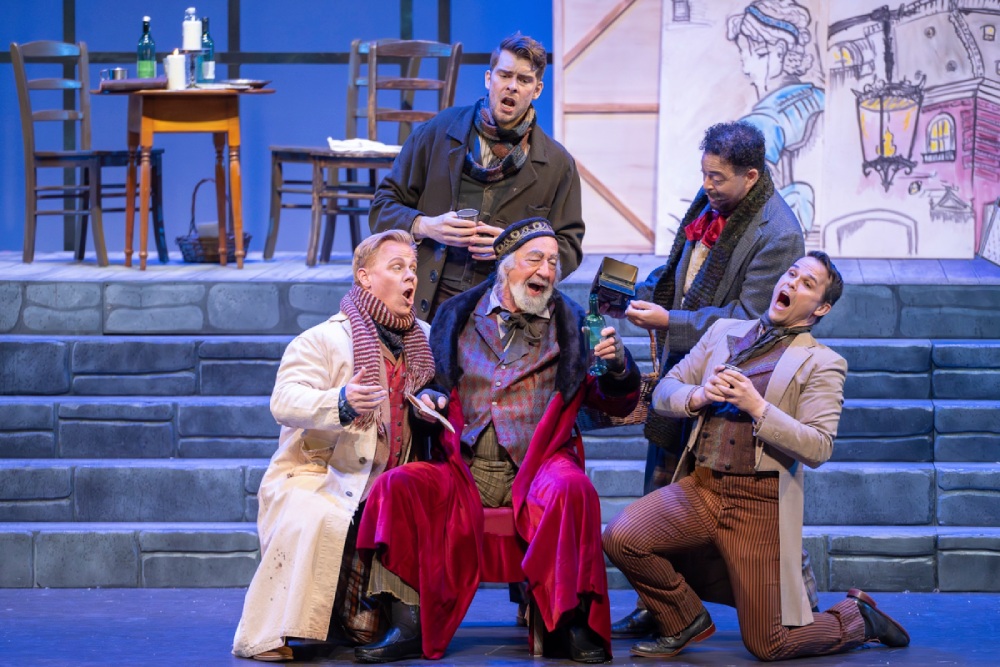
(L to R) Kenneth Stavert, “Marcello;” Anthony Reed, “Colline;” William Powers, “Benoit;” Nathan Granner, “Rodolfo” and Jonathan Wilson, “Schaunard” in LA BOHÈME from Opera Festival of Chicago. Photos by A.Deran Photography.
The set itself is perfectly workable and the large video boards truly animate the space, supplying shifting imagery of snowfall and other atmospheric touches throughout the evening. Because the opera is sung in Italian, overhead supertitles - crisply projected and easy to follow - add a modern presentational layer that supports the storytelling without ever competing with Puccini’s world.
This La Bohème resonates with honesty, heart, and thrilling musicality, carried by a cast and chorus performing at the height of their powers. It’s a standout achievement for Opera Festival of Chicago - and a compelling reason to experience not only this production but also their Adriana Lecouvreur, by Francesco Cilea, directed by Shifra Werch and also conducted by Sir Emanuele Andrizzi, which promises its own dramatic and musical rewards.
Recommended.
Performances are held at the North Shore Center for the Performing Arts in Skokie.
La Bohème - Friday, June 26 at 7:30 p.m., Wednesday, July 1 at 7:30 p.m., and Sunday, July 5 at 2 p.m.
Adriana Lecouvreur - Sunday, June 28 at 2 p.m. and Friday, July 3 at 7:30 p.m.
Tickets range from $25 to $150 and are available at www.OperaFestivalChicago.org.
The Art of Awe: Water for Elephants Balances Spectacle and Soul
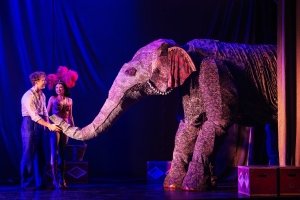
The musical Water for Elephants, presented by Broadway In Chicago and based on Sara Gruen’s 2006 novel, is the rare touring Broadway production that feels like two forms of live entertainment fused perfectly. It is a sweeping musical, yes, but it is also a full-blown circus spectacle – and, more impressively, it manages to blow you away on both fronts.
Told through the memories and ghosts of an elderly Jacob Jankowski, Water for Elephants follows a young Jacob who, under unfortunate circumstances, follows the age-old childhood dream of running away with the circus. The show brings to life the complicated realities behind that fantasy: the idea of stumbling into a secret, self-contained world where danger, wonder, chosen family, and reinvention all exist under one big top. From the moment Jacob enters that world, the audience is drawn in with him.
Particular standouts in the principal cast were Zachary Keller as Jacob Jankowski, whose vocal talent and charisma are matched only by Robert Tully as Older Jacob – the perfect pairing across time. As Marlena, Helen Krushinski commanded the theatre like a pure-of-heart ringmaster, capturing our attention both on trapeze and vocally. However, no one made the audience laugh harder than Tyler West as Walter, the gritty, spunky clown and knife-thrower whose physical comedy was unmatched, projecting every larger-than-life expression to the backs of the theatre.
The show’s creative engine fires on all cylinders: a soaring score from the acclaimed PigPen Theatre Co. (The Tale of Despereaux), a sharply crafted book by four‑time Tony Award nominee Rick Elice (Jersey Boys, Peter and the Starcatcher), and tour direction by Ryan Emmons, faithfully re‑creating Jessica Stone’s Tony‑nominated original staging (Kimberly Akimbo).
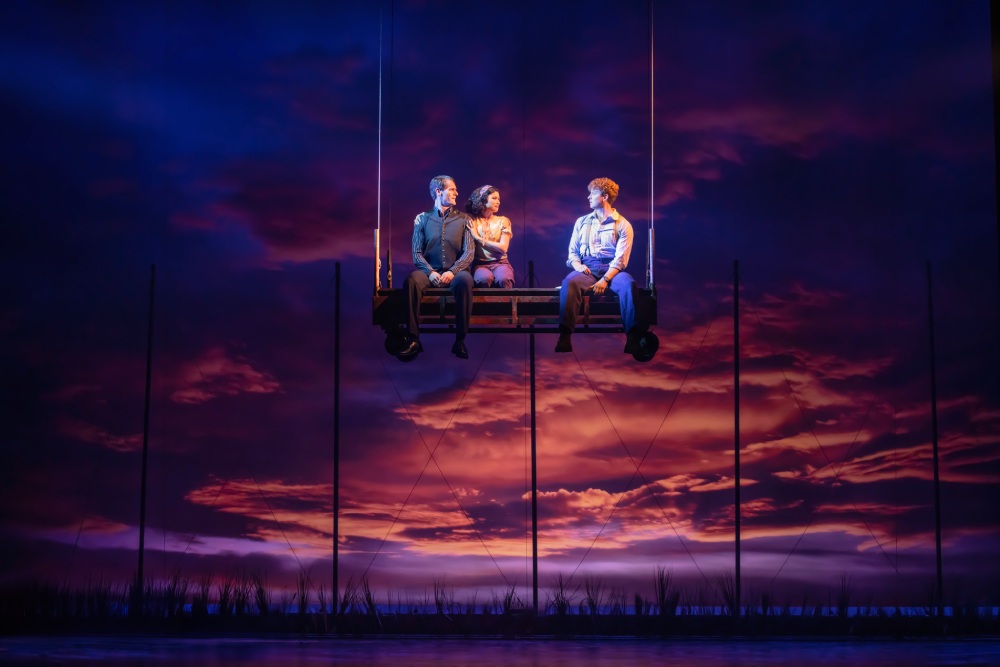
(left-right) Connor Sullivan, Helen Krushinski, and Zachary Keller in Water for Elephants. Photos by Matthew Murphy for MurphyMade.
The most immediately astonishing element of this production is, unsurprisingly, the circus work. The show features a truly impressive range of skills, including aerial hoop and silks, Spanish web, trapeze, and dozens of genuinely death-defying acrobatic tricks and stunts. These sequences are not treated as decorative flourishes or occasional spectacle breaks; they are woven directly into the fabric of the show, pulling us behind the scenes of how the circus breathes, moves, celebrates, and survives.
Aside from their incredible acrobatic talent, it is the ensemble’s acting and collective presence that really bring the Benzini Brothers Circus to life. They do not just perform like a group of talented individuals; they feel like a community. Their presence gives the spectacle a lived-in quality, as if we are getting a glimpse into a strange, beautiful little village that existed long before Jacob arrived and will continue on after he leaves. The choreography only deepens that feeling, filling the stage with constant motion that still somehow feels purposeful, like the well-oiled machine behind a traveling circus, rather than chaotic. Even in the busiest moments, there is a sense of shared rhythm and collective trust among the ensemble that’s impossible to fake.
That trust extends beyond performance and into the technical construction of the show itself. Throughout the production, the cast quite literally assembles and dismantles the world around them. The big top is built, broken down, reconfigured, and rebuilt in front of us, using artistry to turn scene transitions into their own kind of performance. For a concept that presents so many obvious challenges – live animals, circus-scale theatricality, and the limitations of a traveling production, to name a few – Water for Elephants meets each obstacle with remarkable creativity and a steady grounding force.
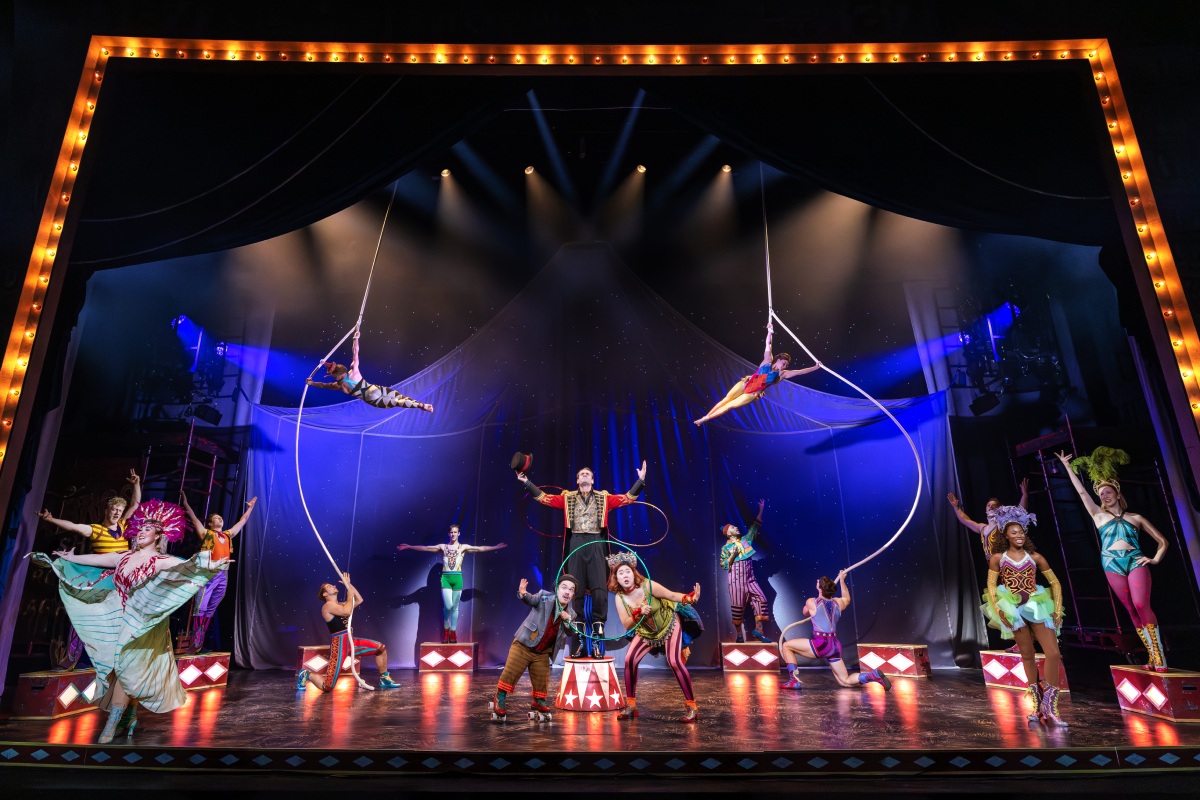
The touring cast of Water for Elephants.
The production design is especially successful because it knows when to lean into abstraction. Rather than attempting to make every element literal, the show often suggests the world of the circus through movement, fabric, shadow, structure, the bodies of its performers, and some of the most beautiful puppets I’ve seen on stage. The amount of thought that went into creating something cohesive, theatrical, and fully transportable - without dulling any of its magic - feels less like standard Broadway stagecraft and more like a feat pulled off by a traveling chosen family.
All of this authenticity, however, at times feels at odds with the musical’s book and score. The ensemble feels so natural, so physically and emotionally connected to one another, that a few of the more dramatic scenes begin to feel noticeably staged by comparison. That is not a question of the principal cast’s talent, but rather a limitation of translating this story from novel to musical. There are moments when the circus – and even the puppets – feels startlingly real, and moments when you are reminded that you are very much watching a musical. Neither approach is inherently wrong, but the gap between them can be jarring. Still, that critique feels small compared to the scale of what the production accomplishes. It is also worth noting how vocally balanced the ensemble remains despite the wide range of performers on stage. In a show that combines musical theatre performers with circus and acrobatic artists, maintaining that level of cohesion is both a performance achievement and a technical one.
Water for Elephants captures the exact feeling it is chasing: awe. It is dangerous, romantic, inventive, and deeply theatrical, with a company that makes the impossible look effortless.
For anyone who has ever wanted to run away with the circus – or simply be reminded of what live performance can do when artists push it to its limits – Water for Elephants is running at James M. Nederlander Theatre through July 5th. Tour information and tickets are available at https://waterforelephantsthemusical.com/.
Overshadowed Theatrical Productions Announces 2026-2027 Season: “Ordinary People, Extraordinary Moments”

Overshadowed Theatrical Productions announced their 2026-2027 season entitled “Ordinary People, Extraordinary Moments,” which includes five main stage productions and special events.
Kicking off the season is an original play written by Artistic Director Reba Hervas entitled “Flame of Fire.” The story is inspired by "Operation Auca," a mission to make peaceful contact with an Ecuadorian tribe. Remembering the events 70 years later, this dramatic play follows missionaries Jim Elliot, Nate Saint, Pete Fleming, Ed McCully, and Roger Youderian and their wives as they bravely prepare for what would change their lives forever. Auditions for this empowering tale will be held on Tuesday, July 28.
For the Christmas season, Overshadowed will present the beloved “It’s a Wonderful Life,” adapted by Jason LeBlanc from the film by Frank Capra. This cherished story follows George Bailey as he discovers the most precious gift thanks to some heavenly help by a quirky angel trying to earn his wings. The film turns 80 years old this year.
In January, the season continues with the family-oriented “James and the Giant Peach (TYA).” Adapted from Roald Dahl's book, this musical follows the adventures of a young boy and his strange new friends as they travel in a giant peach to New York. Book by Timothy Allen McDonald with music and lyrics by Benj Pasek and Justin Paul, known for "Dear Evan Hansen."
The spring will feature a rare Agatha Christie mystery, “The Stranger.” Considered a lost play until 2019, this intriguing tale will have audiences on the edge of their seats as a woman’s whirlwind romance takes a turn when she discovers something about her husband’s past.
The season wraps with the Tony Award-winning “Titanic” with music and lyrics by Maury Yeston and a book by Peter Stone. This beautiful musical delivers powerful emotional moments and soaring songs that bring history to life.
The season will also include the return of Shakespeare on the Grass, a partnership with the City of Itasca. “A Midsummer Night's Dream” will be presented on August 15 at 1 p.m. and 4 p.m. at 201-261 S. Walnut Street, Itasca, in the newly renovated gazebo. The event is free and will feature food and beverages for purchase from local vendors.
In February, Overshadowed will also present its annual Valentine’s Day show with a special performer to be announced at a later date.
Season subscriptions are available for purchase on Overshadowed’s website or by calling the box office at (630) 634-2100.
Production Dates:
- “Flame of Fire”: September 18 – October 10, 2026
- “It’s a Wonderful Life”: November 27 – December 19, 2026
- “James and the Giant Peach (TYA)”: January 22 – February 6, 2027
- “The Stranger”: March 12–20 and April 1–10, 2027
- “Titanic”: July 9–31, 2027
- Shakespeare on the Grass: “A Midsummer Night's Dream”: August 15, 2026 (1 p.m. & 4 p.m.)
About Overshadowed Theatrical Productions
For over 20 years, Overshadowed Theatrical Productions has provided high-quality, family-friendly theater that entertains, inspires, and promotes a Biblical message while fostering a positive community atmosphere. The company is also dedicated to training and encouraging the next generation of performers and theater technicians.
A People: A Sweeping, Soul‑Stirring Journey That Celebrates Jewish Identity
An extraordinary eight-person ensemble fuels the sweeping storytelling of A People - a production presented collaboratively by Arts Judaica and YI Love Jewish - shifting through nearly 80 characters across generations and geographies. Though only one cast member is Jewish, playwright LM Feldman intentionally assembled a diverse ensemble to reflect the many ways Jewish identity manifests - across culture, theology, race, queerness, and lived experience - underscoring that there is no single way to be part of a people.
The performance thrives on the versatility of this cast, featuring standout contributions from Douglas Levin, who provides an authentic and anchoring sincerity, and Charity Schultz, who illuminates her roles with magnetic charm. Daniel Boughton moves with ease between sharp humor and striking emotional depth, and Jin Ai anchors the production’s stillest moments with a quiet power, enriched by her beautifully integrated guitar work. Zach Kunde cuts through the space with sharp intellect and a commanding vocal presence, while Haley Schenk turns a single, piercing glance into some of the production’s most potent dramatic beats, and she even threads in flute playing that adds a surprising, delicate texture. The momentum never falters thanks to Xavier Mattison’s vibrant energy and tenderness, while Freya Churchwell rounds out the ensemble with impressive, wide‑ranging versatility and delivers some of the play’s genuine laugh‑out‑loud exchanges. Together, they weave a unified and deeply affecting tapestry of human survival.
This remarkable stage chemistry is guided by director Avi Hoffman, an acclaimed figure in global Jewish theater who recently directed and starred in a historic Yiddish production of Death of a Salesman in Bucharest, Romania. Having previously earned a Drama Desk nomination for playing Willy Loman in New York, Hoffman injects this local production with masterful artistic insight. Under his careful guidance, the non-linear, fragmented script by L. M. Feldman avoids confusion, gaining immense clarity and striking a perfect balance between epic historical weight and intimate human connection.
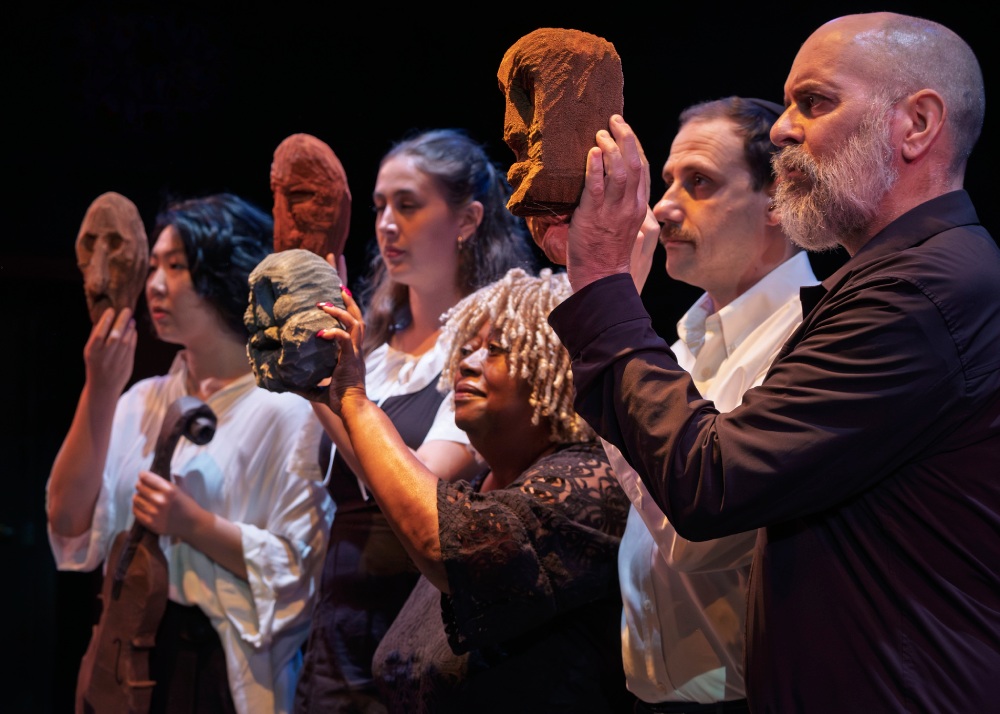
L-R: Jin Ai, Charity Schultz, Freya Churchwell, Zach Kunde, Douglas Levin. Photos by Logan and Candice Conner, Oonphotography.
Starting with the diaspora of the Jewish people that have become scattered throughout the world, the production explores several expressions of Judaism while ultimately reinforcing the idea that, despite their differences, they remain one people - and a remarkable people at that. It touches on beautiful threads of Jewish history, including the teaching that Moses received not only the written Torah referred to as “The Hand” at Mount Sinai but also the Oral Torah referred to as “The Tongue,” which was an interesting fact that I did not ever learn about the Torah in Hebrew school. I was also unaware of another phenomenon that members of the Jewish community called “tonals” actually memorized whole portions of the Torah to recite and sing so that the Torah portion could be performed for groups of students/scholars etc., to discuss and watch. The important thing that came out of this discussion of the Torah and the essential thing that makes Judaism different from other religions is that Jews learned and passed on the teachings of the Torah and the Talmud for the purpose of discussing them and learning from them and interpreting them and re-interpreting them -so as not to force them down anyone’s throat to be followed with blind faith.
As a Jew, I appreciated how the piece pokes gentle fun at our tradition of spirited debate - a trait that can be both energizing and, at times, hilariously counterproductive.
They are so intelligent at debating with each other that sometimes they nitpick each other to the end of a discussion that could otherwise forward the family or community or couple in a more positive way.
One of the production’s most profound scenes comes when a character asks a 90‑year‑old what history lives in the wrinkles of their face - how an entire lifetime, nearly a century of memory, can be held within one fragile human body. Another moment that stayed with me was the gentle but urgent insistence that nurturing future generations is vital to the continuity of the Jewish people.
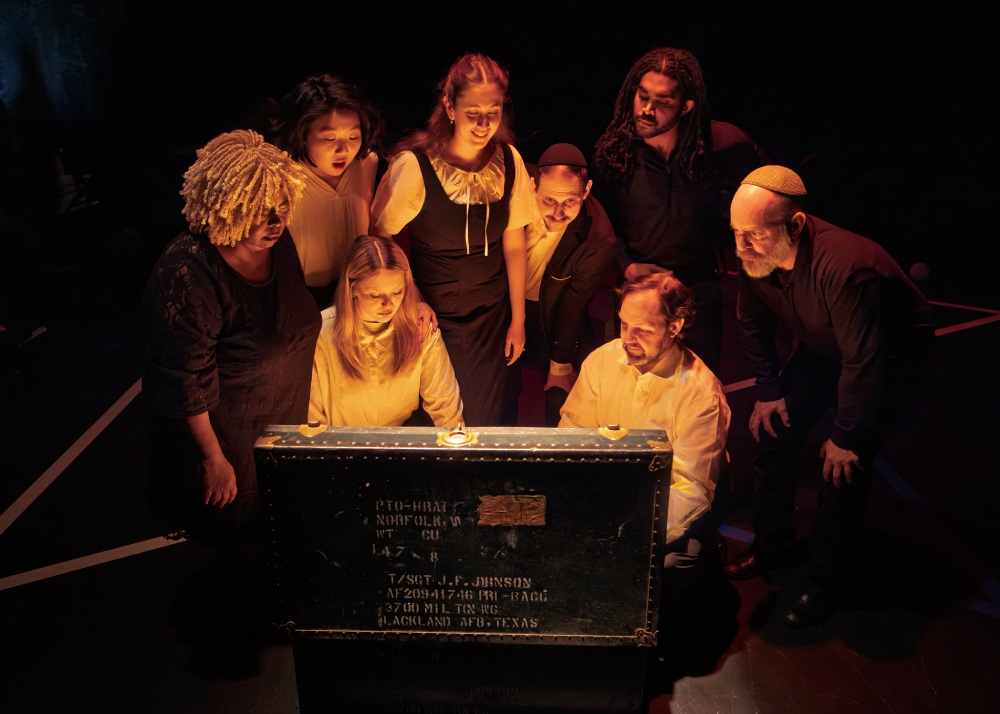
Back row L-R: Freya Churchwell, Jin Ai, Charity Schultz, Xavier Mattison, Zach Kunde, Douglas Levin. Front L-R: Haley Schenk, Daniel Boughton.
The differences among them are many, yet a shared thread still binds them together. One character argues passionately for a two‑state solution, while another hopes her girlfriend will one day be fully embraced by her community. A rabbi even confronts a group of Jewish Christmas carolers, shouting, ‘Why are you doing this?’ as the story considers how and why some Jews celebrate Christmas - a reflection of how the holiday’s overwhelming cultural presence in America can blur the line between religious observance and simple seasonal participation. And still, beneath all these disagreements and divergences, the play returns to the same essential truth: that despite their varied beliefs, identities, and practices, they remain part of one people.
This production was perfect for me as a Reform Jew who has been struggling in recent years with the current rise in antisemitism and my own childhood feelings of being a “self-hating Jew”. I remember being told as a teenager by my talent agent applying for theater roles that I needed to change my last name from Katz to Cates, implying that I would not be cast with a Jewish last name.
The work also reminded me that many young women today - queer and straight alike - continue to push back against the patriarchal elements of Judaism. It echoes the long history of restrictions found in early texts, where girls as young as 12 years old were defined by their childbearing potential and barred from studying sacred writings.
On the plus side, it brought me back to the beauty of the Yiddish language and how I hunger for the sounds of my great grandmother Fanny’s voice and my grandmother Lillian’s voice saying, ‘Have a little nosh!’ and, ‘We love you so much we’re kvelling!’”
The set is intentionally simple: a large Star of David stretches across the floor of Theater Wit’s intimate in‑the‑round space, immediately grounding the production in its cultural and spiritual roots. A few risers punctuate the stage, giving actors elevated platforms for defining moments, while small prop boxes at either end glow when opened, revealing modest but striking items that carry surprising emotional weight. Puppets appear briefly as well, echoing the woodworking projects referenced in the story and adding a tactile, handmade quality to the world. It’s an effective setup for this play - the open space becomes essential as the ensemble moves fluidly around the stage, frequently breaking the fourth wall to bless a volunteering audience member, pass out challah, ask questions, or coax the crowd into clapping along.
By luck, I chose the seat that happened to be in the spotlight for participation, and I was delighted when one actor asked me to be his ‘bubbe’ - his grandmother. When I said, ‘Yes! I will be your grandma!’ He gently took my hand, giving me a grateful squeeze. At another point, one of the actors - dressed as a bride - asked if he could give one of the audience members a blessing. I immediately said, ‘Yes!’ and he came over and placed his hands gently on my head - he was wearing the traditional lace head covering the bride on her wedding day - and he wished me great life blessings of joy and to find a wonderful husband. It was a delightful, intimate moment, and I hope that everyone who sees the show volunteers to experience that.
Throughout much of the play, the actors also wear small placards hanging from their necks, each bearing a single word such as “wrestle,” “struggle,” and “legacy.” These signs become a quiet but potent visual motif, suggesting the burdens, questions, and inheritances each character carries across time. They function almost like distilled themes of Jewish history itself - reminders that to be part of a people is to wrestle with identity, to struggle for continuity, and to consider what legacy one leaves behind. Other words appear as the ensemble shifts through eras, each one offering a compact window into the emotional or spiritual weight of the moment.
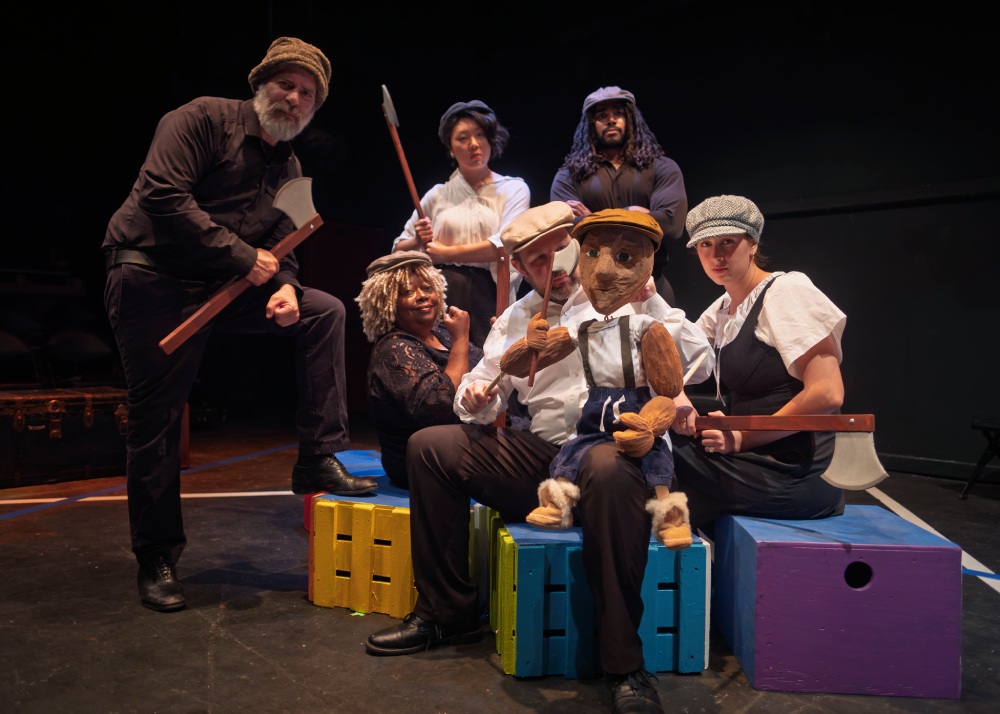
Back row L-R: Douglas Levin, Jin Ai, Xavier Mattison. Front row L-R: Freya Churchwell, Daniel Boughton, Charity Schultz.
My only note - and this is for the author, not the cast or director - is that of all the various types of Jews included in this piece - Reform, Conservative, queer, self‑hating, Orthodox, even atheist - the one type of Jew that was not represented was the Messianic Jew, of which I am one.
Messianic Jews (not to be confused with the organization Jews for Jesus) are Jews who believe that Jesus is the Messiah spoken of in the Old Testament - the ‘Christed One,’ meaning the one anointed with the oil of blessing. In those same scriptures, this figure is described as the blessed one who would be ‘pierced through his hands and feet,’ yet ‘whose bones would not be broken.’
Messianic Jews also believe that, regardless of his lineage - whether Yeshua was a descendant of King David or not - his purpose in allowing himself to be publicly killed, and then healing his own body three days later, was to show that this world is made of spirit, or ‘shimmering motes,’ as he called them. This was long before molecular structure or the effects of consciousness on physical matter were even theorized. All of his miracles were mitzvahs - acts of goodness - centered on healing and feeding the poor, the sick, and the disabled.
At the very least, Jesus was a respected, super advanced, rabbi, rebel and healer who introduced the idea that women were worthy of learning the Torah and receiving healing from his touch whether they were Jewish or not. This Feminist thought alone was a very radical and world changing idea that women of all nations and all religions are eternally grateful for.
Given all that Yeshua represents historically and spiritually to many Jews, I was surprised that his name never surfaced in a piece that explores so many branches of Jewish identity, its factions, and its many splintered paths. I compare his omission from Jewish studies when debating this with my friends to discussing basketball history without mentioning Michael Jordan or discussing physics without ever mentioning Albert Einstein - not a judgment, just an observation about the scope of the narrative.
In any case, author LM Feldman has created a marvelously complex and deliciously enjoyable reminder of all the different expressions of Judaism, and of the lush intelligence and grace of Jewish people around the globe caught up in the current battle to stay alive and well. Le Chaim!
A People was a very deeply inspiring and delightful experience for me, especially at this unprecedented time in history. This heartfelt production of A People helped this Jewish girl from Miami, Florida remember so many of the great things about my Jewish heritage; the sights, the sounds, the heated discussions, the music, the fabulous food, the funny family dinners, my own bat mitzvah… just so many things that make me proud to be a Jew today.
With its blend of live music and rapid-fire storytelling, the production compresses five thousand years of Jewish history and cultural inheritance into a brisk, engaging evening. A People stands out as essential summertime theater, honoring its deep historical foundations while resonating powerfully with contemporary audiences.
Mazel Tov and Highly Recommended!
Running through July 5 at Theater Wit.
Astonrep Approaches Uncle Vanya’s Appeal from a Novel New Angle
Anton Chekhov, a Russian playwright who was also a doctor, can claim a level of regard few writers achieve and maintain so long after their deaths. Born in 1860, the same year the Republican Party nominated Abraham Lincoln for President, his plays are routinely produced on stages in America and around the world because of what they reveal about who we are. That’s especially true for Chekhov’s Uncle Vanya, written in 1899, just a few years before the playwright died. Its popularity may be due to its mystery. Is it about resilience or is it about failure? Is it a comedy or a tragedy? It’s the kind of work that leaves you with questions about not only its two main characters, Sonya and her Uncle Vanya, but also about us.
A part of the city’s theater community since 2011, Astonrep Productions is a small Chicago company intent on “creating compelling and intimate experiences that challenge audiences”. Their interpretation of Uncle Vanya that opened over the weekend at The Edge Off Broadway succeeds in doing so with some reservations.
It’s the first American company to mount this commissioned 2024 Canadian adaptation of Chekhov’s classic. Liisa Repo-Martell’s revamp of the play dutifully adheres to the structure, plot themes and character composition of the original. But the play’s softer aspects, the features that define its essence and purpose, are less reliable and sure.
Displeasure with self is one of first things we get a sense of when the play opens. But even before that awareness sets in, there’s a curiosity the audience notices while they’re selecting their seats before the play begins. A man is slouched in an upholstered chair with one leg over its arm. He’s at the back of the stage and asleep. (We later learn he’s passed out drunk.) Soon after and closer to us, a man and woman are talking. They’re in the sprawling home of a rural Russian estate well over 100 years ago. He’s Mikhail Astrov (Robert Tobin), the local doctor and she’s Marina, a housekeeper very ably played by Liz Cloud, who clearly possesses a warm motherly instinct and a sharp wit. Astrov’s lamenting his fate as a country doctor. It’s all tedium. The people are gossip thirsty “savages”. His life has no fulfillment. He’s not married. He’s not in love with anybody and his youth is behind him. The demands of his work, a sour outlook and his liberties with vodka are catching up with him by slowly dismantling his good looks.
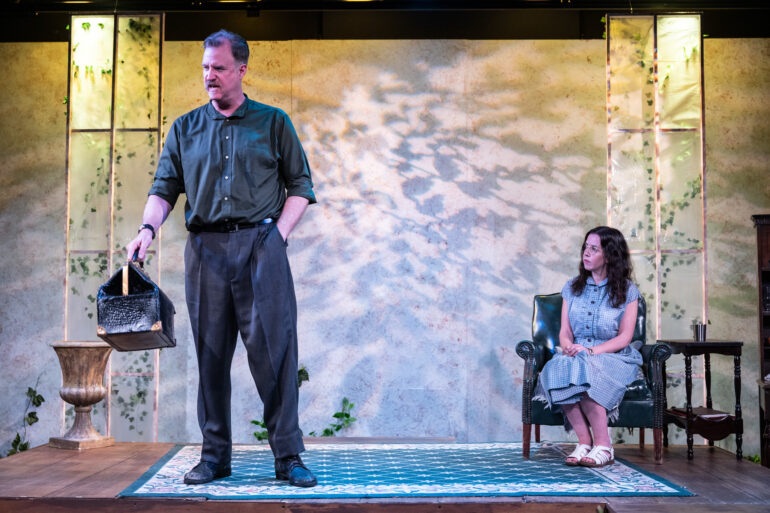
L-R: Robert Tobin, Natalie Hurdle. Photo by Paul Goyette.
By calling him a moron, the doctor’s antipathy for the sleeping man is made clear even before he wakes up.
As more people enter the story, we find ourselves in the middle of a family crisis. Vanya, the man who was sleeping in the chair, and his niece Sonya (Natalie Hurdle) have been the caretakers of the estate since her mother died. Sonya’s father, Alexandre (Geoff Isaac), is a professor in the city who’s been forced out of his university position and has now returned to the homestead. He’d been relying on income from the estate to support his lifestyle in town. He’s not returned alone. Joining him is his much younger and very beautiful second wife, Yelena, with Andi Muriel in the role. Things are tense. Alexandre’s pompous and obliviously demanding. And Vanya, played with visceral intensity by Rian Jairell, is demonstrably resentful.
An appeasing conflict avoider, Sonya’s loyalties are split between the natural draw a child has to her father and her uncle who’s labored with her to keep the estate viable at tremendous personal sacrifice to them both. Now a young woman, she seems to know it’s Vanya who’s been more the nurturing father presence for her and that other than each other, the estate is all that either of them have.
Additional strain is added with the presence of Yelena. Her beauty is like an intoxicant for both Vanya and the dissatisfied doctor, Astrov. They’re both brazen in their desire for her. Watching them shamelessly try to seduce her is equal parts comic and piteous.
With so much instability, friction and doubt in the air, you’d expect to feel the charge of that energy engulfing the air. Directed by Derek Bertelsen, it doesn’t arrive with any real intensity until the second act when Sonya’s father floats the idea of selling the estate. And that’s despite the considerable investments Jairell as Vanya had been contributing up to that point. Because It’s so transparent Alexandre wants the money from the sale to fund his return to the city and his refined form of living, Vanya’s resentment turns to rage. Finally filling the production with heat.
It dials up too when Sonya confesses her attraction, indeed love, for Astrov to Yelena. Unrequited never looked so vulnerable and fragile.
Part of Repo-Martell’s adaptation included revising the language to be more contemporary and ostensibly more approachable. It works in an essential way. Both Jeremiah Barr’s handsome set and Natalie Shoch’s costume designs are ambiguous enough to blur any specific time reference. But in the back of your mind you know this is all happening in a very distant time and place. One where duty and tradition held much more sway. That difference can often be found in the words used to express and explain obligations and choices. Here there’s a nagging sense that you may be missing important steppingstones.
In the end, things aren’t much different from where we found them in the beginning. Except everyone is much more depleted. Drained. But still tasked with shouldering their disappointments and continuing with their lives. In Chekhov’s original script, the word “rest” is used to represent that place of willful resignation that amounts to acceptance of one’s inevitable destiny. In this adaptation, the word “peace” is substituted. They say the same thing about something we’ve all experienced. When we’ve had to pull ourselves up out of the ashes and push forward. Uncle Vanya brings that feeling front and center and offers understanding through catharsis. That alone will keep it in heavy production for a few more centuries at least.
Uncle Vanya
Through July 5, 2026
Astonrep Productions
Venue: The Edge Off Broadway
1133 W. Catalpa Avenue
Chicago, IL 60640
For more information or tickets: https://www.astonrep.com
This review is proudly shared with our friends at www.TheatreInChicago.com.
Couch Penny Ensemble’s An Oak Tree: A Raw, Unrehearsed Descent Into Grief
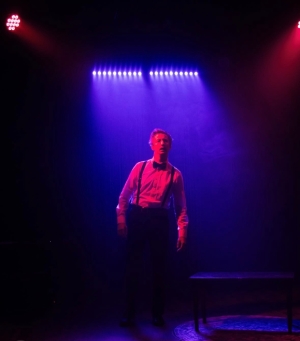
Couch Penny Ensemble, in association with Theatre Arcana, presents the ambitious and experimental An Oak Tree, a raw, unconventional approach to theater that is sure to spark conversations on the nature of grief and the experience itself.
In writing An Oak Tree, playwright Tim Crouch wanted to replicate the disorienting nature of grief. The play features two actors - one who has rehearsed the script (the Hypnotist) and another who has neither seen nor read it (the Father). The Hypnotist acts as a dual guide both for the actor playing the Father and the audience, as this one-of-a-kind experience comes to life.
For each performance, a new, different actor takes on the role of the Father, and it’s their job to live in the moment, breathing life into this character through the use of real-time instructions (given via headphones) and script lines given to them on the spot. The result is an unpolished, raw theater experience. The format is intriguing and innovative - a reflection on grief itself. When tragedy happens, you aren’t prepared for it, and you suddenly find yourself wrestling with a script that is unrehearsed.
Under Bryce Lederer’s direction, the production leans into the play’s shifting dynamics, shaping its unpredictability into something sharply focused and theatrically alive.
Riles August Holiday anchors the evening as the Hypnotist, delivering a technically demanding and well-acted performance. Holiday does a fantastic job of drawing a sharp line between his moments in character - playing a defensive, fragile man - and his moments acting as an administrative guide, calmly steering both his co-star and the audience through the mechanics of the script.
On this evening, Suzy Krueckeberg played the Father, and one can only imagine the excitement and the nerves of taking on such a role. As the Father, she was required to relive the trauma of losing a daughter and process the deterioration of her family without rehearsing - no small task. Krueckeberg did a good job finding the part and taking the audience on the journey with her.
For all its ingenuity, An Oak Tree serves a very specific appetite. This is avant-garde, experimental theater through and through. If you are an audience member searching for that specific brand of rule-breaking performance art, there is plenty to analyze here. Personally, I felt the script left something to be desired. In an examination of grief, I felt at times it was too simplistic or trod ground others had covered more effectively.
That said, it was a unique and interesting experience to see an actor walk a tightrope, constructing a character in front of the audience’s eyes. Holiday’s emotional depth on stage was a treat as well.
An Oak Tree runs at Greenhouse Theater Center until July 5th.
This review is proudly shared with our friends at www.TheatreInChicago.com.
Champions of Magic Captures the Thrill of Live Performance
One of the things I have always thought that concerts and other live events had over theatre is the energy of the crowd afterward. While people certainly leave plays and musicals moved, impressed, or deep in conversation, there is often a certain reserve to the way theatre audiences spill out onto the sidewalk. That was not the case after Champions of Magic at Studebaker Theater.
Leaving the theatre, the crowd was electric. People of all ages and backgrounds were in full childlike awe, excitedly recounting their favorite tricks, debating the moments that scared or shocked them most, and trying (mostly unsuccessfully) to understand how any of it could have been done. At one point, while my friend and I were part of the herd heading toward the train, an older man turned to us mid-discussion and said, “Usually, I see tricks and, even if I don’t know exactly how they did it, I can wrap my head around it just being an illusion. That was true magic.” And it was – that’s the only explanation.
That reaction captures the biggest strength of the night: it makes magic feel genuinely special again. In an age when so much of our entertainment is filtered through screens, clips, and behind-the-scenes explainers, it is easy to think you have already “experienced” these kinds of illusions through television or YouTube. But seeing them live, in a room full of people gasping, laughing, screaming, and turning to strangers in disbelief, is a completely different kind of experience – one you can only get from the Champions of Magic, themselves.
The large-scale magic show runs upwards of 2.5 hours, including one intermission, and is loosely structured as a rotation between three featured acts: Young & Strange (Richard Young, Sam Strange), Liberty Laren, and Fernando Velasco. While each performer brings their own style and specialties, the show works best when it feels like a shared, collaborative spectacle. There is something especially exciting about seeing different magicians combine their individual strengths to create an experience that feels bigger, stranger, and more theatrical than a traditional magic show.
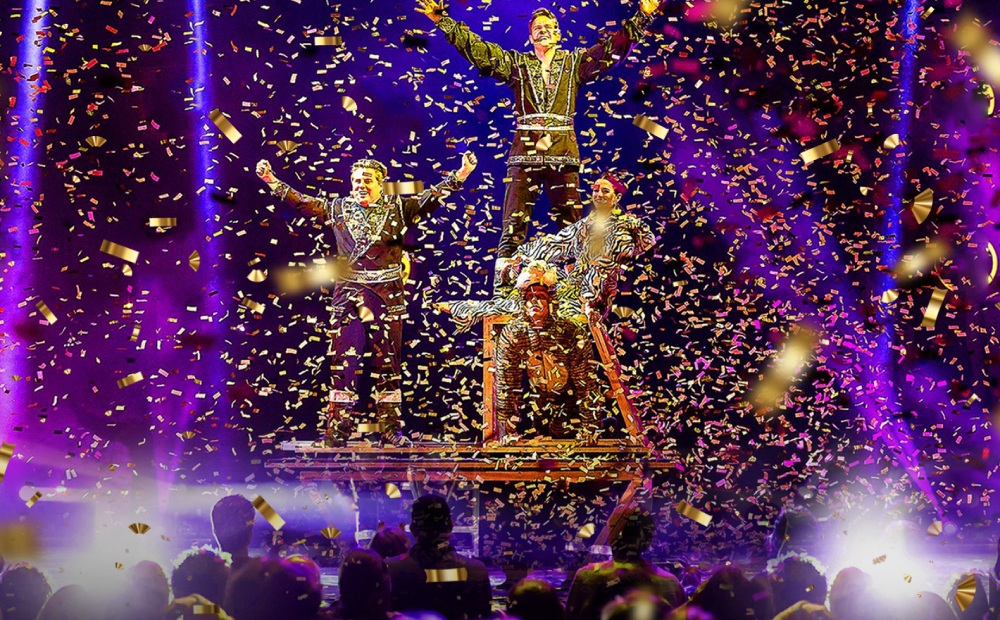
The company of Champions Of Magic - photo by Bill Axell.
The variety of tricks is especially impressive. Champions of Magic includes everything from classic illusions, like the classic woman-sawed-in-half, to large-scale and death-defying stunts, to more intimate pieces of sleight of hand with audience interaction. Some tricks are quick and funny; others are story-driven and beautiful. The show also includes bits of magic history, particularly through fourth-generation magician Liberty Larsen’s family history as the founders of the Magic Castle. This was one of the most interesting threads in the evening, and I found myself wishing there had been even more of that magical history woven throughout the show.
The production is also extremely audience - and family-friendly, with plenty of built-in participation. Volunteers are selected in playful ways, such as by launching ping-pong balls into the audience, and several children are brought onstage as assistants. That said, parents should be warned before intermission: the glowing “red light, green light” magic toy promoted during the show costs $30 in the lobby – much more than I expected and not advertised until kids were already next in line for their new toy.
Aside from the occasional product placement, the show’s biggest issue was with pacing. I understand that a production of this scale needs slower, smaller tricks for both budget and timing reasons, and not every moment can or should be a massive illusion. Still, for a show pushing two and a half, there were stretches that felt extensively padded with smaller-scale filler. Ironically, the grand finale had the opposite problem. It was packed with multiple incredible tricks, but they came so quickly - back-to-back - that there was barely time to absorb one astonishing moment before the next was already underway. A little more breathing room there would have made the ending feel even more satisfying, without risking exposing the secrets at play.
Even with those pacing issues, Champions of Magic is a very fun, very unique night out. It is bigger, more surprising, and more communal than I expected, and it reminded me how powerful live spectacle can be when experienced with an audience fully willing to believe in what they are seeing. Whether or not it was “true magic,” it certainly felt like it.
Originally scheduled to run through July 5th, Champions of Magic was extended before opening due to popular demand – now running at Studebaker Theater through August 23rd. Tickets are available at https://championsofmagictour.com/.
*Extended through September 2nd
Lookingglass' Untitled Vampire Play has bite
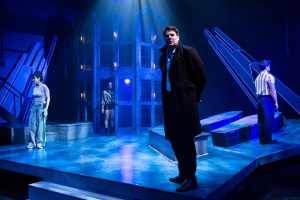
Lookingglass Theatre Company continues its tradition of staging visually inventive and thought-provoking world premieres with its latest production, Untitled Vampire Play. Written by Lookingglass Ensemble Member Kevin Douglas - who has previously crafted well-received work for the company, including Thaddeus and Slocum: A Vaudeville Adventure - this comedy-drama uses supernatural lore to dissect the vulnerabilities of modern relationships.
The story centers on a delightfully bizarre “meet the parents” scenario. Dom (Jordan Anthony Arredondo), an everyman bartender, introduces his parents to his new girlfriend, Val (Courtney Rikki Green). The twist? Val is a centuries-old vampire. But don’t worry - she gets her blood from ethical sources, not human victims. Dom’s parents laugh it off, though, thinking their son’s girlfriend has a few screws loose.
Meanwhile, Val’s “brother” Roderick (Walter Briggs) resurfaces, wanting to reconnect. In reality, they are former lovers, but after his betrayal, she ran away. Val doubts that he’s changed, but her progeny, Rose (Jin Park), gets sucked into his orbit despite being under Val’s supernatural control. As Roderick carelessly makes kills in Chicago, bodies begin piling up, drawing the attention of Dom’s mother - a police detective - and a vampire hunter descended from Van Helsing. Who said love was easy? The result is a look at relationships in all of their messy, bloody glory.
Briggs turns in an excellent performance as Roderick, playing the charismatic bad boy with ease. He channels the classic Hollywood vampire aesthetic with immaculate fashion and a distinct, formal vocal cadence that commands the room. Sure, he’s a villain, but he’s fun to watch, especially with the little flairs he adds to his characterization.
Kareem Bandealy is another standout, tackling two completely contrasting roles. He plays Dom's father, Louie, with a relentless barrage of corny vampire dad jokes, then completely transforms into Lance Tardis Van Helsing, a fierce vampire hunter with an equally fierce hair flip.
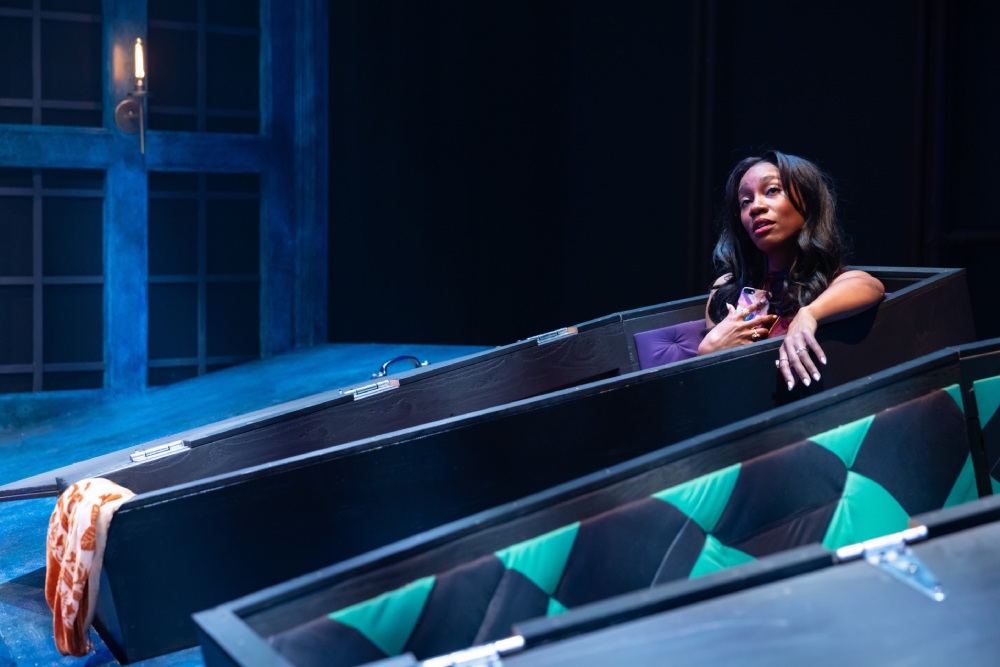
Courtney Rikki Green as Val inUntitled Vampire Play at Lookingglass Theatre. Photo by Justin Barbin.
Anchoring the whole cast, though, is Green, who brings immense emotional weight to her performance as the complex Val. Serving as the real window into this hidden world, Green charts her character's profound transformation, as Val wrestles with whether she is seeking genuine love or simply trying to outrun eternal loneliness.
Beneath the fangs, the play asks a deeply human question: What does it mean to love someone? It explores the underlying selfishness that often masks itself as romance. Val wants Dom to turn into a vampire so they can be together forever, viewing his reluctance as a rejection of her identity rather than a defense of his own humanity. Meanwhile, Dom uses Val as an emotional security blanket to quiet his own intense insecurities. Through these characters, Douglas examines how control, weakness, danger, and even lust can taint love, or at least the illusion of it.
The script could use a bit of trimming in its exploration, as there are moments that feel repetitive, alongside a few minor plot weaknesses. For instance, it seems odd that a police detective would wait so long to investigate self-proclaimed vampires once gruesome deaths with animal-like attack marks begin happening. Furthermore, one thing I certainly could have gone without was a gruesome scene where the vampires feast on a victim, using gummy worms to simulate intestines. Still, beneath those rough edges, the play’s core story has real spark, offering a fresh, funny twist on vampire mythology that keeps the audience engaged.
I’d be remiss not to praise the play’s design. The technical execution is a masterclass in atmospheric world-building. Scenic designer Alyssa Mohn delivers an expert landscape featuring coffins that seamlessly rise from and sink into the stage floor. This clever staging pairs beautifully with Andre Pluess’s precise sound design and Jason Lynch’s lighting choices - ranging from moody washes to stark spotlights and flashing accents - to wrap the theater in an escalating sense of intrigue and peril. The atmosphere creates moments when you’re not sure if you might be the next victim.
Inventively directed by Devon de Mayo, the production also incorporates fun moments of audience engagement, whether it’s handing theatergoers caution tape to hold at a crime scene or a rather messy vampire kill that sprays stage blood into the front row.
While it doesn’t entirely break new ground, Untitled Vampire Play is creative and visually arresting. At a time when modern relationships are being heavily dissected in media - such as in the hit Obsession - Untitled Vampire Play tosses its fangs into the conversation, leaving the audience to wrestle with what should encompass the core tenets of love.
Recommended.
Untitled Vampire Play is being performed at Lookingglass Theatre through July 12th.
This review is proudly shared with our friends at www.TheatreInChicago.com.
Tom Stoppard’s epic finale Leopoldstadt is an instant classic at Writers Theatre
What would you do if you found out your heritage wasn’t what you thought it was? In Tom Stoppard’s case, he wrote a sweeping, epic play about it. Glencoe’s Writers Theatre brings Leopoldstadt to the Chicago area for the first time since its West End and Broadway runs in the early 2020s. Directed by Carey Perloff, a longtime friend and collaborator of Stoppard’s, this final stage play proves to be among his best.
Stoppard passed away late last year but he left a decades-long cannon of seminal stage and screenplays. When his semi-autobiographical play “Leopoldstadt” began performances in the West End in early 2020, he was sure it would be his last. Though he wrote it in a year, it took nearly 30 years to find the narrative. Stoppard, who was raised as a gentile most of his life, was told by a family member in 1993 he was of Jewish heritage and that many of his family members were murdered in the Holocaust. Stoppard escaped Czechoslovakia as a child and was raised in the UK entirely unaware.
A blended Jewish-Catholic family’s history in 20th century Vienna is divided neatly into four pivotal scenes with a sizeable cast of some of Chicago’s best. In the first scene, a Christmas party (1900), we’re shown a Vienna in which Jews were considered equals. Families had interfaith marriages and shared holiday celebrations. By the second scene (1924), WWI has redrawn the maps of Europe. Austria, as well as the family, finds itself in a precarious place. Scene three (1938) portrays an Austria fully committed to the Third Reich and family alliances are put to the test when the family is forced out of their home by the Nazis. The final scene (1955) happens in the aftermath of Austria’s reunification following WWII. This last scene mirrors Stoppard’s own life and serves as an emotional climax to a play that is often dense with political and historical theory.
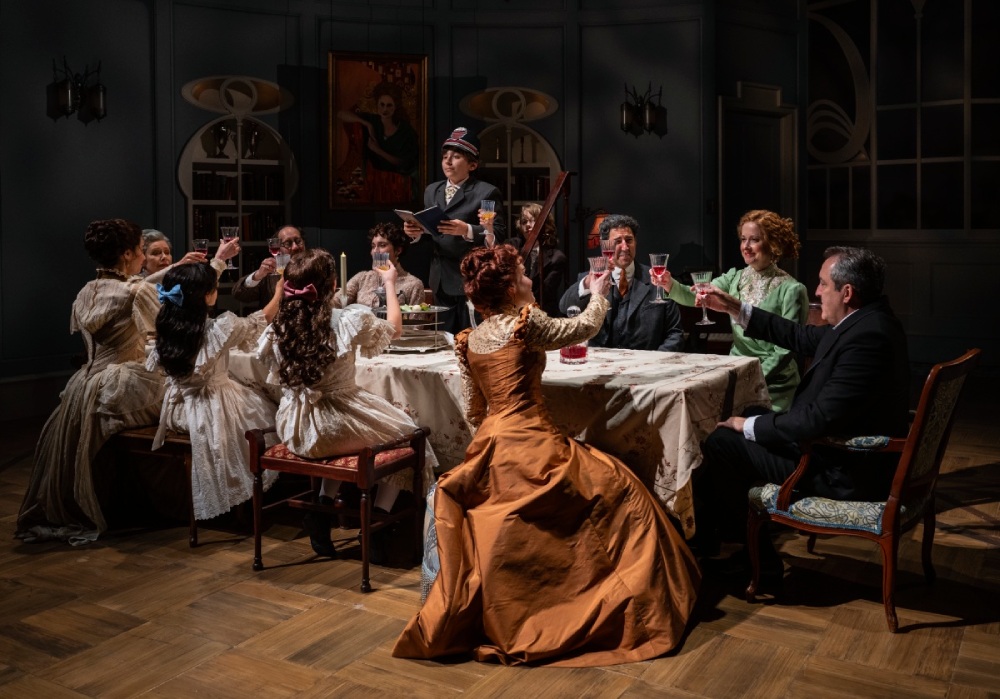
The cast of Leopoldstadt. Photo by Michael Brosilow.
Writers Theatre’s production is as faithful to the original as you can get. Carey Perloff directed the Boston and D.C. premieres too. Along with an all-star cast of Chicago heavy hitters, Perloff’s production will likely be remembered as the definitive Midwestern revival. Between Ken MacDonald’s set and Alex Jeager’s costumes, audiences are sure to be swept away to a different time and place that can feel eerily reminiscent to the present.
As the eras change so do the actors playing the characters. Stoppard’s script trusts that the storytelling is so engaging that audiences will figure out who’s who by the context clues, and he was right. Some may find the story hard to follow but thankfully a helpful lobby installation catches everyone up on the history of Austria during this time period.
Writers Theatre favorite Kate Fry plays a Catholic woman, Gretl, who marries into a prominent Jewish family. Her performance is at first charming but by the end heartbreaking. Jessie Fischer delivers a transformative performance, particularly during the final scene. Rounding out the male ensemble is Ian Barford as Hermann who plays a converted catholic, but it’s his deterioration that is unforgettable. Justin Albinder is given the meatiest part of the final scene and his ability to switch from one emotion to the next is some of the most natural acting of the evening.
Leopoldstadt is every bit as epic as something like Gone with the Wind. Much like the famed novel and movie, this play tells the story of a civilization, a family, lost to the tragedy of war. It’s a story of a family’s near extinction. Stoppard’s brilliance is on full display and how lucky are we to have this capstone for his illustrious career?
Through August 16 at Writers Theatre. 325 Tudor Ct, Glencoe, IL. 847-242-6000
https://www.writerstheatre.org/events/leopoldstadt
This review is proudly shared with our friends at www.TheatreInChicago.com.
Nunsense, Not Quite Immaculate - But Blessed With a Strong Cast
Following its recent winter production of Sister Act, Drury Lane Theatre returns to the convent with Nunsense, a light-hearted musical comedy which, as the title implies, is a lot of nonsense.
The premise is funny, albeit morbid. After an unfortunate mishap, 52 members of the Little Sisters of Hoboken die from tainted soup prepared by Sister Julia, Child of God. With limited resources, the surviving nuns can only cover the funeral expenses of some of their sisters - leaving the remaining four bodies in their convent freezer, awaiting burial. How can they solve this problem? Well, stage a variety show, obviously! After all, while these women are nuns, they all wanted a moment in the spotlight.
E. Faye Butler, who also directed Sister Act, returns to stage Nunsense and injects the same optimism into this show. Unfortunately, it lacks the same substance, failing to elevate its premise beyond the initial idea.
The origin of Nunsense seems to explain its structural weakness. In the early 1980s, playwright Dan Goggin created a line of tongue-in-cheek greeting cards featuring a nun offering witty, irreverent quips. The cards were a hit, and Goggin used them as a jumping-off point for a cabaret show, which was later expanded into a full-length musical.
Unfortunately, the script doesn’t have much narrative depth or structural momentum. It seems to wander through quips and gags, trying to find a laugh rather than developing character or plot. At one point, we learn that a health inspector will fine them if they can’t raise the money by tomorrow, but it doesn’t land as a serious threat or even a driving force for the remainder of the show. The problem even has a quick resolution when Sister Mary Amnesia remembers her identity and discovers she’s suddenly rich thanks to a contest - talk about a deus ex machina (mary-ina, if you will).
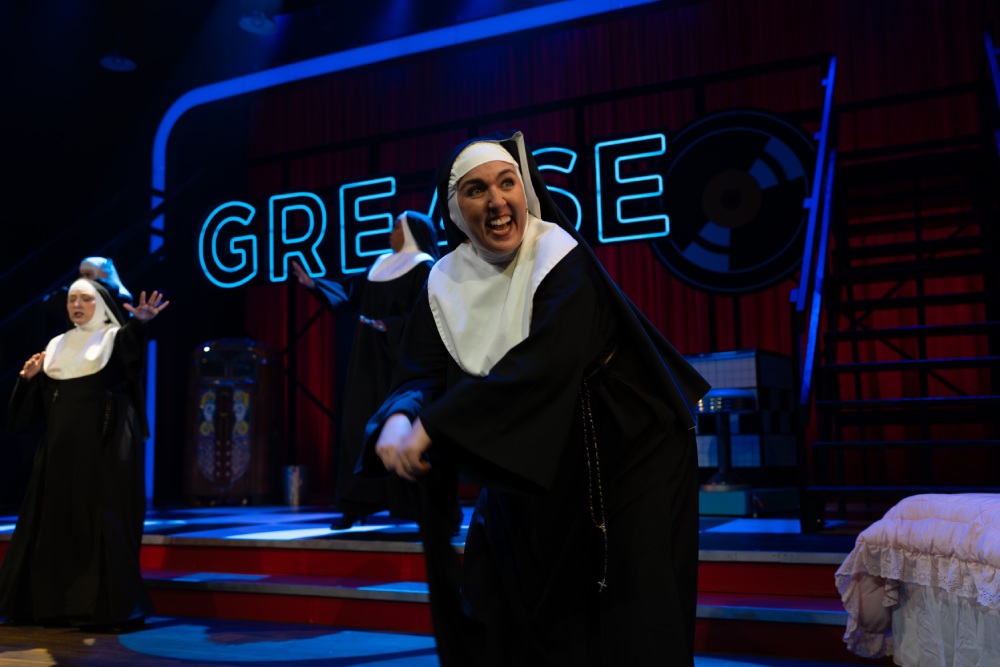
Rachel Carreras in Drury Lane THeatre's Nunsense. Photos by Caitlin Dennis.
The book’s weaknesses are unfortunate because the cast is genuinely strong. Every member brings spectacular vocals to the stage, effortlessly belting out musical numbers and sounding excellent throughout.
Sharriese Hamilton delivers a standout performance as Sister Hubert. Her sassy comebacks and vocal riffs are hilarious, especially her trill in their rap. Her big second-act number, "Holier Than Thou," takes the audience to church and gives the show a much-needed jolt of energy. Cory Goodrich, Rachel Carreras, Kelly Felthous, and Aurora Boe also do well in their solo moments, whether it’s physical comedy, playing with a puppet, or ballet. Felthous gets to shine with her audience work and banter, and it is fun to see the cast do callbacks to specific interactions, such as flirting with or chiding audience members.
The show succeeds best when it moves quickly. Without much plot, gags can get tired easily. For instance, the Reverend Mother accidentally inhales a drug found in the girls’ locker room and goes to pieces. The sequence goes on a few beats too long. Transitions also could be tightened so the show doesn’t lose steam between numbers.
Nunsense is a fun idea, but the script fails to execute it satisfyingly. It’s also unclear who the intended audience is; the PG‑13 tone might make it a slightly tougher fit for families, even though they’d otherwise be a natural demographic.
While each performer gets a well-deserved moment to shine, it is a shame that such a talented cast doesn't have better material to serve either their collective skills or a meaningful story. Drury Lane's Nunsense has its moments, but it never quite reaches divine heights.
This review is proudly shared with our friends at www.TheatreInChicago.com.
Operation Mincemeat: A Smart, Scrappy Musical That Shines When Its Cast Takes the Wheel
01 October 2026 in Theatre in ReviewIn the 2019 film Yesterday, a struggling musician wakes up in a world where The Beatles never existed. A similar…

SANCTUARY STORIES - A JOURNALISM THEATER PROJECT October 9-18 at the Athenaeum Center for Thought and Culture
30 September 2026 in Upcoming TheatreThrough music, documentary video, sound, photos and live actors, “SANCTUARY STORIES: A JOURNALISM THEATER PROJECT” captures in words and images…

Red Theater presents the world premiere of CHURCH HURT October 24 - November 21, 2026
30 September 2026 in Upcoming TheatreRed Theater is thrilled to announce the cast and production team of the world premiere of Church Hurt by Brynne…
Ballets Jazz Montréal Makes Chicago debut at THE AUDITORIUM Saturday, November 7th
30 September 2026 in Upcoming DanceThe Auditorium (Chicago's landmark stage at 50 E. Ida B. Wells Drive) continues its 2026-27 Dance Season titled North American…

A Red Orchid Theatre Opens 34th Season with Chicago Premiere of HEROES OF THE FOURTH TURNING October 29 – December 6, 2026
29 September 2026 in Upcoming TheatreA Red Orchid Theatre is pleased open its 34th Season, exploring the theme of "world on fire," with the Chicago…
Lookingglass announces new leadership team
29 September 2026 in Theatre BuzzLookingglass Theatre Company today announced a new leadership structure that brings together four longtime members of its acclaimed ensemble and…
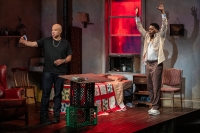
Steppenwolf’s Topdog/Underdog: When History Deals the Cards
28 September 2026 in Theatre in ReviewSusan-Lori Parks’ Topdog/Underdog, the Pulitzer Prize-winning masterpiece, is the kind of play that changes depending on when—and how many times—you…
MAMMA MIA! and HADESTOWN Return to Chicago in Spring 2027
28 September 2026 in Upcoming TheatreBroadway In Chicago is excited to announce two fan-favorite shows are returning to our stages this year: MAMMA MIA! and…
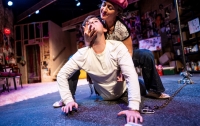
'I’m Going to Marry You Tobey Maguire,' Full of Laughs, Ends With a Fizzle
25 September 2026 in Theatre in ReviewHere’s a play that should be really good, based on its reputation alone. Written by Chicago comedy writer Samantha Hurley,…

ALL THINGS EQUAL: THE LIFE AND TRIALS OF RUTH BADER GINSBURG 2027 NATIONAL TOUR - tickets now on sale
25 September 2026 in Upcoming TheatreInnovation Arts & Entertainment, along with Broadway In Chicago, are thrilled to announce single tickets for ALL THINGS EQUAL: THE…

League of Chicago Theatres announces "It's Theatre Season" and celebrates the industry's impact
24 September 2026 in Theatre BuzzThe League of Chicago Theatres announces the return of It's Theatre Season, a campaign inviting Chicagoans and visitors to discover…

Steppenwolf Theatre Continues 51st Season with World Premiere of ADIRONDACK CHAIR CIRCLE October 22 — December 6
24 September 2026 in Upcoming TheatreSteppenwolf Theatre Company, the nation's premier ensemble theater company, is pleased to launch its 51st Season with the world premiere of…
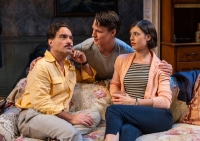
Lookingglass’ Kowalski Ignites a Battle of Wits Between Two Icons
24 September 2026 in Theatre in ReviewLookingglass Theatre’s production of Kowalski offers a gripping, fictionalized glimpse into the first meeting between two theater greats: Tennessee Williams…

Writers Theatre continues its 35th Anniversary Season with explosive, high-stakes boxing drama The Royale October 22 – November 29
23 September 2026 in Theatre in ReviewWriters Theatre, under the leadership of Executive Director Kathryn M. Lipuma and Alexandra C. and John D. Nichols Artistic Director Braden Abraham, continues…
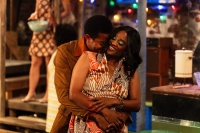
Detroit ’67: A Basement Becomes a City on the Brink
23 September 2026 in Theatre in ReviewDetroit was burning in the summer of 1967, inside one basement, life was still going on. That contrast is at…
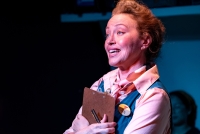
Now Boarding: Bonnie’s Last Flight, a Sky‑High Comedy with Real Heart
23 September 2026 in Theatre in ReviewRivendell Theatre Ensemble closes its milestone 30th season with Bonnie’s Last Flight, a sly, sky‑high comedy set during a flight…

Teatro Vista Productions announces season
22 September 2026 in Upcoming TheatreTeatro Vista Productions, the Midwest's only Latine-led Equity theatre company, led by Executive Director Lorena Diaz and Artistic Director Wendy…
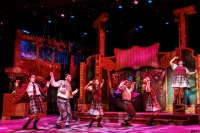
Step Right Up and Ride the Cyclone (The Musical) at Metropolis Arlington Heights
22 September 2026 in Theatre in ReviewIf anyone has ever told you to buckle up and enjoy the ride, they were talking about life—and even if…
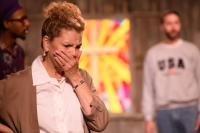
Funny ‘Prayer Circle’ Is Loaded With Laughs
22 September 2026 in Theatre in ReviewErik Gernand is resident playwright at Redtwist Theatre, and his Prayer Circle is absolutely laugh-out-loud funny. The strength of this…

Steppenwolf Presents GRACEFUL WARRIOR: AN EVENING WITH GARY SINISE - Tuesday, November 24, 2026
22 September 2026 in Upcoming TheatreSteppenwolf Theatre Company, the nation's premier ensemble theater company, is pleased to present Graceful Warrior: An Evening with Gary Sinise on Tuesday, November…

Acclaimed Mexodus musical makes Chicago premiere November 7-21 at Studebaker Theater
22 September 2026 in Upcoming TheatreStudebaker Theater, P3 Productions and Audible, in collaboration with Teatro Vista Productions, present the Chicago premiere of the groundbreaking, award-winning new hip-hop musical Mexodus, written and performed…

Arts in the Dark Parade moves to Columbus Drive due to dynamic growth, Oct. 24
21 September 2026 in Theatre BuzzLUMA8 and the City of Chicago return with the 12th Annual Arts in the Dark Halloween Parade, a family-friendly celebration…

American Blues Theater hosts its annual costumed fundraiser HALLOWEEN BOO BASH October 25th
21 September 2026 in Theatre BuzzAmerican Blues Theater, under the continued leadership of Executive Artistic Director Gwendolyn Whiteside, presents Halloween Boo Bash, its annual costumed fundraiser benefiting artists' wages…
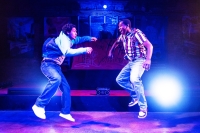
Definition's How We Got On: A Mixtape for the Stage
21 September 2026 in Theatre in ReviewWhat happens when three young people discover hip-hop and realize they might have something to say? Idris Goodwin’s How We…
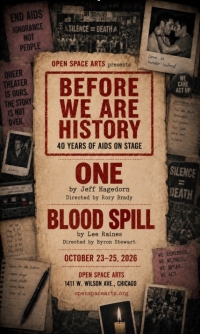
Open Space Arts Presents BEFORE WE ARE HISTORY October 23 – November 8
21 September 2026 in Upcoming TheatreOpen Space Arts presents BEFORE WE ARE HISTORY, a three-week theatrical exploration of LGBTQ+ theater created during and in response to…
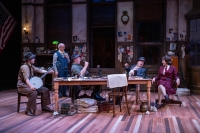
Northlight Delivers a Headline-Making, Hilarious Front Page
20 September 2026 in Theatre in ReviewNorthlight Theatre opened its new venue with Jeffrey Hatcher’s smart, rejuvenated adaptation of The Front Page. Commissioned by Artistic Director…
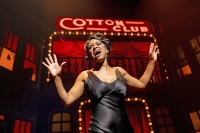
Chicago Shakes' Play On!: With a Syncopated Harlem Beat
20 September 2026 in Theatre in ReviewThere are some productions you watch, and then there are productions that make your heart swoon and your toe tap.…

Overshadowed's Flame of Fire Finds Humanity, Strength, and Forgiveness in a Tragic Chapter of Missionary History
19 September 2026 in Theatre in ReviewOvershadowed Productions’ Flame of Fire revisits one of the most polarizing true stories in mid‑century missionary history, and the result…
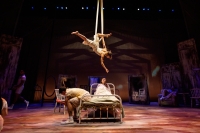
The Attic at Goodman Theatre Redefines Memoir Through Breathtaking Physical Storytelling
19 September 2026 in Theatre in ReviewAt intermission, I sent Ken, Buzz Center Stage’s managing editor, a text: “So thankful I made it!! It’s intermission, and…
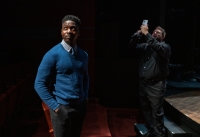
Class is back in session with Victory Gardens’ World Premiere of The Humanities
19 September 2026 in Theatre in ReviewCoincidentally (or not), Victory Gardens’ new play about a controversial campus speaker opens just days after the one-year anniversary of…



Latest Articles
-
 Operation Mincemeat: A Smart, Scrappy Musical That Shines When Its Cast Takes the Wheel
Written by Maddie BurroughsIn the 2019 film Yesterday, a struggling musician wakes up in a world where The Beatles never existed. A similar theatrical case study could be done with every musical that might not exist without Hamilton; Operation Mincemeat should be first…
Operation Mincemeat: A Smart, Scrappy Musical That Shines When Its Cast Takes the Wheel
Written by Maddie BurroughsIn the 2019 film Yesterday, a struggling musician wakes up in a world where The Beatles never existed. A similar theatrical case study could be done with every musical that might not exist without Hamilton; Operation Mincemeat should be first… -
 MAMMA MIA! and HADESTOWN Return to Chicago in Spring 2027
Written by Buzz Center StageBroadway In Chicago is excited to announce two fan-favorite shows are returning to our stages this year: MAMMA MIA! and HADESTOWN. Current subscribers can add these to their season package when renewing by clicking here or calling (312) 977-1717. Group…
MAMMA MIA! and HADESTOWN Return to Chicago in Spring 2027
Written by Buzz Center StageBroadway In Chicago is excited to announce two fan-favorite shows are returning to our stages this year: MAMMA MIA! and HADESTOWN. Current subscribers can add these to their season package when renewing by clicking here or calling (312) 977-1717. Group… -
SANCTUARY STORIES - A JOURNALISM THEATER PROJECT October 9-18 at the Athenaeum Center for Thought and Culture
Written by Buzz Center StageThrough music, documentary video, sound, photos and live actors, “SANCTUARY STORIES: A JOURNALISM THEATER PROJECT” captures in words and images the lives and communities deeply connected with — and affected by — immigration in Chicago. This “living documentary” is a…
-
Red Theater presents the world premiere of CHURCH HURT October 24 - November 21, 2026
Written by Buzz Center StageRed Theater is thrilled to announce the cast and production team of the world premiere of Church Hurt by Brynne Frauenhoffer and directed by Jessica Love, running October 24 - November 21, 2026 at The Edge Off Broadway in Chicago’s…


Does your theatre company want to connect with Buzz Center Stage or would you like to reach out and say "hello"? Message us through facebook or shoot us an email at This email address is being protected from spambots. You need JavaScript enabled to view it..
*This disclaimer informs readers that the views, thoughts, and opinions expressed in the text belong solely to the author, and not necessarily to Buzz Center Stage. Buzz Center Stage is a non-profit, volunteer-based platform that enables, and encourages, staff members to post their own honest thoughts on a particular production.