
Displaying items by tag: Goodman Theatre
A Final Bow: Chicago Theatre Mourns Matt DeCaro

The Chicago theater community is grappling with the sudden loss of Matt DeCaro, whose death early Saturday came as a shock to colleagues and audiences alike. A cause of death has not been made public. Only hours before, he had taken the stage at the Goodman Theatre, performing the role of Sturdyvant in Ma Rainey’s Black Bottom during Friday night’s show. His unexpected passing led to the cancellation of Saturday’s matinee, while the evening performance moved forward as a tribute to his decades of work and the impact he left on the city’s artistic landscape.
DeCaro’s career stretched across more than four decades and reached nearly every major stage in Chicago. His long association with the Goodman Theatre included roles in Heartbreak House, The White Snake, The Cherry Orchard, Night of the Iguana, Boy Gets Girl, Camino Real, Romance, Richard II, Spinning into Butter, and The Play About the Baby. He moved fluidly between companies and styles, portraying Winston Churchill in Drury Lane’s The Audience, stepping into Doc’s role in Marriott Theatre’s West Side Story, and earning a Jeff Award for his performance in Cat on a Hot Tin Roof. His work extended across the region as well, with appearances at Chicago Shakespeare Theater, Victory Gardens, Licoln Center, the Guthrie, and Asolo Rep. Beyond his extensive Goodman history, DeCaro built a substantial body of work across the city, including a standout turn in Steppenwolf’s Men of Tortuga - recognized by the Chicago Tribune as one of 2005’s most memorable performances - and a role in Victory Gardens’ Symmetry, further underscoring his versatility and command as a character actor.
His screen résumé was equally wide-ranging, with roles in Prison Break, The Office, Curb Your Enthusiasm, Chicago P.D., ER, U.S. Marshals, and Richie Rich. Yet for many, it was his presence on Chicago stages that defined him - steady, generous, and deeply rooted in the craft. Among the roles that left a lasting mark on those who followed his work, DeCaro’s Big Daddy in Cat on a Hot Tin Roof at Drury Lane stands out as a personal favorite. The mix of authority and raw vulnerability he brought to the character made the performance unforgettable - the kind that lingers in your mind long after the production has ended.
As tributes continue to emerge, the sense of loss is felt not only by those who worked beside him, but by audiences who witnessed his final performance just one night before his passing - a testament to how fully he remained devoted to the work until the very end.
In losing Matt DeCaro, Chicago loses one of the quiet forces that helped shape its stages for decades. His work was never about spotlight or spectacle - it was about craft, commitment, and the kind of presence that made every production stronger simply because he was in it. Even as the community mourns, the stories he told and the characters he embodied continue to resonate, a lasting reminder of an artist who gave everything he had to the world he loved.
Goodman’s Ma Rainey’s Black Bottom Delivers a Powerful Revival

Goodman Theatre’s production of Ma Rainey's Black Bottom arrives with the weight of expectation - and under the dual direction of Chuck Smith and Harry Lennix, it does not merely meet that weight, it reshapes it. This is not a revival of August Wilson’s searing text; it is a precise, muscular excavation of its tensions, its music, and its truths.
From the outset, the production leans into what makes Ma Rainey distinct within Wilson’s canon: its compression. There is no sprawling Hill District, no generational sweep - only a room, a day, and a reckoning. Smith and Lennix understand this pressure-cooker structure and allows it to simmer deliberately. The pacing is patient but never indulgent, each pause and eruption calibrated to expose the fractures between the woman, the men and the system that contains them.
At the center stands E. Faye Butler’s Ma Rainey, and “center” is not metaphorical - it is gravitational. Butler embodies what makes Ma singular among Wilson’s women: she is not surviving the system, she is making the system bend to her will. Where characters like Rose in Fences or Bertha in Joe Turner’s Come and Gone endure with moral resilience, Ma operates with economic and performative authority. Butler’s Ma is unapologetically self-possessed, openly sensual in her relationship with Dussie Mae, and fiercely aware of her value. Every demand - a Coca-Cola, a delay, a correction - is less eccentricity than strategy. She dictates the terms, and the room adjusts.
Surrounding her is a cast that functions both as ensemble and as volatile elements in a dramatic equation. Al’Jaleel McGhee’s Levee is electric, restless, and dangerously unmoored. He captures the tragic duality of the character: brilliance tethered to illusion. His performance builds like a slow burn until it detonates, revealing the unresolved trauma and misplaced faith in a system that will never reward him. In contrast, David Alan Anderson’s Cutler is grounded, pragmatic, a man who has learned the cost of survival. Kelvin Roston, Jr.’s Toledo brings intellectual weight, his reflections on Black identity landing with quiet force, while Cedric Young’s Slow Drag occupies the margins with understated authenticity.
The white power structure—embodied by Matt DeCaro’s Sturdyvant and Marc Grapey’s Irvin - is rendered with chilling subtlety. There is no overt villainy here, only the smooth machinery of exploitation. Irvin’s politeness is the point; it is the veneer that makes the system function.

Ma Rainey’s Black Bottom at Goodman Theatre. (L-R) Jabari Khaliq, E. Faye Butler, Kelvin Roston Jr.
Visually, the production is nothing short of exquisite. Linda Buchanan’s set design transforms the stage into a 1920s Chicago recording studio that feels both expansive and suffocating. The inclusion of distinct spaces - the recording area, control room, rehearsal room, even a suggestion of the street - creates a dynamic environment while maintaining the play’s essential confinement. This is a world built for observation and control.
Jared Gooding’s lighting design elevates this world into something almost cinematic. The suggestion of the Chicago Loop’s overhead train is particularly striking, its presence looming like an industrial heartbeat. Gooding uses light not just for visibility but for composition - creating tableaus, isolating tensions, and guiding the audience’s eye with precision.
And then there are Evelyn M. Danner’s costumes, which operate as visual dramaturgy. The color palette tells its own story: Irvin and Sturdyvant in stark black and white, embodiments of rigid power; the band in various shades of brown, signaling labor, reliability, and earthbound existence; and Ma Rainey in a commanding money-green dress, a walking declaration of her worth. Dussie Mae’s yellow flapper dress, accented with green, subtly marks her proximity to that wealth and power. Even Sylvester’s patterned brown attire hints at his connection to Ma’s orbit. Every choice is intentional, every color a statement.
What ultimately distinguishes this production is its understanding of language - not just Wilson’s text, but the music within it. The scenes among the band members crackle with rhythm and lyricism, their banter and arguments forming a kind of blues composition. It is beautiful, but volatile - a powder keg of masculinity, frustration, and deferred dreams.
What Chuck Smith and Harry Lennix achieve is extraordinary. They do not merely stage Ma Rainey's Black Bottom; they orchestrate it, allowing every performance, every design element, every silence to resonate with intention. Nowhere is that more evident than in Levee’s arc, where Al’Jaleel McGhee delivers a performance that simmers with ambition and barely contained rage, his volatility carefully shaped into a slow, inevitable unraveling.
This is direction of the highest order - precise, unflinching, and deeply attuned to the rhythms of Wilson’s language and the weight of his themes. What emerges is not just unforgettable theatre, but necessary theatre: a production that insists we listen more closely, look more deeply, and reckon more honestly with the truths it lays before us.
HIGHLY RECOMMENDED
When: Through May 3
Where: Goodman Theatre, 170 N. Dearborn St.
Tickets: $44-$84
Info: www.goodmantheatre.org
Box Office: 312-443-3800
This review is proudly shared with our friends at www.TheatreInChicago.com.
A Wondrous Production of Oscar Wao at The Goodman Theatre

Based on the novel by Junot Díaz, The Brief Wondrous Life of Oscar Wao follows neurodivergent and perpetually lovelorn college student Oscar as he fixates on the fukú – a generational curse he believes has haunted his family’s love lives for decades. Oscar’s college roommate and his sister Lola by his side, the trio journeys to Santo Domingo, uncovering more about Oscar and Lola’s family history and the fukú than none of them bargained for.
At the heart of the story is the trio of Oscar (Lenin D’Anthony Izquierdo), Yunior (Kelvin Grullon), and Lola (Julissa Calderon), who are as messy, spirited, and loving as three college kids can be. Their chemistry feels genuinely lived-in: the easy humor, the sharp edges, the quiet loyalties. Their dynamic perfectly captures the complexities of chosen family, blurred boundaries, and sibling devotion, all while keeping the audience constantly laughing.
While often sharp and funny, Oscar and Lola’s mother, Beli (Yohanna Florentino), delivers the production’s most devastating performance. She embodies the tension of someone trying – fiercely, desperately – to do right by her children, yet repeatedly falling short. Florentino’s performance is astonishingly intimate; even in a full theatre, she makes it feel as though her pain is being shared one-on-one with each audience member.
The show – especially in its first act – is funny, self-aware, and unabashedly camp. Although set among college-aged characters in the 1990s, Director Wendy Mateo has made the show feel timeless and accessible to audiences of all ages. The script incorporates a significant amount of Spanish, most often through colloquial phrases and biting insults, yet the cast’s physicality and clarity ensure that no translation is required to follow the emotional stakes. It’s a compelling reminder that audiences don’t need to speak Spanish to fully appreciate bilingual storytelling when the performances are this grounded.
Where the production occasionally stumbles is in its visual storytelling, particularly once the setting shifts to Santo Domingo. The scenic design’s abstract, college-forward aesthetic serves the first half well, but meshes less cohesively with the production’s second act shift into heightened spiritual and video game-inspired imagery. This evolution also introduces more disruptive set transitions – unlike the fluid, almost invisible shifts of Act One, several Act Two changes require full stops in the action, interrupting momentum and dampening the pacing. At its best, the projections and gaming motifs cleverly mirror Oscar’s inner grasp of reality and the story’s mythic foundation. At their weakest, however, they overtake the truly human stakes at the center of the narrative.
One moment in particular – a key story from Beli’s past – is partially rendered through animation and projection rather than live performance. Given the emotional precision already established onstage, the stylistic shift feels jarring and unintentionally distances the audience from what should be an intimate revelation. The production’s reliance on heightened, game-like aesthetics resurfaces in later confrontations as well, occasionally pushing character choices toward exaggeration at moments that call for gravity. The result is a tonal imbalance that slightly undercuts the weight of the story’s final turns.
While the stage adaptation diverges in notable ways from the novel, the production stands strongest when viewed as its own interpretation rather than a strict retelling. That said, the emotional core of Oscar’s story remains intact and, by the final moments, the theatre is silent enough to hear a pin drop – a testament to the emotional weight the cast ultimately earns.
The Brief Wondrous Life of Oscar Wao is running in The Goodman’s Owen Theatre through April 12th. Tickets are available at https://www.goodmantheatre.org/show/the-brief-wondrous-life-of-oscar-wao/.
This review is proudly shared with our friends at www.TheatreInChicago.com.
Goodman's HOLIDAY – A Modern Take on a Dramedy About the True Price of Wealth

Holiday is a play written by Philip Barry in 1928 before the tragic stock market crash of 1929. It has been made into two movies, most notably in 1938 starring Cary Grant and Katherine Hepburn. This adaptation, artfully authored by Richard Greenberg, has brought a case study in the class system and its relationship with money and assets is not only thought-provoking but clever. The use of modern idioms mixed with classic patter delivery of movies of the thirties and forties keeps the audience rapt awaiting the next joke or witticism to land. The direction by Robert Falls is a translation of reticence and underlying suppressed emotion of a family possessing generational wealth on the upper east side of New York City. Falls delivers Greenberg’s words in a manner so true that the piece has a voyeuristic tone.
The play opens in the main modernized parlor of a Manhattan mansion so beautifully appointed that audible gasps could be heard throughout the audience. The scenic design by Walt Spangler is so spot on in depicting “Old Money” right down to the mallard decoys on the mantel that it transports everyone into the Seton family fortunes. Lighting designer Amith Chandrashaker’s work baths the Seton family like a beautifully seated family portrait. When the curtains are parted to allow daylight to seep into the parlor, it makes one question what time they arrived at the theatre. It is in this opening scene that we meet the Seton family and guests. Julia Seton (played by Molly Griggs) the compliant entitled daughter and her new beau, Johnny Case played with great range by Luigi Sottile. Linda Seton, the defiant sibling seeking to change the world and identify with the residents and children of Red Hook played with just the right mixture of outrage and vulnerability by Bryce Gangel and Ned Seton (Wesley Taylor), the youngest namesake brother who has failed to measure up. And, the scion of the fortune, Edward Seton played with steely reserve by Jordan Lage who ensures “the equilibrium of the house is not disrupted” as one scene tells us.
The story unfolds as Julia is besotted with Johnny Case, a new beau met in a “spa”, and we watch her try to mold him into a man to join the family business after first making his own millions. Case ended up in the “spa” through an intervention by friends who realized he was working himself to misery. Being around the family and relations of Julia Johnny begins to reexamine his life’s purpose and path. With a healthy dose of sarcasm from Linda and Ned we see wealth and privilege scoffed at as much as it is valued and revered by Julia. Johnny is a ping pong ball in the family’s game of emotions and parlayed witticisms. We travel in time through a season of proposal and an engagement announcement to other reasons to celebrate. We visit the childhood traumas of a mother dying young of cancer with her dreams of being a prima ballerina dashed by Edward Seton and his insistence on the importance of an heir. Each child is a character study in the privilege and travails of the very wealthy. Johnny Case, who is first viewed as a pawn in their family games goes through his own evolution and the realism of wealth, money and power. Wesley Taylor is the standout of a well guided and directed ensemble. He plays Ned with such mirth, hilarity and tragic pain that one moment he has you laughing and the next on the verge of tears. Every scene he is in becomes pivotal.
The other unexpected “star” of this show is the scenic design and transition. One moment you are in the parlor and then next act transported to the childhood nursery/playroom of memories styled by their mother. It hardly seems possible but in almost a magical fable like scene change we end up in the parlor. It’s a feat rarely seen on stage and every member of the design and stage management team needs to be aware that their contribution to this piece is pivotal, both literally and figuratively. The scenic design alone is a reason not to miss this show but go for the laughs and beautiful line delivery such as “Alexa stop the joy”. Modern, relatable and beautifully delivered.
There’s nothing not to love about Cary Grant and Katherine Hepburn but Robert Fall’s direction of these talents honor this beautifully written adaptation which is a mini-Holiday for anyone who attends.
HOLIDAY, now playing at the Goodman’s Albert Theatre in Chicago through March 1, 2026.
https://www.goodmantheatre.org for ticket and performance time information.
Mary Beth Euker is a founding director of Cricket Theatre Company in Lake Zurich, Illinois, has appeared in shows at Devonshire Theatre in Skokie and Woodstock Opera House and directs in Lake Zurich at various schools and for Cricket.
*UPDATE - Extended through March 8th
This review is proudly shared with our friends at www.TheatreInChicago.com.
Holiday magic has arrived! Goodman Theatre's 'A Christmas Carol' is a triumph!

Goodman Theatre’s 2025 production of A Christmas Carol delivers a reimagined yet reverently faithful vision of Charles Dickens’ enduring holiday masterpiece. Directed by BOLD Artistic Producer Malkia Stampley, the staging infuses fresh energy into the familiar tale, striking a delicate balance between honoring tradition and embracing innovation.
Charles Dickens’ A Christmas Carol follows Ebenezer Scrooge, a cold-hearted miser who scorns Christmas and human kindness. On Christmas Eve, he is confronted by the ghost of his former partner, Jacob Marley, and guided by three spectral visitors - the Ghosts of Christmas Past, Present, and Yet to Come. Their haunting revelations force Scrooge to witness his own failings, the hardships of others, and the bleak destiny awaiting him. Awakened to the power of compassion and generosity, he greets Christmas morning as a transformed man - joyful, benevolent, and fully embracing the spirit of the season.
At the center of this transformation is Christopher Donahue, returning to the role of Ebenezer Scrooge with a performance that brims with nuance. Donahue embodies the character’s frosty detachment and biting cynicism with precision, while gradually revealing the vulnerability and humanity that make Scrooge’s redemption so powerful. His portrayal anchors the production, ensuring that audiences experience not only the spectacle of Dickens’ ghosts and festive scenes, but also the emotional depth of one man’s journey from isolation to generosity.
Surrounding him is an ensemble that blends the wisdom of seasoned Goodman veterans with the energy of exciting newcomers, forging a dynamic interplay that keeps the production alive and ever-evolving. Their chemistry, paired with imaginative staging and subtle special effects, ensures that longtime patrons experience the story anew while first-time audiences are swept into its magic.
Beyond the performances, the production dazzles with fresh choreography, inventive musical direction, revitalized design elements and special effects that elevate the performance. The stage becomes a canvas of contrasts: the eerie, otherworldly visitations of Marley and the Ghosts unfold with haunting theatricality, while the warmth and intimacy of the Cratchit household radiate joy and tenderness.
Every moment is meticulously layered with detail, reminding us that Dickens’ tale is more than a seasonal tradition—it is a living parable of generosity, compassion, and the enduring bonds of community.

(L-R) Jon Hudson Odom, Ella Boparai, Carmelo Kelly, Viva Boresi, Bethany Thomas, A’mia Imani, Henry Lombardo, Sól Fuller and Helen Joo Lee.
For close to fifty years, Goodman Theatre’s A Christmas Carol has stood as a defining ritual of Chicago’s holiday season—a theatrical gathering place where generations of families, friends, and theatergoers return year after year. More than just a retelling of Dickens’ classic, the production has become a civic tradition, woven into the fabric of the city’s winter celebrations.
This year’s staging carries that legacy forward with renewed vitality, reminding audiences why the story continues to resonate across centuries. At its core, A Christmas Carol is not simply the tale of Ebenezer Scrooge’s redemption; it is a parable about the power of empathy, generosity, and human connection. Goodman’s production magnifies those themes by transforming the theatre itself into a communal space - where laughter, music, and the haunting presence of Dickens’ ghosts converge to awaken the spirit of compassion.
The endurance of this holiday cornerstone lies in its dual nature: it is both deeply personal, charting one man’s journey from isolation to belonging, and profoundly collective, celebrating the bonds that unite a community. Each performance becomes a reminder that the true gift of the season is not material wealth, but the shared warmth of kindness and fellowship.
The cast assembled for Goodman Theatre’s A Christmas Carol is nothing short of outstanding. Christopher Donahue, stepping into the role of Ebenezer Scrooge after Larry Yando’s celebrated tenure, delivers a performance that is both commanding and deeply human. His portrayal captures the character’s sharp edges and biting cynicism, yet gradually reveals the warmth and vulnerability that make Scrooge’s transformation so moving - you can’t help but be won over by him. Donahue was nothing short of electrifying, also bringing a masterful sense of graceful physical comedy to the role. He embodied the rakish, childlike exuberance and sheer JOY that floods Scrooge when he discovers it’s not too late to transform his life.
One of the evening’s biggest laughs came as Donahue realized that only a single night had passed with the spirits—despite their showing him years of missteps and warning that he must change his ways immediately or face a hated death and generations of sorrow. The audience roared, and I’ve never heard such sustained laughter in this production before. It was pure delight.
Ella Boparai brings a radiant charm to Tiny Tim, embodying the innocence and hope that anchor the story’s emotional core. The ensemble as a whole is vibrant and cohesive, each member contributing to the production’s energy and richness.
Among the spirits, Bethany Thomas shines with grandeur and generosity as the Ghost of Christmas Present, while Daniel José Molina delivers a chilling, spectral presence as the Ghost of Christmas Future. Lucky Stiff rounds out the trio with a compelling and evocative Ghost of Christmas Past, guiding Scrooge through memories with both tenderness and gravity.

(L-R) Christopher Donahue and Daniel José Molina.
Jon Hudson Odom brings remarkable depth to Bob Cratchit, embodying Dickens’ humble clerk with a warmth and sincerity that make him the beating heart of the production. His performance captures Cratchit’s quiet resilience and steadfast kindness, elevating the role from supporting character to emotional cornerstone. Odom’s nuanced portrayal balances gentle humor with the weight of hardship, reflecting the struggles of working families while never losing sight of Cratchit’s unwavering optimism.
In scenes with the Cratchit family, Odom radiates tenderness and devotion, particularly in his interactions with Tiny Tim. The father-son bond he conveys is both poignant and inspiring, a reminder of the fragile yet enduring hope that sustains the family through adversity. His presence underscores the stark contrast between Scrooge’s cold isolation and the Cratchits’ warmth, amplifying the play’s central themes of compassion, perseverance, and the transformative power of love.
Together, this company breathes fresh life into Dickens’ timeless tale, ensuring that every scene resonates with theatrical magic and emotional depth.
I wholeheartedly encourage audiences to experience this beloved Goodman holiday tradition - an annual production that never fails to capture the true spirit of the season. For anyone eager to embrace the warmth, wonder, and festive magic of Christmastime, A Christmas Carol at Goodman Theatre is the perfect way to step into the holiday “spirit.”
A Christmas Carol is being performed at Goodman Theatre through December 31st. For tickets and/or more show information, visit https://www.goodmantheatre.org/show/a-christmas-carol/.
David Byrne's 'Theater of the Mind' - Goodman Theatre - Through November 1st

Goodman Theatre announced today that its highly-anticipated presentation of Theater of the Mind, by Academy, Grammy and Tony Award-winning artist David Byrne (Broadway’s Here Lies Love with Fatboy Slim, American Utopia and the renowned group Talking Heads) with writer Mala Gaonkar, will make its Chicago debut March 11 – May 31, 2026 (opening night is March 25, 2026) at the Reid Murdoch Building, 333 N. LaSalle. Tickets ($66-$96, subject to change) will be available for sale starting Friday, November 7 at 10 am, at the Goodman Theatre Box Office (170 N. Dearborn), by calling 312.443.3800 or by purchasing online at TheaterOfTheMindChicago.com. The Goodman is grateful for the support of the Alfred P. Sloan Foundation, Illinois Office of Tourism, Northern Trust, and Friedman Properties.
“The Goodman is thrilled to introduce Theater of the Mind to Chicago audiences and to showcase the singular creativity of David Byrne and Mala Gaonkar,” said Goodman Theatre Walter Artistic Director Susan V. Booth. “Our Centennial Season welcomes audiences to experience all of the ‘feels’ and Theater of the Mind engages all of the senses, making it a perfect addition to our landmark season. We hope for this production to be an ongoing attraction that sparks joy, conversation and community.”
A one-of-a-kind theatrical experience audiences will see, feel, taste, and hear, this intimate and immersive journey of how we perceive and create our worlds is inspired by both historical and current neuroscience research. Under Director Andrew Scoville and Technology Director Heidi Boisvert, PhD, Theater of the Mind is a 15,000-square-foot immersive experience taking just sixteen audience members at a time through a 75-minute journey of self-reflection, discovery, and imagination, inspired by and grounded in neuroscience.
"Mala and I have long been fascinated by the science behind these experiences; though reading about the phenomena involved is exciting, it’s quite something else to actually experience it,” said co-creator David Byrne. “It’s a different level of understanding, a different kind of knowledge—visceral, immediate, and profound. The film and theater adage ‘show, don’t tell’ became a guiding principle in discovering a way to include these experiences in an entertaining and engaging show. A show in which the audience makes many of the inferences for themselves, without being told by us what it means. For me, the broader implications that these phenomena have in our lives, our sense of the world, and our sense of self is key.”
“For a few years, David and I partnered with several cognitive neuroscience labs to see how some of the most basic human intuitions determine how humans react," said co-creator Mala Gaonkar. "What we concluded was that the experiments and ideas of the labs we partnered with, several of which we embedded in our narrative, seemed as engaging as any piece of theater. We began referring to this project as a ‘Neuro Funhouse,’ but as we worked on it, we came to realize that it was evolving to be something more than that. It has made us rethink some of our own beliefs and assumptions, to see ourselves and the world in a different way. We hope that it might have a similar effect on our audience—and think of science and theater in a new way."
Led by a Guide whose stories are inspired from the creators' lives, audiences will explore how they perceive the world through sensory experiments that reveal the inner mysteries of the brain. Casting for the multiple roles of the Guide will be announced after the new year.
Caution: the brain may wander! Side effects may include a distrust of your own senses, a disorientation of self, and a mild to severely good time. You may not be who you think you are. But we're all in it together.
Theater of the Mind had its World Premiere on August 31, 2022, at the Denver Center for the Performing Arts.
PERFORMANCE SCHEDULE
Starting March 11, Theater of the Mind will be staged Tuesday evenings starting at 6 pm; Wednesday afternoons starting at 2 pm and evenings starting at 6 pm; Thursday evenings starting at 6 pm; Friday evenings starting at 5 pm; Saturday afternoons starting at noon and evenings at 6 pm; and Sunday afternoons starting at 12:30 pm. Performances begin every 15 minutes, and each includes 16 audience members. A complete schedule can be found at theaterofthemindchicago.com.
ABOUT THE CREATORS
David Byrne (Co-Creator) is a musician, performer, writer, and multidisciplinary artist whose creative ventures have captivated audiences since 1975, when he co-founded the renowned group Talking Heads. In addition to Theater of the Mind, recent works include Here Lies Love, a musical with music by Byrne and Fatboy Slim (2023), SOCIAL! at The Park Avenue Armory, the Broadway production of Byrne’s American Utopia (2019) as well as the Spike Lee-directed film version (2020), the launch of his Reasons to be Cheerful online magazine (2019), and the solo album American Utopia (2018). To date, Byrne has published five books including How Music Works (2012).
Mala Gaonkar (Co-Creator) has more than 20 years of experience investing behind technology trends. She was a founding partner of the investment management firm Lone Pine Capital in 1998. In 2022, Gaonkar launched her own firm, SurgoCap Partners, focused on the disruptive effects of technology within broad industry categories. Gaonkar’s focus is on multi-disciplinary thinking, including using the tools of data science, artificial intelligence, and behavioral science to solve problems. She has embraced this approach both through her investing career as well as through Surgo Ventures, a foundation that she co-founded in 2015. Gaonkar is a graduate of Harvard University and Harvard Business School.
ABOUT THE DIRECTORS
Andrew Scoville (Director), a native of west suburban Elmhurst, is a New York-based theater director specializing in immersive layouts, technological landscapes, and hybrid-genre theater-making with an emphasis on integrating science ideas into theatrical experiences. Credits include The Brobot Johnson Experience (Bushwick Starr, The New York Times Critics' Pick), Escape the Planet (NY Hall of Science commission with astronomer Moiya McTier), People Doing Math podcast and, as Associate director: Here Lies Love (dir. Alex Timbers, Public Theater, National Theater UK, Seattle Rep), Sweeney Todd (dir Bill Buckhurst, Barrow Street Theater), Bloody Bloody Andrew Jackson (dir Alex Timbers, Broadway).
Heidi Boisvert, PhD (Technology Director) is an interdisciplinary artist, experience designer, creative technologist, and researcher investigating the neurobiological and socio-cultural impacts of media and technology. Her work focuses on how the body, senses, and emotions influence perception and social change. She is currently mapping the world’s first media genome with careful attention to its ethical implications. She founded future Perfect lab, a creative agency and think tank that works with social justice organizations to design playful emerging media campaigns to transform the public imagination. She also co-founded XTH, a company developing novel forms of expression through biotechnology and the human body.
ABOUT GOODMAN THEATRE
As previously announced, Theater of the Mind makes its Midwest debut during The Goodman’s Centennial 25/26 Season. Since 1925, The Goodman has been a theatrical home for artists and a gathering space for community. It’s where stories come to life—bold in artistry and rich in history, deeply rooted in the city it serves. Led by Walter Artistic Director Susan V. Booth and Executive Director John Collins, The Goodman sparks conversation, connection, and change through new plays, reimagined classics, and large-scale musicals. With distinctions including world and American premieres, Pulitzer Prizes, Tony Awards, and Joseph Jefferson Awards, The Goodman is proud to be the first theater to produce all 10 plays of August Wilson’s “American Century Cycle.” But The Goodman believes a more empathetic, more connected Chicago is created one story at a time and counts as its greatest legacy the community it’s built. The Goodman was founded by William O. Goodman and his family to honor the memory of Kenneth Sawyer Goodman—a visionary playwright whose bold ideas helped shape Chicago’s early cultural renaissance. That spirit of creativity and generosity endures today.
“Revolution(s)” – Rage, Reflection, and the Cost of Change at Goodman Theatre

Goodman Theatre launches its 2025/26 season at the Owen with Revolution(s), a world premiere musical that thunders with urgency and defiance. Written by Zayd Ayers Dohrn—2016 Horton Foote New American Play Prize winner and son of Bill Ayers, co-founder of the Weather Underground—the play carries the weight of history and the pulse of rebellion. With music by Tom Morello of Rage Against the Machine and Audioslave fame and direction by Steve H. Broadnax III, Revolution(s) explodes onto the stage as both a call to arms and a meditation on generational resistance.
Dohrn’s daring script weaves two timelines into one charged narrative. In 1989, African-American veteran Leon (Al’Jaleel McGhee) and his quick-thinking, idealistic wife Emma (Jackie Burns) find themselves fugitives, forced to flee with their newborn twin sons. Their flight captures the uneasy tension of a generation torn between paranoia and hope—a time when the dream of revolution still felt urgent and within reach. Fast forward to 2016, and those twins, now adults, grapple with the legacy their parents left behind. Hampton (Aaron James McKenzie), scarred by his service in Afghanistan, abandons his post and returns to Chicago’s South Side and to Lucia (Alysia Velez), his undocumented girlfriend who anchors him to a fragile sense of home. His brother Ernie (Jakiem Hart), once a prodigy on the guitar, has withdrawn from both his talent and the world—until Hampton’s unraveling forces him to confront the very past he’s been avoiding.
Broadnax directs with a ferocity that mirrors the play’s title, blending moments of tenderness and chaos with cinematic precision. He builds scenes that combust with tension and intimate ache, often within the same breath. The design work—gritty projections, steel scaffolding, and stark, rhythmic lighting—evokes both the bunker of a warehouse and the battlefield. There’s an immediacy here: revolution is not a metaphor, but a lived inheritance.

(L-R) Jakeim Hart and Aaron James McKenzie in Revolution(s).
Then there’s the music—pure Morello. The score, straight from the Rage Against the Machine playbook, fuses electric rebellion with spiritual yearning. Songs like “Battle Sirens,” “Hold the Line,” and “Whatever It Takes” roar as anthems of resistance, while “Rise to Power” and “Promenade” reveal unexpected warmth and vulnerability. The songs don’t so much advance the narrative as expand it, offering philosophical texture instead of plot propulsion. In Revolution(s), music is both protest and prayer—an act of survival.
What happens when the spirit of rebellion is passed down like trauma? What does it mean to inherit both resistance and loss? Revolution(s) suggests that revolution isn’t merely an act—it’s a legacy, coded into the body like memory or pain. Leon and Emma’s defiance becomes both a beacon and a burden for their sons, who carry the scars of a fight they didn’t choose but can’t escape. For Hampton, rebellion manifests as a restless need to confront authority—even when the war he’s fighting is within himself. For Ernie, it’s the refusal to participate, a quieter but no less radical protest against expectation. The play’s most haunting insight is that revolution reshapes generations; its victories inspire, but its wounds linger.
Dohrn’s writing captures this duality with compassion and fury, showing that to inherit rebellion is to inherit a question—how do you keep fighting without becoming consumed by the fire your parents lit?
Revolution(s) is a work of conviction—raw, restless, and unapologetically alive. It asks hard questions about legacy, freedom, and what we’re willing to sacrifice for change. In a cultural moment of complacency by our elected representatives, Revolution(s) doesn’t just remind us of what rebellion sounds like—it dares us to remember why it matters.
Highly Recommended
When: Through Nov. 16th
Where: Goodman Theater (170 N. Dearborn)
Tickets: $34-$104
Info: goodmantheatre.org
*This review is also shared on https://www.theatreinchicago.com/!
Review: 'Ashland Avenue' at Goodman Theatre

When a business closes, who mourns their loss? Lee Kirk’s new play Ashland Avenue, now running at Goodman Theatre, asks that very question. Kirk resides in LA, but he studied theatre at DePaul a few decades back and has a strong connection to the city of Chicago. On a recent visit, he remarked on how few of his college haunts were still open. Perhaps it wasn’t grief that inspired him, but rather a nostalgia for the places he spent formative years.
You can’t tell a Chicago story in Chicago without one of the city's most celebrated actors, Francis Guinan. As to be expected, he brings a certain hometown charm to the role of Pete, of Pete’s TVs–his time capsule of an electronic store. Ashland Avenue begins with Pete preparing to be honored by the mayor for being part of the community for over 40 years. His daughter Sam, played by Jenna Fischer of ‘The Office’, loyally helps him keep the shop running as the world marches into the future and threatens to leave her behind.
Ashland Avenue runs the length of Chicago, and each block tells a different story, but every city has its own version of changing neighborhoods and gentrification. Kirk’s use of objects as storytelling devices feels especially relevant as a parallel to Pete’s TV shop. Though TVs are still a staple of most households, their importance has significantly waned in an era in which you can stream network TV on your iPhone. Ashland Avenue is at its core a play about the tension between Pete’s sustained resistance to change and his daughter Sam’s yearning for a new beginning.
If you live anywhere long enough, you’ll see storefronts change, but how often do we think about the proprietors and what prompted them to close their doors? Ashland Avenue brings you behind the counter to share in both the victories and failures of small business. It’s a play that celebrates family owned and operated businesses in a world of Targets and Amazons. It’s weird to say a business becomes part of your own family but like an aging family member, once they’re gone, they’re gone.
The small cast is rounded out by Sam’s husband Mike (Chike Johnson), Pete’s former shop assistant, now roommate Jess (Cordelia Dewdney), and a mysterious late-night customer played by Will Allan. A whole world of emotional catharsis happens just within the shop walls, but big things come in small packages. The scene work between Fischer and Guinan is understated and heartrending, which is to say, human and honest. Both performances only add to the authenticity of the play.
It can be tough to write a play about Chicago when you are not really from Chicago. Too often we see out-of-town writers jam in the words “bean” and “Sears Tower” but Ashland Avenue has perfectly captured the spirit of what it means to be a Chicagoan. Perhaps it’s the reliably earnest Guinan’s performance or Kirk’s brilliant script but Ashland Avenue might just be the best Chicago play since Bruce Norris’ 2011 Pulitzer winner Clybourn Park.
Through October 12 at Goodman Theatre. 170 N Dearborn St. 312-443-3800
Jackie Taylor to Receive 2025 Fuller Award from Chicago Literary Hall of Fame

Chicago - Jackie Taylor, the author of more than 100 plays and musical bios, thousands of poems, a screenplay, and two books, has been selected as the Chicago Literary Hall of Fame’s 2025 Fuller Award recipient in honor of her lifetime achievements. Taylor will be celebrated at a ceremony on Monday, October 20, at her Black Ensemble Theater (4450 N. Clark Street). Registration is open. Presenters will include Jeff Award-winning director Daryl Brooks, UIC Associate Professor of Theatre Lydia R. Diamond, poet and author Haki Madhubuti, and Harvey Young, Dean of the College of Fine Arts at Boston University. The American Writers Museum is a major partner in the program.
The Chicago Literary Hall of Fame selection committee consisted of past Fuller Award recipient Patricia Smith, Linda Bubon, Yoland Nieves, Ugochi Nwaogwugwu, and Keehnen Owens. During the stringent selection process, the committee considered dozens of outstanding candidates, evaluating the quality of their literary output, the strength of their Chicago connections, and their greater contributions to Chicago’s literary life.
Born August 10, 1951 in Chicago, Taylor was raised in the Cabrini Green housing project. Taylor founded Black Ensemble Theatre in 1976, a year after she made her Hollywood acting debut in the now classic film Cooley High.
Taylor majored in theater with an education minor, and after earning her B.A. from Loyola University in 1973, she began working with Free Street Theater. In addition to her acting break in 1975's Cooley High she produced and starred in television and film - as well as in theatrical productions with such companies as the Goodman Theater, Organic Theater and Victory Gardens Theater. Early in her career, Taylor concluded that Hollywood’s depiction of African Americans would continue to be largely negative, which led to her to found Black Ensemble Theater, according to her biography at History Makers. Since the start, Taylor has written, produced, and directed stories that cut across racial and cultural lines. Her mission, she says, is to bring people together.
Among Taylor’s many writing credits are The Other Cinderella, The Hoochie Coochie Man: Muddy Waters (co-written with Jimmy Tillman), The Marvin Gaye Story, The Jackie Wilson Story, All In Love Is Fair, I Am Who I Am (The Story of Teddy Pendergrass), Don’t Make Me Over (The Story of Dionne Warwick), Don’t Shed A Tear (The Billie Holiday Story), Somebody Say Amen, At Last: A Tribute To Etta James, and Precious Lord Take My Hand. She has had featured roles in several major films, including Hoodlum, Barbershop 2, The Father Clements Story, Losing Isiah and To Sir With Love: Part 2, and worked with such greats as Sidney Poitier, Laurence Fishburne, Vanessa Williams, Bill Dukes, Glynn Thurman, and Lawrence Hilton Jacobs.
In 2010, Taylor broke ground on a new 20-million-dollar Black Ensemble Theater Cultural Center, which opened on November 18, 2011. The Free To Be Village development, introduced in 2023, aims to expand the existing campus, in part to offer affordable housing to artists in the community and establish an education program. The project’s goal is to reinforce and grow the theater’s mission of reducing inequality in the arts.
Taylor earned a master’s degree in education and receive an honorary doctorate degree from DePaul University. She has worked for the Chicago Board of Education, the Illinois Arts Council, and Urban Gateways. Through the years, Taylor has taught every grade level from kindergarten through major universities. She served as president of the African American Arts Alliance and is on the board of the Betty Shabazz International Schools.
The City of Chicago honored her by naming a street after her, Jackie Taylor Street, and Governor Pat Quinn declared March 27, 2009, Jackie Taylor day in Illinois.
Taylor’s many awards include a Special Jeff Award for her cultural contributions and a League of Chicago Theater Lifetime Achievement Award. She has been named as an outstanding performer, director, and business woman by dozens of media outlets, including New City, Chicago Defender, Today’s Chicago Woman Magazine, Chicago Magazine, Chicago Sun-Times. She and her work have been featured in Jet, Variety, the New York Times, The Washington Post and Essence.
Registration closes when the theater reaches capacity.
Seeing Purple: Goodman Theatre’s Stunning Revival Honors Alice Walker’s Vision

In the Goodman Theatre’s stirring new production of The Color Purple, director Lili-Anne Brown delivers a version of Alice Walker’s landmark novel that feels both stripped down and soulfully expansive. Forgoing spectacle in favor of raw emotional clarity, Brown places the story’s heart—female resilience and love—center stage, and the result is a deeply moving, musically rich, and spiritually resonant experience.
Performed on a minimalist wooden set, this production doesn’t rely on lush visuals or elaborate scenery. Instead, it trusts in the power of storytelling, character, and song to carry the audience through Celie’s journey. And Brittney Mack, as Celie, is a revelation. Her performance is layered and honest, tracing Celie’s transformation from a silenced, abused girl to a self-possessed, radiant woman with astonishing depth and grace. Mack’s voice, vulnerable and strong in equal measure, anchors the production emotionally and thematically.
What sets this Color Purple apart is Brown’s unflinching loyalty to the spirit of Walker’s novel. Where some adaptations have diluted or sidelined the central theme of same-sex love, this one centers it. Celie and Shug’s relationship is not a footnote—it’s the story’s spiritual awakening. Aerie Williams as Shug Avery brings magnetic charm and fierce tenderness to the role, particularly in the aching duet “What About Love,” which becomes a quiet act of liberation for Celie. In this production, purple is not just a color—it’s a symbol of the love between women, of beauty that exists even in suffering, and of a life finally chosen on one's own terms.
Nicole Michelle Haskins brings fierce humor and unbreakable will to Sofia, commanding the stage with her booming presence and crystal-clear purpose. Her scenes with Gilbert Domally’s affable and conflicted Harpo pulse with humor and tension. Evan Tyrone Martin as Mister and Sean Blake as Ol’ Mister embody the failure of patriarchy to extinguish women’s light. The men here, barely even named, are forces to resist rather than understand—an intentional move that mirrors Walker’s narrative framing.
Musically, the show is a triumph. Jermaine Hill’s musical direction allows the score—by Brenda Russell, Allee Willis, and Stephen Bray—to soar. From the quiet yearning of “Somebody’s Gonna Love You” to the exuberant defiance of “Push the Button” and “Big Dog,” every number drives the story forward with emotional precision. Breon Arzell’s choreography adds joy to even the darkest moments, reminding us that Black joy, even amidst oppression, is a radical act.
By centering the relationships between women—mothers, sisters, lovers—and embracing the spiritual and sexual awakenings that shape Celie’s story, this Color Purple finds new life and renewed purpose. Brown doesn’t simply direct this musical; she honors it, restores it, and reminds us why this story still matters. It’s not just about surviving trauma—it’s about reclaiming beauty, pleasure, and love on your own terms.
In a world that often asks Black women to be strong for others, this Color Purple says: be soft, be bold, be free. And be seen—in all your brilliance.
Top of Form
Highly Recommended
When: Through Aug. 3
Where: Goodman Theatre, 170 N. Dearborn St.
Tickets: $33-$143
Run time: 2 hours, 50 minutes
Info: goodmantheatre.org
*This review is also featured on https://www.theatreinchicago.com/!
Operation Mincemeat: A Smart, Scrappy Musical That Shines When Its Cast Takes the Wheel
01 October 2026 in Theatre in ReviewIn the 2019 film Yesterday, a struggling musician wakes up in a world where The Beatles never existed. A similar…

SANCTUARY STORIES - A JOURNALISM THEATER PROJECT October 9-18 at the Athenaeum Center for Thought and Culture
30 September 2026 in Upcoming TheatreThrough music, documentary video, sound, photos and live actors, “SANCTUARY STORIES: A JOURNALISM THEATER PROJECT” captures in words and images…

Red Theater presents the world premiere of CHURCH HURT October 24 - November 21, 2026
30 September 2026 in Upcoming TheatreRed Theater is thrilled to announce the cast and production team of the world premiere of Church Hurt by Brynne…
Ballets Jazz Montréal Makes Chicago debut at THE AUDITORIUM Saturday, November 7th
30 September 2026 in Upcoming DanceThe Auditorium (Chicago's landmark stage at 50 E. Ida B. Wells Drive) continues its 2026-27 Dance Season titled North American…

A Red Orchid Theatre Opens 34th Season with Chicago Premiere of HEROES OF THE FOURTH TURNING October 29 – December 6, 2026
29 September 2026 in Upcoming TheatreA Red Orchid Theatre is pleased open its 34th Season, exploring the theme of "world on fire," with the Chicago…
Lookingglass announces new leadership team
29 September 2026 in Theatre BuzzLookingglass Theatre Company today announced a new leadership structure that brings together four longtime members of its acclaimed ensemble and…
Steppenwolf’s Topdog/Underdog: When History Deals the Cards
28 September 2026 in Theatre in ReviewSusan-Lori Parks’ Topdog/Underdog, the Pulitzer Prize-winning masterpiece, is the kind of play that changes depending on when—and how many times—you…

MAMMA MIA! and HADESTOWN Return to Chicago in Spring 2027
28 September 2026 in Upcoming TheatreBroadway In Chicago is excited to announce two fan-favorite shows are returning to our stages this year: MAMMA MIA! and…
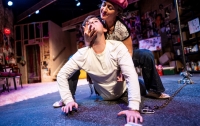
'I’m Going to Marry You Tobey Maguire,' Full of Laughs, Ends With a Fizzle
25 September 2026 in Theatre in ReviewHere’s a play that should be really good, based on its reputation alone. Written by Chicago comedy writer Samantha Hurley,…

ALL THINGS EQUAL: THE LIFE AND TRIALS OF RUTH BADER GINSBURG 2027 NATIONAL TOUR - tickets now on sale
25 September 2026 in Upcoming TheatreInnovation Arts & Entertainment, along with Broadway In Chicago, are thrilled to announce single tickets for ALL THINGS EQUAL: THE…

League of Chicago Theatres announces "It's Theatre Season" and celebrates the industry's impact
24 September 2026 in Theatre BuzzThe League of Chicago Theatres announces the return of It's Theatre Season, a campaign inviting Chicagoans and visitors to discover…

Steppenwolf Theatre Continues 51st Season with World Premiere of ADIRONDACK CHAIR CIRCLE October 22 — December 6
24 September 2026 in Upcoming TheatreSteppenwolf Theatre Company, the nation's premier ensemble theater company, is pleased to launch its 51st Season with the world premiere of…
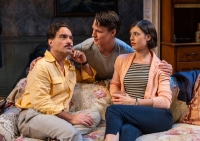
Lookingglass’ Kowalski Ignites a Battle of Wits Between Two Icons
24 September 2026 in Theatre in ReviewLookingglass Theatre’s production of Kowalski offers a gripping, fictionalized glimpse into the first meeting between two theater greats: Tennessee Williams…

Writers Theatre continues its 35th Anniversary Season with explosive, high-stakes boxing drama The Royale October 22 – November 29
23 September 2026 in Theatre in ReviewWriters Theatre, under the leadership of Executive Director Kathryn M. Lipuma and Alexandra C. and John D. Nichols Artistic Director Braden Abraham, continues…
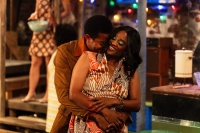
Detroit ’67: A Basement Becomes a City on the Brink
23 September 2026 in Theatre in ReviewDetroit was burning in the summer of 1967, inside one basement, life was still going on. That contrast is at…
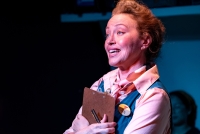
Now Boarding: Bonnie’s Last Flight, a Sky‑High Comedy with Real Heart
23 September 2026 in Theatre in ReviewRivendell Theatre Ensemble closes its milestone 30th season with Bonnie’s Last Flight, a sly, sky‑high comedy set during a flight…

Teatro Vista Productions announces season
22 September 2026 in Upcoming TheatreTeatro Vista Productions, the Midwest's only Latine-led Equity theatre company, led by Executive Director Lorena Diaz and Artistic Director Wendy…
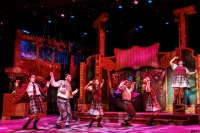
Step Right Up and Ride the Cyclone (The Musical) at Metropolis Arlington Heights
22 September 2026 in Theatre in ReviewIf anyone has ever told you to buckle up and enjoy the ride, they were talking about life—and even if…
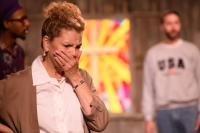
Funny ‘Prayer Circle’ Is Loaded With Laughs
22 September 2026 in Theatre in ReviewErik Gernand is resident playwright at Redtwist Theatre, and his Prayer Circle is absolutely laugh-out-loud funny. The strength of this…

Steppenwolf Presents GRACEFUL WARRIOR: AN EVENING WITH GARY SINISE - Tuesday, November 24, 2026
22 September 2026 in Upcoming TheatreSteppenwolf Theatre Company, the nation's premier ensemble theater company, is pleased to present Graceful Warrior: An Evening with Gary Sinise on Tuesday, November…

Acclaimed Mexodus musical makes Chicago premiere November 7-21 at Studebaker Theater
22 September 2026 in Upcoming TheatreStudebaker Theater, P3 Productions and Audible, in collaboration with Teatro Vista Productions, present the Chicago premiere of the groundbreaking, award-winning new hip-hop musical Mexodus, written and performed…

Arts in the Dark Parade moves to Columbus Drive due to dynamic growth, Oct. 24
21 September 2026 in Theatre BuzzLUMA8 and the City of Chicago return with the 12th Annual Arts in the Dark Halloween Parade, a family-friendly celebration…

American Blues Theater hosts its annual costumed fundraiser HALLOWEEN BOO BASH October 25th
21 September 2026 in Theatre BuzzAmerican Blues Theater, under the continued leadership of Executive Artistic Director Gwendolyn Whiteside, presents Halloween Boo Bash, its annual costumed fundraiser benefiting artists' wages…
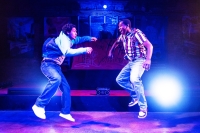
Definition's How We Got On: A Mixtape for the Stage
21 September 2026 in Theatre in ReviewWhat happens when three young people discover hip-hop and realize they might have something to say? Idris Goodwin’s How We…
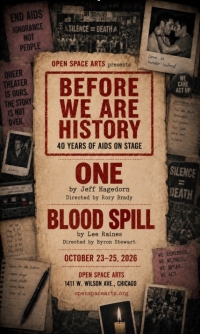
Open Space Arts Presents BEFORE WE ARE HISTORY October 23 – November 8
21 September 2026 in Upcoming TheatreOpen Space Arts presents BEFORE WE ARE HISTORY, a three-week theatrical exploration of LGBTQ+ theater created during and in response to…
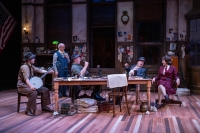
Northlight Delivers a Headline-Making, Hilarious Front Page
20 September 2026 in Theatre in ReviewNorthlight Theatre opened its new venue with Jeffrey Hatcher’s smart, rejuvenated adaptation of The Front Page. Commissioned by Artistic Director…
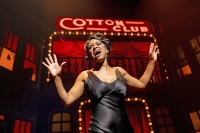
Chicago Shakes' Play On!: With a Syncopated Harlem Beat
20 September 2026 in Theatre in ReviewThere are some productions you watch, and then there are productions that make your heart swoon and your toe tap.…

Overshadowed's Flame of Fire Finds Humanity, Strength, and Forgiveness in a Tragic Chapter of Missionary History
19 September 2026 in Theatre in ReviewOvershadowed Productions’ Flame of Fire revisits one of the most polarizing true stories in mid‑century missionary history, and the result…
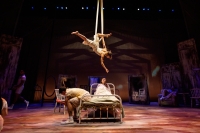
The Attic at Goodman Theatre Redefines Memoir Through Breathtaking Physical Storytelling
19 September 2026 in Theatre in ReviewAt intermission, I sent Ken, Buzz Center Stage’s managing editor, a text: “So thankful I made it!! It’s intermission, and…
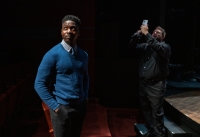
Class is back in session with Victory Gardens’ World Premiere of The Humanities
19 September 2026 in Theatre in ReviewCoincidentally (or not), Victory Gardens’ new play about a controversial campus speaker opens just days after the one-year anniversary of…



Latest Articles
-
 Operation Mincemeat: A Smart, Scrappy Musical That Shines When Its Cast Takes the Wheel
Written by Maddie BurroughsIn the 2019 film Yesterday, a struggling musician wakes up in a world where The Beatles never existed. A similar theatrical case study could be done with every musical that might not exist without Hamilton; Operation Mincemeat should be first…
Operation Mincemeat: A Smart, Scrappy Musical That Shines When Its Cast Takes the Wheel
Written by Maddie BurroughsIn the 2019 film Yesterday, a struggling musician wakes up in a world where The Beatles never existed. A similar theatrical case study could be done with every musical that might not exist without Hamilton; Operation Mincemeat should be first… -
 MAMMA MIA! and HADESTOWN Return to Chicago in Spring 2027
Written by Buzz Center StageBroadway In Chicago is excited to announce two fan-favorite shows are returning to our stages this year: MAMMA MIA! and HADESTOWN. Current subscribers can add these to their season package when renewing by clicking here or calling (312) 977-1717. Group…
MAMMA MIA! and HADESTOWN Return to Chicago in Spring 2027
Written by Buzz Center StageBroadway In Chicago is excited to announce two fan-favorite shows are returning to our stages this year: MAMMA MIA! and HADESTOWN. Current subscribers can add these to their season package when renewing by clicking here or calling (312) 977-1717. Group… -
SANCTUARY STORIES - A JOURNALISM THEATER PROJECT October 9-18 at the Athenaeum Center for Thought and Culture
Written by Buzz Center StageThrough music, documentary video, sound, photos and live actors, “SANCTUARY STORIES: A JOURNALISM THEATER PROJECT” captures in words and images the lives and communities deeply connected with — and affected by — immigration in Chicago. This “living documentary” is a…
-
Red Theater presents the world premiere of CHURCH HURT October 24 - November 21, 2026
Written by Buzz Center StageRed Theater is thrilled to announce the cast and production team of the world premiere of Church Hurt by Brynne Frauenhoffer and directed by Jessica Love, running October 24 - November 21, 2026 at The Edge Off Broadway in Chicago’s…


Does your theatre company want to connect with Buzz Center Stage or would you like to reach out and say "hello"? Message us through facebook or shoot us an email at This email address is being protected from spambots. You need JavaScript enabled to view it..
*This disclaimer informs readers that the views, thoughts, and opinions expressed in the text belong solely to the author, and not necessarily to Buzz Center Stage. Buzz Center Stage is a non-profit, volunteer-based platform that enables, and encourages, staff members to post their own honest thoughts on a particular production.