
Displaying items by tag: Oscar Wilde
David Salsbery Fry returns to Chicago Opera Theater for fourth production with company in Chicago Premiere The Importance of Being Earnest - December 2-6
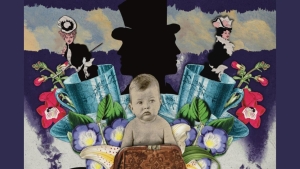
David Salsbery Fry sings the role of Rev. Canon Chasuble in the Chicago Premiere of Chicago Opera Theater’s (COT) production of Castelnuovo-Tedesco’s humorous and final stage work – a “sparkling operatic adaptation of Oscar Wilde’s beloved play and a joyful tribute to the history of classical music itself.” Conducted by Kamna Gupta and directed by Brenna Corner, the acclaimed bass joins a cast featuring sopranos Vanessa Becerra and Erica Schuler, mezzo-sopranos Emily Treigle and Leah Dexter, and tenors Martin Luther Clark and Omar Najmi.
His fourth production with COT, Fry has previously appeared in the company’s productions of Shostakovich’s The Nose (2023) singing multiple roles (4th Janitor, 3rd Policeman, 3rd Student & 3rd Acquaintance); Chen/Simpatico’s The Life and Death(s) of Alan Turing (2023, as Don Bayley, Bobby & Prosecutor,); Adamo’s Becoming Santa Claus (2021, as Donkey & Messenger); and in the 2019 Orchestral Workshop presentation of The Life and Death(s) of Alan Turing.
Filled with romantic chaos and elaborate deceptions, Chicago Opera Theater’s December 2026 production of Castelnuovo-Tedesco’s The Importance of Being Earnest is the Chicago premiere of this rarely performed gem. Described by COT as “an opera where impeccable manners conceal outrageous secrets, romance blossoms in the most unlikely circumstances, and the greatest revelation of all may be the true importance of being 'Earnest'", further details of this scintillating production can be found on COT’s website here.
Chicago Opera Theater
Mario Castelnuovo-Tedesco: The Importance of Being Earnest (Chicago Premiere)
Libretto by the composer after Oscar Wilde
The Studebaker Theater
Wednesday, December 2 at 7:30 PM
Saturday, December 5 at 3:00 PM
Sunday, December 6 at 3:00 PM
3 hours, including intermission.
Tickets: click here.
About David Salsbery Fry
Singer David Salsbery Fry continues to captivate audiences with each role. Acclaimed for his expressive, powerful bass voice, wide range and nuanced versatility, along with an authentic and engaging stage presence, Fry enjoys a diverse career as singer, actor, narrator, and recording artist. Having performed throughout the United States, in Europe, Canada, Thailand, and Israel, Fry continues to expand his relationship with orchestras and opera companies through a broad range of repertoire, from Verdi, Mozart, Rossini, and Britten, to Argento, Chen, Foss, Fussell, Honegger, Sondheim, and more.
His voice has been praised as “Incredible! …Truly remarkable and astounding…”, “darkly sonorous,” and possessing “almost impossibly deep tones.” In addition to performing traditional operas and arias, Fry has premiered works by numerous composers, including Robert Aldridge, Shawn Brogan Allison, Lembit Beecher, Justine F. Chen, Frank Corcoran, Chaya Czernowin, John David Earnest, Ruby Fulton, Juliana Hall, Jenny Olivia Johnson, Louis Karchin, Lowell Liebermann, Adam Maor, Eric Nathan, Osnat Netzer, Steve Potter, Arnold Rosner, Joseph Summer, Kristian Twombly, Nicholas Vines and Scott Wheeler. He has also collaborated with Mark Adamo, James Granville Eakin III, Oliver Knussen, Ari Benjamin Meyers, Nico Muhly, John Musto, Judith Shatin, and Charles Wuorinen.
Fry has created a name for himself in the recording arena as well, appearing on recordings for Albany, Navona, BMOP/sound, Naxos, New World and Odyssey Opera. Most recently recording with Boston Modern Orchestra Project for its 2025 release of Dominick Argento and Charles Nolte’s The Voyage of Edgar Allan Poe (BMOP/sound 1107), Fry can be heard on 11 CDs.
The unique characteristics of Fry’s cross-genre voice has attracted engagements in other fields. In 2023, he voiced the character of Charles Xavier (Professor X) in the audio series “X-Men: Age of Orchis” for Marvel Entertainment.
A passionate advocate for performers with disabilities, Fry has written articles for and been featured in such media outlets as HowlRound, Classical Singer, The Liberated Voice, and Opera and Disability. A supporter of inclusion and diversity in all art forms, particularly the classical music industry, he believes in the importance of accessibility in the arts for artists with disabilities. Additional information may be found on his website.
No Dogs’ Delivers an Unfamiliar Earnest
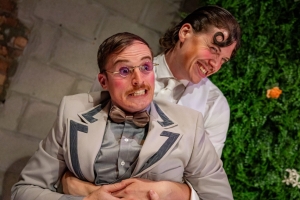
Oscar Wilde’s The Importance of Being Earnest is one of the greatest farces ever written. His wordplay caricatured high society, and clever pay-offs are hilarious when executed properly. The play was first performed on February 14, 1895 (Valentine's Day). The premiere took place at the historic St James's Theatre in London. Wilde famously subtitled the work “A Trivial Comedy for Serious People,” a reminder that its brilliance lies in treating absurdity with absolute sincerity. Unfortunately, No Dogs in the Kitchen Theatre Company’s recent production, directed by Genevieve Corkery, misses the mark when bringing this beloved play to the stage.
For those unfamiliar, the classic comedy follows two high-society bachelors, Jack Worthing and Algernon Moncrieff, who invent secret personas to escape the boredom of everyday life. Trouble arises, however, when Jack (going by the name of “Ernest”) proposes to Gwendolen, who is intent on only marrying a man with that specific name. Matters are complicated further when the carefree, mischievous Algernon also dons the moniker “Ernest” to woo Jack’s ward, Cecily, who shares the exact same romantic obsession with the name. To find happiness, the lovers must quickly untangle a web of ridiculous misunderstandings and mistaken identities. The true brilliance of Wilde’s script lies in its wordplay and sharp societal satire, taking the audience on a wild, hysterical ride where the utterly absurd is treated with the utmost importance.
Founded in 2023, No Dogs in the Kitchen is still a young company, and a certain learning curve is both natural and expected as they continue shaping their artistic identity. Their past work has already shown a clear interest in bold, unconventional staging, often embracing heightened physicality and playful absurdism. That adventurous spirit is a defining part of their aesthetic, and it’s evident the ensemble values experimentation and a willingness to push familiar texts in unexpected directions. While this production didn’t always find harmony between those impulses and Wilde’s finely tuned verbal wit, the company’s enthusiasm, imaginative framework, growing technical confidence, and emerging vision suggest they have the tools to grow into a distinctive and compelling presence within Chicago’s storefront theatre scene.
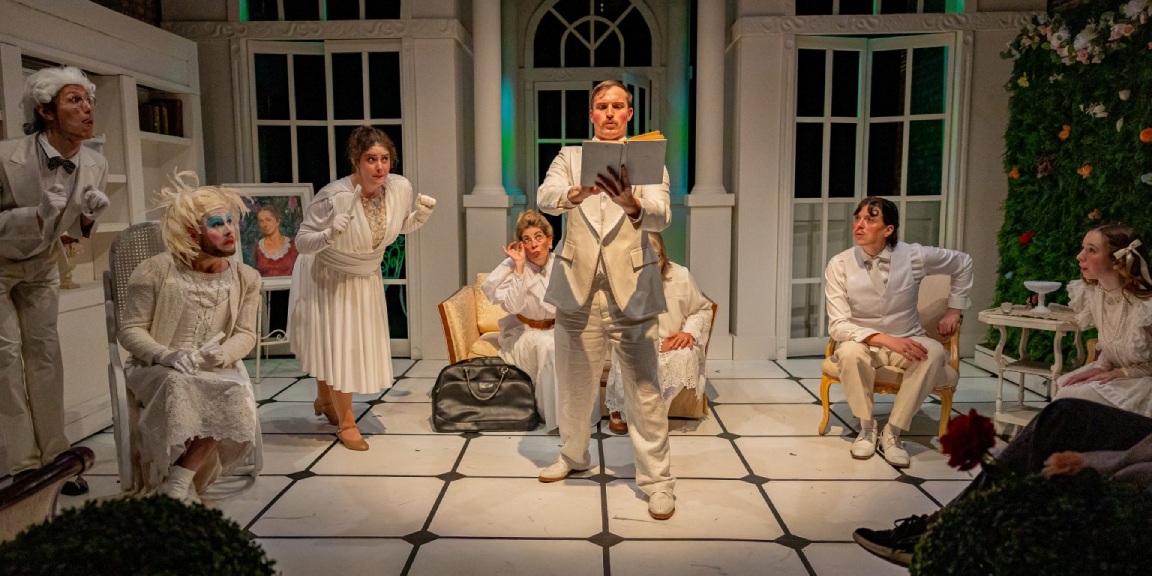
The cast of No Dogs in the Kitchen’s “The Importance of Being Earnest” at Facility Theatre.Photo: Alex Albrecht
That said, where this production struggles is in its apparent distrust of the script, adding jumbled and superfluous elements that only serve to undercut the humor it tries so hard to generate. It is as if the creative team didn't believe the script was funny enough on its own, choosing instead to pile on unnecessary subtext that needlessly deviated from - and was unsupported by - Wilde’s text.
This staging regularly undermines its own comedic timing with added, cartoonish sound effects that reduce wit to silly gags. From boinging springs to breaking plates, it felt as if someone was trying to use every button on a soundboard. Furthermore, a heavy hand of physical humor frequently distracts from the brilliant dialogue. During several monologues, cast members distracted the audience with routines like fighting on a sofa. Another oddity occurred in the final act when multiple cast members broke the fourth wall to deliver lines - a trick they hadn't used up until that point. It’s unclear why there was such distrust in the source material, and why a surplus of additions was believed to be the solution.
The performances also suffered from this same directive, often relying on over-the-top delivery. Mitch Karmis, who played two different butlers, mugged for the audience and utilized an almost cartoon-like physicality. David Lovejoy portrayed Lady Bracknell as a Mommie Dearest caricature instead of the formidable, sophisticated society matriarch who delivers scathing lines with dry, icy wit. The performance moved between widely contrasting vocal registers, creating an uneven tone that often felt out of step with Lady Bracknell’s traditionally controlled presence. It was also unclear why, in the final act, Lady Bracknell suddenly transformed into a flirtatious aggressor who growled at Jack and threw herself at the butler. Another odd decision was to have Dr. Chasuble played by Sara Corkery in a rubber race mask.
Amidst these choices, there was a bright spot in Garret Weigel’s Jack. For the most part, Weigel found the right balance between inventive character choices and a respect for the script. Jack could easily be played as a boring straight-man when up against the whimsical Algernon, but Weigel added a distinct flair to his interpretation without straying too far from the original play.
It is genuinely unfortunate that the production chose to deviate so drastically from the text. When done faithfully, The Importance of Being Earnest is a true theatrical gem. While there were moments that elicited genuine laughter, they occurred when the text was allowed to speak for itself, rather than being buried under extraneous gags.
While this hyper-stylized, over-the-top version might appeal to theatergoers seeking a radical, alternative spin on a classic, those looking for a faithful, witty adaptation of Wilde’s masterpiece will likely find this production is not the one.
The Importance of Being Earnest runs through July 26th at Facility Theatre. For more information and/or tickets, visit https://nodogsinthekitchen.org/.
Production of THE IMPORTANCE OF BEING EARNEST Does Not Fully Recognize Its Importance at Oak Park Festival
It is possible that Oak Park Festival Theatre’s production of Oscar Wilde’s 1895 “trivial comedy for serious people,” The Importance of Being Earnest, was suffering from some opening night jitters and that the actors will settle in and trust the verbal comedy in the script, but on this beautiful evening under the stars, there was too much mugging and nudging going on. Nevertheless, Wilde’s play, about two young men, Algernon (August Forman) and Jack (Chad Bay), who have both invented alibis - Algernon an invalid friend named Bunbury in the country and Jack a degenerate younger brother in town--to allow them to indulge their socially questionable whims, leading to the difficulty of having to explain why neither is Ernest, is still funny. And, despite the excesses on display, this staging still holds many delights for fans of Wilde, verbal comedy, and, particularly in the second act, some smartly choreographed slapstick. What is missing from much of the evening is earnestness. Many of the actors seemed to be in search of motivation and the stakes that propel them through this admittedly effervescent frolic.
Working with a talented cast of regional stage actors, director Kathryn Walsh has not created a secure world for her creative team to inhabit, resulting in an often funny but not dynamic production, with shrill delivery and broad physical comedy undermining human-scale relationships. The tone and gestures of the various characters range wildly, as do the design elements. The whimsical, vaguely Victorian costumes, while fun, support the cartoonish elements of the production, while not always clearly defining the characters. The lighting design by Devin Cameron is appropriately warm and effectively saturated but also deploys unnecessary flourishes to support the comedic business. The scenic design by Evan Frank likewise captures the locations of the play and allows the actors to find many levels - literally - as they shift allegiances and stratagems. Justin Cavazos’s sound design and compositions lend unobtrusive support, except for one hilariously developed cue that draws attention to itself in a good way. Overall, Walsh’s production would be better served by trusting the script and the audience, especially in the first act, when we are getting to know the characters and their desires. That said, both Walsh’s direction and her cast fully commit to the amorous and combative collisions at the beginning of the second act, which showcases the physical and verbal comedic gifts of all to uproarious effect.
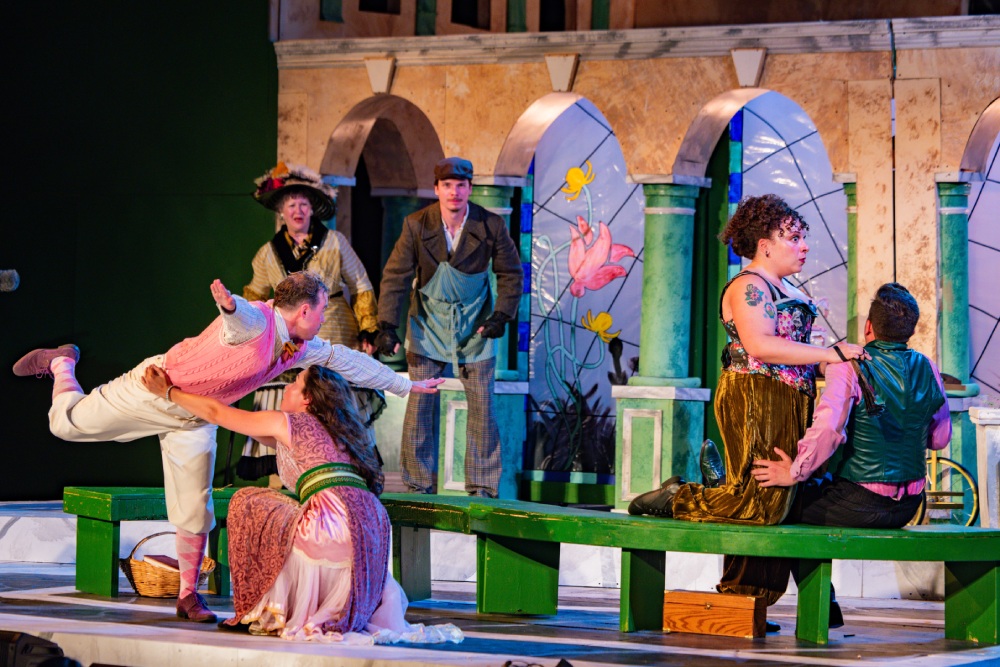
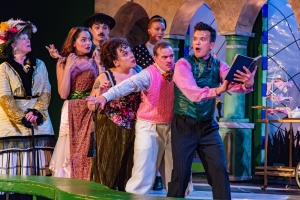
As part of the Oak Park Festival Theatre's 51st season (left to right) August Foreman, Barbara Zahora, Aurora Pennepacker, Drew Bos, Sonia Goldberg and Chad Bay in The Importance of Being Earnest at Austin Gardens.
One of the things that makes The Importance of Being Earnest work is the moral certitude that the characters bring to their pronouncements, no matter how absurd they are or whether their actions correspond to their words. This certitude also grounds the characters in their truths and forms the foundation of their interactions, but too often the actors are checking in with the audience to see if they got the joke (especially when many of Wilde’s observations still resonate) or negotiating with the lines. By the middle of the second act, the characters begin to define themselves, but much opportunity for connection is lost in the first. August Forman as Algernon flings himself into the role with wild abandon and invites the audience along for the ride. An adept comedian, Forman’s strategy often pays off but undermines Algernon’s insecurity as he balances his needs with society’s demands. All that aside, his Algernon’s compulsion for muffins is not to be missed. As his friend Ernest, who is actually Jack, Chad Bay does a good job of playing the less self-aware of the friends and playing up the character’s completely unjustified horror at Algernon’s embrace of Bunburyism. As Jack’s romantic interest, and Algernon’s cousin, Gwendolen, Sonia Goldberg at times overplays her character’s pretensions, some of which Gwendolen is still struggling to master, making Goldberg’s characterization overwhelmingly self-possessed at times. Conversely, Barbara Zahora lacks the imperiousness of many Lady Bracknells, giving the character an interesting warmth, but making her power solely transactional, which could be an interesting choice if it were played more fully. Aurora Pennepacker as Cecily strikes the most effective balance between the verbal and physical comedy, making the most of the opportunities to show Cecily’s willingness to exploit others’ assumptions about her character and her real understanding of her powerlessness without this ability. In Jodi Gage’s performance, Ms. Prism is a refreshingly insightful tutor to Cecily, while doggedly hanging onto youthful romanticism. Gabriel Armstrong is a very youthful Reverand Chasuble, celebrating his sudden relevance in parish life. Drew Bos may be the youngest actor to play the dual roles of Lane and Merriman in a professional production and wisely focuses on the class commentary afforded by the butlers of their respective households. His droll Lane gives Algernon food for thought in Act I, while his Merriman, already suffering from the physical strain of servitude despite his youth, effectively times his long-suffering pauses at each new demand (though Bos may need a visit to a chiropractor after the run). The experienced cast expertly and clearly delivers Wilde’s witticisms, which are always worth revisiting and occasionally resonate with the current social dynamics.
As the run continues, the production will most likely settle in and allow the script to propel the pacing and action more fully, especially in the more expository first act. There is much to appreciate in Oak Park Festival Theatre’s The Importance of Being Earnest, including a smart cast who find both the verbal and physical humor inherent to the play. Director Kathryn Walsh and her cast also explore fresh takes on the characters, some more successful than others, but always welcome. For those unfamiliar with Wilde’s play, this production is a solid introduction.
The Importance of Being Earnest runs in repertory with Hamlet, through August 14, outdoors in Austin Gardens in Oak Park, Illinois. Visit Season 51 | Oak Park Festival Theatre or call (708) 300-9396 for tickets and more information. Note: a number of the actors perform in both Earnest and Hamlet, and Oak Park Festival Theatre is offering discounted tickets for audiences who want to see both.
Pose and Prose: DORIAN now playing at Open Space Arts

Chicago is well-known for its hidden gems: speakeasies hidden behind working laundromats, restaurants located down darkened alleyways, and even theatres located in basements and converted houses. One such innocuous playhouse resides in a small, transitioned home studio, just west of the Uptown neighbourhood. Like any hidden gem in Chicago, looks can be deceiving, and the hyper-intimate 25-seat theatre that is Open Space Arts is playing anything but small as they put on the Chicago Premiere of DORIAN.

DORIAN is a thrilling, queer-forward remix of Oscar Wilde’s timeless tale, brought to life in this bold and visually stunning stage adaptation by Phoebe Eclair-Powell and Owen Horsley. In a world obsessed with beauty and power, what happens when someone is given the chance to remain perfect—forever? This modern interpretation dives headfirst into vanity, desire, and the danger of refusing to age, illuminating the darkest corners of our obsession with self-image and fame. DORIAN fuses gothic horror, biting satire, and cabaret flair into an unforgettable night of theatre.
Similar to the space it was performed in, DORIAN, directed by Aaron Holland, is one of those surprise gems woven into the fabric of the city’s neighbourhoods. The play dramatises the story of Oscar Wilde’s novel THE PICTURE OF DORIAN GRAY in the present-day club scene, where Dorian, the main protagonist, Basil, an artist who idolises Dorian, and Henry, the aristocratic antagonist, gallivant around late 1800s London in search of art, beauty, and just a smidge of hedonism. The minimalist-maximalism of the Open Arts Space is expertly utilised by the play’s performers, Luke Gerdes as Dorian, Bosie, and others, Anthony Kayer as Henry Wotton, Oscar Wilde and others and Brian Kulaga as Basil, James, and other characters. The three performers bring the hedonism and exuberance of Wilde’s Victorian London to the modern stage with wickedly witty dialogue and a reverence for the late author. DORIAN juxtaposes THE PICTURE OF DORIAN GRAY alongside the historical record of Wilde’s prosecution and conviction for the “gross indecency” of his relationship with the much younger Lord Alfred “Bosie” Douglas in 1895, at the height of his literary success. The two stories intertwine beautifully, with plenty of camp and sass like The Victorian Homosexual Quiz, blended with respect and reverence that Wilde himself would applaud. The performances of Gerdes’ Dorian and Kayers’ Wilde are shockingly tender, perfectly capturing the drive and desire for beauty and youth that both the author and fictional protagonist sought in Victorian London.

DORIAN is as relevant and relatable today as it was in Victorian times. The play features many of the same challenges, vices, and themes that modern-day audiences can relate to. Told with poetic prose and perfectly picturesque poses, this production is a rare gem in the Chicago theatre scene. Just as our protagonist, Dorian Gray, or the author himself, Oscar Wilde, would do, we must covet and hold on to our Chicago gems, appreciate and admire them. Youth, beauty, art, and productions are all fleeting in their world, and DORIAN is no different. DORIAN will play through December 14 at Open Space Arts (1411 W. Wilson, Chicago). Tickets are $30 and are on sale now at www.openspacearts.org.
See Oscar Wilde Convicted of Gross Indecency in Promethean Ensemble's Inventive Revival

Gross Indecency: The Three Trials of Oscar Wilde, running through March 23 at Strawdog Theatre, is an exciting rendering of the courtroom battles that led to a fatal fall from grace for 19th century literary genius Oscar Wilde.
It is hard to imagine now, with the growing empowerment of the LGBT-plus community, that Wilde’s career was completely destroyed when his attraction to men was discovered and proven. He was sentenced to two years of hard labor, and he lost all his assets and his income, dying nearly destitute three years later.
Promethean Ensemble’s wonderful presentation of Gross Indecency: The Three Trials of Oscar Wilde (actually a revival of a 2016 production by these talented players), brings us playwright Moisés Kaufman’s 1997 debut work, which won an Outer Critics Circle Award for outstanding Off-Broadway play in New York.
The play has aged well, and is exceptionally well crafted, and carefully researched, drawing from court records, and liberally sprinkled with Wilde’s memorably entertaining expressions. It has all the power of a court room drama, and all the flair of Wilde’s colorful life and friends.
The Promethean Ensemble is in its element, with a work that is loaded with excellent language, and demanding versatility – as 8 actors take on more than 25 characters, plus Wilde. He was a great speaker and writer, and Jamie Bragg’s performance in the lead conveys his brilliant intellect, and great humor. The cast is large, and the characters plentiful – and while the casting includes several women playing men’s roles, gender identities disappear for the audience as soon as the performances commence.
Because it is a revival of an earlier production, with largely the same cast, Promethean hit the ground running even before opening night. Directed by Brian Pastor, the costumes by Uriel Gomez have a creative steam punk that cross the boundaries from 19th century to contemporary leather and safety pin fetishism.
The first act describes Wilde’s creative world and his social circle, and at one point we leap to the present, as a scholar explains to a television interviewer that in his time, Wilde would not have conceived of himself as “gay,” but merely as a creative aesthete, who was unbound by contemporary mores and taboos, modeling himself after the ancient Greeks in his love for young men.
Wilde was “outed” by the Marquess of Queensbury, accusing him publicly of being homosexual in an effort to end Wilde’s relationship with his son, Lord Alfred Douglas. The Three Trials part follows from Wilde suing Queensbury for defamation, but losing when it was proven that he did have sex with men.
This evidence brought a new trial as Wilde was charged with "committing acts of gross indecency with other male persons," a crime against a recently adopted law. We see enacted the excellent defense mounted by Wilde’s lawyer. But the trial ended in a hung jury, and Wilde was convicted in the third trial, and went to prison.
Wilde’s reputation was reclaimed over the decades, largely by the power of his writing. He is perhaps the second most prized author in English letters for such perfectly realized works las his novel, A Portrait of Dorian Gray, or his plays that remain popular to this day, such as Lady Windermere’s Fan, The Importance of Being Ernest, or The Ideal Husband.
Watching this show, I whispered to myself, “Brexit!” For the play brought to mind a rigidity seen in British Government, which under a Victorian sodomy law, felt duty-bound to continue its unfortunate legal pursuit of him – despite several junctures at which it would have been possible to do so gracefully.
Bound by expectations in a rigid social structure, the Crown’s legal apparatus went over a cliff with Wilde as they destroyed one of the leading lights of British culture, on behalf of the nobility class. (Likewise they are headed over a cliff by slavishly following the Brexit plebiscite – in my humble opinion.)
There is great tragedy there, both in Wilde's original decision to sue for slander, and in his ruin. At the time, Wilde had two immensely popular plays on London’s West End. These closed, cutting off his revenue, and allowing creditors to seize his assets, amid a scandal that, as we learn in Gross Indecency, he largely initiated himself. The Promethean Ensemble show runs through March 23 at Strawdog Theatre, and it is highly recommended.

CELESTIA: A Heavenly Event
21 November 2026 in Theatre in ReviewIn 1871 our broad city burned in the Great Chicago Fire. In 1875 St. Vincent de Paul church rose in…
Paramount's A Christmas Carol Stands Among the Season's Finest Gifts
21 November 2026 in Theatre in ReviewFew holiday stories are as deeply woven into the fabric of the season as A Christmas Carol, yet Paramount Theatre's…
Jackalope’s ‘Engines and Instruments of Flight’ Gives Wings to the Legend of Tony Kushner
18 November 2026 in Theatre in ReviewEngines and Instruments of Flight: A Fantasia in Three Acts by local playwright Calamity West is everything you’ve ever wanted…
Trap Door Theatre Presents: The False Servant, Written by Pierre de Marivaux, Translated by Martin Crimp, Directed by Kay Martinovich. Opens January 14th, 2027
18 November 2026 in Upcoming TheatreTrap Door Theatre is thrilled to begin its mainstage work of their 33rd season with Martin Crimp's take on the…

Steppenwolf Theatre Presents JESSIE MUELLER WITH SETH RUDETSKY – December 18 & 19
18 November 2026 in Upcoming TheatreSteppenwolf Theatre Company and Mark Cortale welcome back Tony Award winner Jessie Mueller (Beautiful: The Carole King Musical, Waitress) for a…
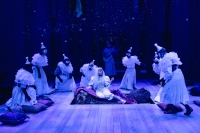
A Midsummer Night’s Dream: Chicago Shakespeare’s Circus of Love and Mischief
16 November 2026 in Theatre in ReviewChicago Shakespeare Theater celebrates its 40th Anniversary season with the second production of its ambitious repertory. A Midsummer Night’s Dream…

THEATER UNSPEAKABLE ANNOUNCES MIME OR NOTHING, FEBRUARY 5 - 28, 2027
16 November 2026 in Upcoming TheatreTheater Unspeakable is proud to announce the cast and creative team for the Midwest Premiere of Mime or Nothing, February…
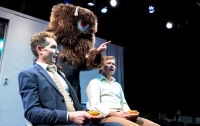
'Oh, Buddy' a Lighthearted Absurdist Look at Transgender Issues in the Workplace
16 November 2026 in Theatre in ReviewLeave it to Trap Door Theatre to find an absurdist play, their milieu, that’s a funny, fresh take on office…

"An Evening with Gary Sinise" Author of "Graceful Warrior" to Benefit WSFDV at the MAC November 23rd
16 November 2026 in Theatre BuzzWest Suburban Foundation for Disabled Veterans (WSFDV) presents "An Evening with Gary Sinise," Author of "Graceful Warrior" at the McAninch…
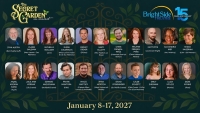
BrightSide Theatre announces cast and creative team for THE SECRET GARDEN IN CONCERT, January 8 -17, 2027
16 November 2026 in Upcoming TheatreBrightSide Theatre has announced the cast and creative team for its concert performance of THE SECRET GARDEN. The musical, based…
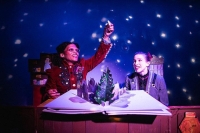
The Beatrix Potter Holiday Party at Chicago Children’s Theatre’s returns for the holidays, December 5-27
16 November 2026 in Upcoming TheatreChicago Children’s Theatre’s 21st Birthday Season continues with its annual holiday rite of passage for Chicago toddlers, The Beatrix Potter…

Filament Theatre announces 2026/27 Season With returning interactive family favorites: Fort-building fun with FORTS and performance installation for babies RAIN
16 November 2026 in Upcoming TheatreFilament Theatre (4041 N. Milwaukee Avenue in Portage Park), the Northwest Side’s premier theater for young audiences, is delighted to…
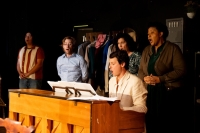
‘Our Town’ Finds Big Feelings in an Ordinary Small Town
15 November 2026 in Theatre in ReviewI’ll admit I had never seen, read, or even heard of Our Town before opening weekend. All I knew going…
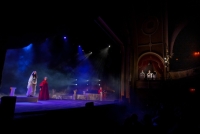
The Latest 'Dante 360' Leads to Paradise, Particularly for Dante-philes
14 November 2026 in Theatre in ReviewDante 360 Virgil Edition is the latest iteration of a performance work first launched in 2021. Directed by Peggy Garvey,…
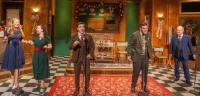
Citadel Theatre Captures the Magic of Old-Time Radio in It's a Wonderful Life: A Live Radio Play
14 November 2026 in Theatre in ReviewThere is something undeniably captivating about witnessing the magic of old-time radio brought to life on stage. In an era…
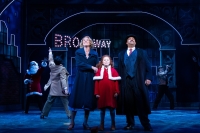
Genuine Heart Meets Classic Charm in Drury Lane’s Sunny Holiday Revival of Annie
13 November 2026 in Theatre in ReviewAlmost fifty years after she first sang her way into Broadway history, the sun is still shining bright in Oakbrook…
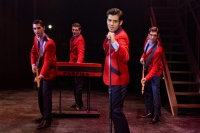
Beggin' For Something: Jersey Boys Falls Flat at CIBC
12 November 2026 in Theatre in ReviewWhen I was growing up in Southern California, the radio dial of our family car was always tuned to one…
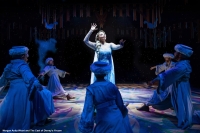
Warm Hearts in a Wintry Arendelle: Disney's Frozen the Musical Shines at Marriott Theatre
12 November 2026 in Theatre in ReviewDisney's Frozen the Musical arrives at Marriott Theatre's intimate in-the-round stage with a story most audience members already know, though…

Theater of the Mind: Not Your Typical Juggernaut
10 November 2026 in Theatre in ReviewAt this stage of his career, David Byrne’s name alone fills concert halls and theaters. The “singer, songwriter, musician, record…

Redtwist Theatre Announces its Cast and Creative Team for Robert Falls' Directed FLYING MONKEYS - Dec 6 - Jan 17
10 November 2026 in Upcoming TheatreAward-winning Redtwist Theatre announces the cast and creative team for this added special engagement to its 2026 - 2027 season,…
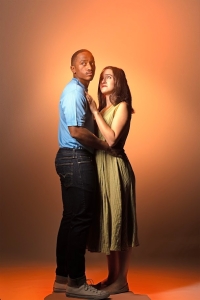
Romeo y Julieta - A bilingual adaptation of Shakespeare's classic is transported to 1960s Miami - January 29 – March 14, 2027
10 November 2026 in Upcoming TheatreChicago Shakespeare Theater (CST) announces the cast and creative team for Romeo y Julieta, Karen Zacarías and Henry Godinez's bilingual…

The Second City announces casting for the 5th annual Black Excellence Revue - February 5 – March 13, 2027
10 November 2026 in Upcoming TheatreFive years in, The Second City's Black Excellence Revue continues to bring bold comedy, fresh perspectives and an unmistakable sense…
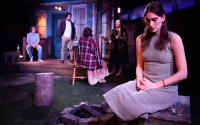
An Incredibly Good Snapshot of Our Social Discourse in 'Heroes of the Fourth Turning'
10 November 2026 in Theatre in ReviewSettling in for A Red Orchid Theatre’s Heroes of the Fourth Turning, I knew next to nothing, having no familiarity…
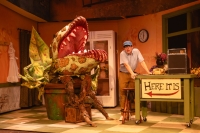
Porchlight’s Out of This World “Little Shop of Horrors” lands at Biograph Theater
10 November 2026 in Theatre in ReviewFew musicals are as fun to sing (and watch) as “Little Shop of Horrors”. It’s not a huge surprise that…
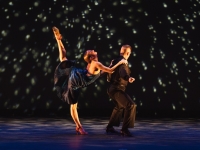
Giordano’s delectable Untamed Passion lights the fire of true love
10 November 2026 in Dance in ReviewFew dance companies can claim both the history and continued relevance of Giordano Dance Chicago. More than sixty years after…
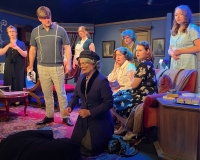
A Murder Is Announced Is Murderously Entertaining
09 November 2026 in Theatre in ReviewFew authors have mastered the art of the whodunit quite like Agatha Christie, whose intricate mysteries continue to captivate audiences…

Oil Lamp Theater Announces Single Tickets for its 2027 Season are Now On Sale
09 November 2026 in Upcoming TheatreOil Lamp Theater announces that single tickets are now available for its 2027 season in addition to four-show and three-show…
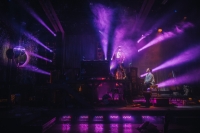
Mexodus Gives Voice to a Rarely Told Story of Freedom
08 November 2026 in Theatre in ReviewWhat is Mexodus? Part concert, part theatrical journey, and part history lesson, it explores a rarely told chapter of the…
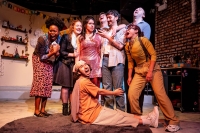
Sardonic Love In The Time of Gen Z: World Premiere of The Break Up at Rivendell Theatre
08 November 2026 in Theatre in ReviewThere are more important things in the world to worry about. At some point in our lives we’ve heard this…
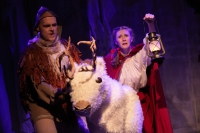
Finding Light in Winter: The Snow Queen at The Den Theatre
07 November 2026 in Theatre in ReviewFirst published by Hans Christian Andersen in 1844, The Snow Queen has captivated readers for nearly two centuries. Now, The…




Latest Articles
-
 CELESTIA: A Heavenly Event
Written by Mary Beth EukerIn 1871 our broad city burned in the Great Chicago Fire. In 1875 St. Vincent de Paul church rose in Lincoln Park. It was constructed of Indiana limestone and still stands proudly at the corner of Webster and Sheffield like…
-
 Paramount's A Christmas Carol Stands Among the Season's Finest Gifts
Written by Ken PayneFew holiday stories are as deeply woven into the fabric of the season as A Christmas Carol, yet Paramount Theatre's lavish production in Aurora finds fresh magic within Charles Dickens' familiar classic. Combining spectacular stagecraft, heartfelt performances, and an infectious…
-
 Jackalope’s ‘Engines and Instruments of Flight’ Gives Wings to the Legend of Tony Kushner
Written by John AccroccoEngines and Instruments of Flight: A Fantasia in Three Acts by local playwright Calamity West is everything you’ve ever wanted to know about Angels in America but have been too afraid to ask Tony Kushner. Jackalope Theatre gives this fascinating…
-
 Steppenwolf Theatre Presents JESSIE MUELLER WITH SETH RUDETSKY – December 18 & 19
Written by Buzz Center StageSteppenwolf Theatre Company and Mark Cortale welcome back Tony Award winner Jessie Mueller (Beautiful: The Carole King Musical, Waitress) for a special holiday engagement. Catch the Broadway star live in Chicago before she heads back to New York next spring in the…


Does your theatre company want to connect with Buzz Center Stage or would you like to reach out and say "hello"? Message us through facebook or shoot us an email at This email address is being protected from spambots. You need JavaScript enabled to view it..
*This disclaimer informs readers that the views, thoughts, and opinions expressed in the text belong solely to the author, and not necessarily to Buzz Center Stage. Buzz Center Stage is a non-profit, volunteer-based platform that enables, and encourages, staff members to post their own honest thoughts on a particular production.