
Displaying items by tag: Theatre Chicago
MadKap’s Streetcar Reveals a Woman’s Life Burning with Death and Desire

MadKap Production’s A Streetcar Named Desire at Skokie Theatre offers a raw, riveting interpretation of Tennessee Williams’ masterpiece, immersing the audience in a world where beauty and brutality constantly collide. The production captures the oppressive heat and emotional volatility of New Orleans as Blanche DuBois arrives at her sister Stella’s modest home, clinging desperately to fading illusions while the truth she’s outrun begins to close in. Her fragile elegance crashes against the brute force of Stanley Kowalski, and the tension between them builds with an inevitability that’s both mesmerizing and terrifying.
It’s a tension rooted not only in the room but in Blanche’s entire history. The story of a woman who stayed home to care for her parents as they died, then struggled to hold onto their home and land as medical expenses mounted and eventually forced her out into the world with “sixty‑one cents” in her purse, rings true today more than ever.
The intimacy of Skokie Theatre amplifies every emotional tremor, turning the cramped apartment setting into a pressure cooker where secrets, desires, and power struggles simmer just beneath the surface. Wonderfully directed by Wayne Mell, the staging leans into the play’s psychological depth, allowing the actors to explore the vulnerability, longing, and explosive conflict that define these characters. What emerges is a haunting, deeply felt production that honors Williams’ poetic language while making the story feel immediate and painfully human. A Streetcar Named Desire at Skokie Theatre is a resonant, beautifully acted experience that stays with you long after the final moment.
The cast delivers a richly textured, emotionally charged performance, anchored by Hailey Hance’s luminous and deeply vulnerable portrayal of Blanche DuBois. Hance navigates Blanche’s unraveling with remarkable nuance, shifting effortlessly between brittle charm, aching fragility, and flashes of desperate bravado. Elyna Mellen offers a beautifully steady counterpoint as Stella Kowalski, grounding the production with warmth and quiet strength as she’s pulled between the two people she loves most. Nathaniel Kohlmeier brings a fierce, narcissistic and unsettling magnetism to Stanley Kowalski, capturing both his brute force and the dangerous charisma that fuels every confrontation. Denis Vorobyev’s Mitch adds a welcome softness to the storm, his gentle sincerity and emotional honesty making his scenes with Blanche especially resonant.
The supporting ensemble brings texture and pulse to life in Elysian Fields, each performer adding a distinct spark to the world surrounding the Kowalskis. AJ Carchi and Wyatt DeLair charge their scenes with crisp, kinetic energy, while Neil Figuracion anchors his moments with a quiet, compelling weight. Kimmy Higginbotham and Dee Dee Logan offer nuanced, emotionally attuned work that enriches the production’s blend of tenderness, tension, and volatility. Together, the ensemble shapes a world that feels immediate and deeply human - a living, breathing testament to the enduring force of Williams’ drama.
Ultimately, MadKap’s A Streetcar Named Desire at Skokie Theatre stands as a vivid, emotionally resonant interpretation of Williams’ classic - one that feels both faithful to the text and urgently alive. The production’s intimate scale, paired with a cast willing to dig deep into the play’s bruised hearts and volatile tensions, creates an experience that lingers long after the final scene.
A Streetcar Named Desire runs through April 26th, and it’s a compelling, beautifully crafted revival well worth experiencing before the run comes to a close.
Highly Recommended.
For tickets and/or more show information, click here.
This review is proudly shared with our friends at www.TheatreInChicago.com.
Delayed by Pandemic, ‘The Ally’ Even More Timely in Rock Solid Chicago Premier

Since its original 2020 Off-Broadway debut was postponed until 2024 by the Covid-19 Pandemic, Itamar Moses’ “The Ally” has likely ripened in its effectiveness. Not because the play has changed, but because the world has.
A 2025 Pulitzer finalist, now in its Midwest premier at Theater Wit, it revolves around the ambivalence of Jewish college writing professor Asaf (Jordan Lane Shappell in a sterling performance) as his Black student Baron (DeVaughn Asante Loman) asks him to sign-on to a manifesto decrying the killing of his cousin by campus police.
Initially sympathetic to this cause, Asaf becomes reluctant to sign on, even though he agrees with its indictment of systemic injustice against people of color. His sticking points? A section ties in charges against Israel for operating an apartheid state vis a vis Gaza, condemning what it describes as policies of genocide against Palestinian people—even more timely topics today given current political discourse and a war in Iran.
Through a fast-paced dialog, the playwright puts on stage detailed explications of points of view that are known to trigger family battles during holiday dinners, or have become verboten altogether in the interests of peaceful coexistence. There seems nowhere safe to listen to opposing positions.
But not so on the stage in “The Ally.” Expertly directed by Jeremy Weschler, who has led a stellar cast to precision delivery with impeccable timing, this production is remarkable simply on the basis of how well rehearsed the performers seem to be in a complicated, granular script.
In publicizing the play, Weschler says, "Before October 7th, I — like a lot of American Jews on the left — held two ideas at once: that Israel was a haven and that the occupation was wrong. Itamar Moses saw, honestly before I did, that those two ideas were becoming impossible to hold simultaneously. But there are always two ways to answer the question ‘What do I believe?': what do I think, and what do I feel? Where we land on that spectrum is a constant negotiation between ourselves and the world around us. What ‘The Ally’ asks — what it really demands — is that we face that negotiation honestly. Can we be good people when our hearts and our heads aren't aligned?”

In the main setting, a library meeting room, impassioned, invested characters put forth their positions. Most have direct experience of that about which they speak. This is both enthralling and compelling, emotionally engaging at the peak moments, as we hear them passionately expounded their positions. Each felt equally compelling, even though they are often diametrically opposed.
Moses is a skillful playwright. He has wrapped the political discourse in a romantic drama, the relationship between Asaf and his wife Gwen (K Chinthana Sotakoun), a faculty member who is of Asian descent. The play opens with a skillful rendering of a couple tentatively probing and challenging each other in a very realistic way.

That scene changes from the living room to campus. Having heard from Baron, and as Asaf tussles with signing the manifesto, the playwright ups the stakes. Palestinian student Farid, (Arman Ghaeini) and his “ally” (a recurring theme) Jewish student Rachel (Mira Kessler), ask Asaf to support the appearance of a noted speaker who questions Israel’s actions in Gaza. Asaf agrees to be their student group sponsor authorizing the speaker.
When Reuven (Evan Ozer) a Jewish PhD student, discovers this, he barges in on Asaf to lay out all the reasons this speaker should not be allowed to address the student body. While Israel may seem brutal at home, he contends, one must think of it in context: Israel is surrounded by middle eastern states that oppose its very existence. Any presentation that might undermine Israel’s welfare should be banned.
Moses’s script is designed to give each of the characters a long moment in the spotlight. For relief he reverts to scenes between Asaf and Gwen. Each of the characters is articulate and brilliant. When Reuven makes his case for Israel, for example, he also recounts accurately the arguments of its opposition as he dispels them.
Most intriguing, and emotionally compelling, is Farid. In his first few appearances he is reticent, retreating, polite. But when the playwright offers him his featured monolog, Farid expresses the suffering of Palestinians, and then, moves to a vehement display of their anger. Arman Ghaeini runs away with this scene, engendering from me empathy and even catharsis. When have I heard this expressed? Never before.
Likewise for Baron, who is generally rather laconic. As the debates on stage progress over the connections between the Israel-Palestinian conflict and racial injustice in the U.S., Baron has his moment for a passionate peroration, and Loman's delivery is powerful.
Throughout, Asaf remains the buffeted everyman, conscious of the warring sympathies within himself, and unable to resolve them. The play has some weaknesses as a drama—an old flame now community activist Nikea (Sharyon Culberson) appears, igniting jealousy in Gwen. But as an expression of the struggle we experience societally, through the vehicle of the conflicted Asaf—that weakness doesn’t hamper the impact and value of “The Ally.”
It is worth noting “The Ally” was written before the Hamas strike against Israel in October 2023. That event killed 1,200 and saw 251 taken hostage. In its subsequent defense, Israel has retaliated and sought to destroy Hamas, killing 73,000 Palestinians and isolating Gaza. Also noteworthy: this Chicago production is only the second staging of the work. Perhaps its incendiary subject makes producers skittish.
But “The Ally” has a heightened immediacy today, and should be seen. Highly recommended, “The Ally” runs through May 2, 2026 at Theater Wit in Chicago.
Extended through May 17th!
This review is proudly shared with our friends at www.TheatreInChicago.com.
In El último sueño de Frida y Diego, Frida’s Beloved Genius Shines Through Her Pain

El último sueño de Frida y Diego is a love story that outlives the body, outlasts the grave, and keeps burning long after death has done its part.
Frida Kahlo famously said, ‘I’ve had two accidents that changed my life: one when I was hit by a trolley, and the other when I fell in love with Diego Rivera.”
And thus opens the first act of this beautiful dedication to the brilliant fiery artist, so far ahead of her time, the astonishing and disabled Frida Kahlo.
Composed by Gabriela Lena Frank with a libretto by Nilo Cruz, El último sueño de Frida y Diego arrives like a heat‑haze hallucination - lush, uncanny, and thrumming with a love that refuses to stay in the ground. It’s 1957, Día de los Muertos, and the opera drops us into a marigold‑drenched cemetery where the living coax their dead back for one brief visit. Diego Rivera, worn thin by grief and a stalled brush, isn’t there for tradition; he’s there to beg the universe for one more moment with Frida. His plea slices through the veil, catching the ear of an unassuming flower seller who promptly sheds her disguise to reveal Catrina, the regal, razor‑sharp Keeper of the Dead - and the only force powerful enough to answer him.
Deep in the shadowed sweep of Mictlán, Frida pushes back against the summons with the same fierce spark that once lit every brushstroke. Death has finally granted her the relief life never did - no shattered spine, no emotional whiplash, no Diego-shaped storm at her heels - and she has zero interest in reopening the wounds she fought so hard to leave behind.
“So much pain!” she cries again and again, swearing at the start of the production that she will never return to the world of the living - or to her love, Rivera - because of it.
But the underworld is anything but still - teeming with spirits who are playful, meddling, and aching for their own brief return. Among them is Leonardo, a young actor whose flair for drama and easy artistic kinship start to chip away at Frida’s resolve. As Catrina assembles the souls cleared for their 24‑hour crossing, Frida reluctantly lets herself be wrapped once more in the hues, textures, and contradictions of her earthly self. Bound by strict rules - no touching the living, no overstaying the day - she steps toward the world she swore off, setting the stage for a reunion as volatile as it is inevitable.
But she is urged by those on both sides of the afterlife to visit with Diego because spirits on both sides of the veil are ALSO missing her presence, her vibrant, dynamic and powerful personality and essence in a dark landscape of blacks and greys. Rivera and her family and friends on both sides of the veil would give anything to have her back with them to color and ignite their universe - even if only for a day.
And although Frida really does want to see Diego again, she is stopped by the memory of the torment she suffered emotionally in his arms and even more so the pain she suffered in her body from the horrific trolley accident that crippled her.

Ana Maria Martinez as Catrina, Alfredo Daza as Diego and Daniela Mack as Frida.
Many times in the show, Frida sings about her extreme unrelenting physical pain. Kahlo’s paintings - often filled with blood, surgical imagery, and unfiltered grief - also gave voice to the extreme physical agony she endured throughout her chronically ill life. Frida endured surgery after surgery, yet none brought the relief she so desperately needed.
In the end, she chooses to return for her art - to see the colors again, the radiant “colors” she sings of in her paintings and in her lovingly adorned home. Kahlo also descends back into her pain‑ridden earthly body to answer Rivera’s desperate daily pleas - his prayers to her and to God to return and save him from a life emptied of inspiration, a life made unbearably lonely without her.
Kahlo and Diego had a tumultuous relationship marked by marital affairs on both sides, though Diego’s affair with Frida’s own sister caused their divorce. But their love was eternal and they remarried, and we’re together until Frida’s death 10 years later.
This production makes clear that although Diego Rivera was the more famous artist in their lifetime - the towering figure whose reputation often eclipsed Frida Kahlo’s - he relied on her completely, both for artistic inspiration and for the very shape of his life. Rivera even said that his greatest wish was to have his ashes buried with hers.
Finally, a production that honors a female artist not only for her public achievements but for her full humanity - one that is unabashedly in love with Frida herself, not just her legacy.
One of the production’s loveliest moments is a tableau where Kahlo’s most famous paintings step off the canvas and onto the stage. I only found myself wishing for projections - of the actors in their vivid recreations or of the paintings themselves - because the costumes and scenic artistry were so intricate and stunning that not everyone in the house could fully take them in. By then, the audience was aching to see her art come alive.

The company of El último sueño de Frida y Diego.
El último sueño de Frida y Diego is currently running at Lyric Opera House, performed entirely in Spanish with the full vocal score intact. English captions are projected overhead throughout, making the story and its emotional undercurrents easy to follow even if you don’t speak the language.
Directed by Lorena Maza with Roberto Kalb conducting, Lyric’s production fields a powerhouse ensemble, led by mezzo‑soprano Daniela Mack, who returns to the house with a Frida that’s all fire, fragility, and fiercely guarded autonomy. Opposite her, baritone Alfredo Daza makes a striking Lyric debut as Diego - his voice carrying the weight of a man haunted by the art he can’t finish and the woman he can’t release. Countertenor Key’mon W. Murrah, in a radiant Lyric debut, infuses Leonardo with a buoyant theatrical spark that lifts the energy of every scene entered. Meanwhile, Ana María Martínez turns Catrina into a study in imperious grace - her soprano gliding through the score with the kind of effortless authority that makes the boundary between worlds feel like something she can open and close at will.
Musically, the evening’s standout moments come through sweeping duets and emotionally charged arias - Frida’s defiant refusals, Diego’s grief‑soaked pleas, and shimmering ensemble passages that blur the line between the living and the dead. Gabriela Lena Frank’s score leans into lush orchestral colors, letting voices ride waves of percussion, strings, and folkloric textures that feel both ancient and startlingly alive, while the live orchestra - under Roberto Kalb’s precise, fiery baton - does far more than accompany, animating the realm around the singers and giving Mictlán its pulse, the cemetery its glow, and the lovers’ reunion its aching gravity.

Visually, El último sueño de Frida y Diego is a sensory feast - an opera that doesn’t just tell a story but paints one stroke by stroke right in front of you. The stage erupts in the saturated hues of Mexican folklore: cascades of marigolds, candlelit altars, and sweeping bands of cobalt and crimson that echo Rivera’s murals and the raw intimacy of Frida’s self‑portraits. The opening cemetery glows like a living ofrenda, its petals and lanterns shimmering in a soft, uncanny haze that makes the border between worlds feel thin, permeable, almost eager to be crossed.
Once the action plunges into Mictlán, the production morphs into a surreal, shadow‑rich dreamscape - floating fabrics drifting like lost souls or the hem of a woman’s skirt lifted by the wind, skeletal silhouettes stalking the edges of the frame, and sculptural lighting carving the darkness into something at once playful and faintly menacing. Spirits flash in and out like animated brushstrokes, their movement and costuming turning the underworld into a kinetic mural of the afterlife. And when Frida finally steps back into her earthly colors, the entire stage snaps into focus as a living canvas - bold, mythic, and charged with the emotional current of two artists whose love refuses to stay still.
El último sueño de Frida y Diego is being performed at Lyric Opera House through April 4th. For tickets and/or more show information, click here.
Highly Recommended.
Upcoming Performances:
March
- Mar 21 • 7:30 p.m.
- Mar 24 • 7:00 p.m.
- Mar 26 • 7:00 p.m.
- Mar 29 • 2:00 p.m.
April
- Apr 1 • 2:00 p.m.
- Apr 4 • 2:00 p.m.
Running Time: Approx. 2h 15m (one intermission)
This review is proudly shared with our friends at www.TheatreInChicago.com.
A Farcical Feverdream that Works: Trapdoor Theatre's 'The Cuttlefish'

Trapdoor Theatre’s “The Cuttlefish” ought to be confounding, but somehow this 1920’s surrealist play from Poland is clear as a bell. Though ostensibly about the philosophical struggle between art and politics, the audience easily recognized echoes of the present-day overall fix in which society finds itself.
Before any dialog, even before house lights go down, “The Cuttlefish, or the Hyrcanian Worldview” (its full title) opens somewhat bewilderingly on a stage with four characters: a masked, gold-clad Statue of Alice D’Or (Keith Surney), whose postures beside a short classic stone column suggest a Greek sculpture. Further backstage is a high ranking church cleric in mitre and liturgical robes, gesturing spiritually—Pope Julius II (Emily Lotspeich), patron of Raphael and Michelangelo. Stage left, a figure in a suit slouches and periodically collapses against a wall, the artist Pavel Rockhoffer (Nicole Wiesner). And a woman wanders, hands outspread—the Mother (Venice Averyheart) of Rockhoffer, who settles into a seat and manages percussion.
What is going on? The audience puzzles through these characters, trying to make sense of the silent tableau, and the lights go down and dialog begins. Rockhoffer has become pessimistic about his creative works, which we learn have been condemned by a government council. “My art is a lie, a carefully planned hoax,” says Rockhoffer.
“Even prisoners serving a life sentence still want to live,” the Statue offers. Along the way Julius remarks, “A man without a worthy adversary is like God without Satan,” and leaving, offers “I wish you a short and unexpected death.” With very little naturalism or conventional exposition, these snippets reveal the conflict that is to be resolved by the end of “The Cuttlefish.”
But it is with the arrival of King Hyrcan IV (David Lovejoy) when the story comes alive. A villainous despot, he smooth-talks Rockhoffer, coaxing him to abandon his dedication to absolute artistic ideals, and come on over to pragmatic freedom of Hyrcania, the land he rules.
Lovejoy is an energetic force on stage, and brings the play to life. “I am a superman, or ‘an uber mensch’” King Hyrcan declares, convincingly. He offers to unchain the artist from historic patronage of entities like Julius, and to have full freedom.
“What do you believe in?” queries Rockhoffer.
“In myself,” King Hyrcan shoots back, and as inexorably as the manosphere today sucks in its lost, wandering adherents, Rockhoffer, after a bit of resistance, falls under his spell. He obeys when Hyrcan tells him to jettison his fiance Ella (Gus Thomas), as unfitting for the new Hyrcanian order. King Hyrcan works his wiles on a weakened Julius, who admits to doubt and crumbles too.
As the action unfolds and the plot thickens, it becomes clearer that the times prophesied by “The Cuttlefish,” which unfolded in the rise of fascist Germany, offer parallels to today —when cultural centers are being expropriated and renamed, arts funding cancelled, and freedom of expression curtailed.
The magic of Trap Door is its penchant for mining an obscure work of 1920s playwright Stanislaw Witkiewicz (translated by Daniel Gerould) to find a work that is regarded as a precursor to later absurdist and expressionist stage works in the 1930s. Under the direction of Nicole Wiesner, what might have been an inscrutable drama instead is intuitively understandable. As we laugh with relief at the line, “One can only hope” (the Mother’s interjection about the end of such terrible times), we may be reminded of Kurt Vonnegut’s advice: “The arts are not a way to make a living. They are a very human way of making life more bearable.”
“The Cuttlefish, or the Hyrcanian Worldview” runs through April 25 at Chicago’s Trap Door Theatre and comes recommended.
This review is proudly shared with our friends at www.TheatreInChicago.com.
Grelley Duvall Best Actress Delivers a Pop‑Culture Fever Dream at Chopin

The Oscars might be over, but this “Best Actress” is just getting started. Welcome to the weird world of the Grelley Duvall Show, or Alex Grelle. His unique approach to cabaret has amassed quite a fanbase over the years. Suffice it to say, there’s nothing else quite like it. In two acts, Grelle and his team blend his favorite female performances with highly choreographed musical numbers set to toe-tappin’ hits performed by a live band.
Directed by Kasey Foster, “Best Actress” tells the origin story of the Grelley Duvall Show and what inspired a young Alex Grelle and his creative partner Jesse Morgan Young. Their obsessive knowledge of pop culture as seen through the lens of queer millennials is unmatched. They throw anything from a given day on cable TV in the 1990s into the blender and it’s up to the audience to keep up. The irreverent humor, costumes, and slickly produced video segments add up to an evening of hilarious deep cuts and surprise cameos.
To be honest, not all experimental cabaret style theatre is good. Rest assured Best Actress is not that. Rather it’s a 2-hour musical extravaganza with solid gold choreography by Erin Kilmurray and Kasey Alfonso and a kick-ass band led by (and featuring the vocals of) Aunt Kelly. Alex Grelle is a certified triple threat: he can sing, he can dance and he can kick. The team he’s assembled for this production has made something really special for anyone really, but especially for the pop culture obsessed, vintage shopping community.
Joining Grelle onstage is a powerhouse ensemble - Kara Brody, Madigan Burke, Lolly Extract, Darling Shear, Patrick Stengle, and Mary Williamson - plus a handful of puppets that feel like characters in their own right. And make no mistake: Grelle isn’t the only one throwing kicks. This cast matches his energy beat for beat, putting on quite a show. Again, Killmurray and Alfonso’s choreography is killer.
Grelley Duvall Best Actress is one of those shows it’s almost best to not know much about going in. It’s also one of those shows that should just run open-ended for a while, because once you see it, you’ll be trying to explain to people for weeks what exactly it was.
Through April 12 at the Chopin Theatre. 1543 W Division St. 773-278-1500
This review is proudly shared with our friends at www.TheatreInChicago.com.
The Drowsy Chaperone Wakes Up the Room at Theo Ubique

“I just want to be entertained. Isn’t that the point?” asks the narrator of The Drowsy Chaperone. And if that indeed is the point, Theo Ubique’s rendition hit the bullseye.
This fun production follows a neurotic musical theatre fan (played by Steve McDonagh) who puts on his favorite record and talks about its fictional history. Thanks to Theo’s inventive seating – a front row made of sofas – the audience feels as if they’re actually in his living too, getting an intimate evening full of laughs as he and the rest of the cast break the fourth wall – even entering and exiting through closet.
The show-within-a-show follows a famous star, her fiancé, and the kooky cast of characters who try to help or hurt the impending nuptials for their own reasons. The result is a musical which never takes itself seriously, as it pokes fun at Broadway shows and troupes.
Everyone turns in a polished performance with each artist getting their moment to shine, whether it’s in a tap-dancing number (expertly accomplished by Trey Pluntnicki and Kevin Chlapecka), a silly vaudeville routine (Jenny Rudnick does enough spit takes to lose count), or a ballad about bunnies – yes, bunnies (sung by Kelsey MacDonald with all the heart and sincerity it needed).
As the “Man in the Chair,” McDonagh anchors the show in reality, but each performer holds the reigns of these larger-than-life characters with precision. Darian Goulding, embodies the Latin lover, Aldolpho, with inspired hilarity from his subtle gestures to that elevated accent. Jimmy Hogan and Chase Wheaton-Werle also stood out as gangsters posing as pastry chefs. Their playful banter and cohesion as a team elevated their numbers and helped sell the silly side plot. Colette Todd, who played the titular character, the Drowsy Chaperone herself, delivered a powerhouse tune with the perfect balance of comedy and chops.
From start to finish, it was clear that the actors were having fun, and their joy was certainly contagious. Directing this production is L. Walter Stearns, and his love of this show was clear in the care in which he handled the material, perhaps because directing The Drowsy Chaperone was a dream come true. In 2004, Stearns had the opportunity to attend an early reading of musical with Sutton Foster, who went on to star in the Broadway cast.
Written by Lisa Lambert and Greg Morrison (music and lyrics) with a book by Bob Martin and Don McKellar, The Drowsy Chaperone is not a deep musical, and it isn’t meant to be. Instead, it’s a reminder that comedy brings connection, and sometimes it’s okay to just want to be entertained.
The Drowsy Chaperone runs through April 19 at Theo Ubique Cabaret Theatre. For tickets and/or more information, click here.
This review is proudly shared with our friends at www.TheatreInChicago.com.
Reimagined Madama Butterfly at the Lyric a Masterpiece in its Own Right

Created in 1904, Giacomo Puccini’s Madama Butterfly has become one of the world’s greatest and most popular operas. New York’s Metropolitan Opera alone had performed it 902 times prior to the beginning of its 2023-24 season. Renowned for his gifts for melody, Puccini’s musical component is ravishingly beautiful. His manner of intermixing cultural references into his orchestration also makes it exquisitely complex. Enhanced with a gripping story about the power of trust and the fragility of love, Madama Butterfly qualifies as an irrefutable masterpiece. Throughout its existence though, the opera has also been an artistic triumph with issues.
An adaptation of a one-act play written in 1900, which itself was based on a short story by an American author, John Luther Long two years earlier, it’s been criticized as being a flawed fantasy. One created by white men about the essence of another culture. In this case, Japan. In Madama Butterfly, an American, Lt. B. F. Pinkerton, arrives in the island country and soon begins a quest for love. A love that he never plans to be lasting. Once he returns state side, he’ll re-enter the mainstream and marry traditionally.
Since its origin, issues of perception and portrayal have always haunted Puccini’s Madama Butterfly. He composed it in partnership with Giuseppe Giacosa and Luigi Illica who wrote the text or libretto. For most of the opera’s existence, the way Japanese culture and its people were projected robbed them of dimension and ultimately diminished their humanity. In both early productions of the opera and in virtually all that followed, Japanese men saw their virility erased while Japanese women watched their deference be reduced to an exaggerated docility. As intrinsically lovely Madama Butterfly is as a creative jewel, for the Japanese people and many others of color, it has also been deeply problematic.
For Matthew Ozawa, Director and Chief Artistic Officer of the Lyric Opera of Chicago, it was as well. As a Japanese-American director of operatic works, his relationship with Puccini’s masterpiece has been fraught. He knew intrinsically as a director he could never present it in a conventional way. If he were ever to take on the challenge of staging the piece, he would do it through more enlightened eyes. The current production of Madama Butterfly he directs at the Lyric, running through April 12th, shows how spectacular a 122-year-old classic can look and feel with a total makeover by a gifted artisan.
Ozawa’s Madama Butterfly, co-produced by the Cincinnati Opera, Pittsburg Opera, Detroit Opera and the Utah Opera, dismantles the old format and completely rebuilds it in a contemporary context. The overhaul was so comprehensive, keeping the original orchestration and libretto unaltered and intact was a condition for greenlighting his vision.

The Company of Madama Butterfly.
Like many men of his generation, Ozawa loved playing video games growing up. It wasn’t a leap for him to envision Madama Butterfly taking on the features of a machine generated video game offering a portal to an alternate reality. Pinkerton (tenor Evan LeRoy Johnson) would travel to Japan through his headset and begin a journey that would lead to the devastating consequences we all know will follow.
But first, like any talented leader, Ozawa needed to assemble a team to bring his concept to fruition. Based on opening night’s performance at the Lyric, a better dream team probably doesn’t exist. Recruiting all females as his key collaborators, who were either Japanese or Japanese-American, cultural accuracy and agency would no longer be a concern. Each of them a heavy hitter in her respective craft, the composite experience they created was so remarkable it could easily be considered revelatory. The superb impact of Kimie Nishikawa’s set designs and Yuki Nakase Link’s lighting talents made on the production’s visual potency and dynamism can’t be overstated.
A muted background would suddenly blaze in dramatic color and fill with subtly ornate splendor when Pinkerton donned the goggles that would transport him to Japan. There, Maiko Matsushima’s costume designs bowled you away with their texture, imagination, sophistication and beauty.
Even when we first finally meet Cio-Cio-San, Butterfly, played by Karah Son, we’re visited with the unexpected. She’s as small and delicate as butterflies are, but in her words and carriage you sense the steel in her spine. At 15, she may have become a geisha to support herself, but she’s clearly proud of the fact that she’s also “well-bred”. That inner dignity is an ever-present element of her character.
Son has played this crucial character in houses around the globe; in her native Korea, Warsaw, Berlin, Bologna, Los Angeles and San Francisco just to list a few. This production marks her Lyric debut. She knows this part. From the excellence of her soprano Saturday night, and the flawlessness of her acting abilities, she is this part.
Johnson, a wonderful tenor who’s also making his debut at the Lyric, makes a compelling Pinkerton. He doesn’t quite comprehend the import of his words when Sharpless (Zachary Nelson) tells him to “Be Careful, she trusts you”, until it’s too late. Finally realizing what that trust has cost releases his humanity. But it can’t stop the payment deception exacts.
In the final scene, where only pathos is expected, this presentation all but blinds you with the complex beauty of real life through the fiction of a story. Ozawa’s brilliant directing, Son’s gifts as a marvelous actress/vocalist and Puccini’s stunning score converge to cause the soul to quake.
Puccini’s Madama Butterfly now truly soars.
Madama Butterfly
Through April 12, 2026
Lyric Opera of Chicago
20 N. Wacker Drive
Chicago, IL 60606
For more information and tickets: https://www.lyricopera.org
Highly Recommended
This review is proudly shared with our friends at www.TheatreInChicago.com.
National Hellenic Museum's Trial of Odysseus: Hero or Criminal?

King Odysseus returns home to Ithaca after twenty years’ absence: ten years’ fighting the Trojan War (it takes time to build a big enough wooden horse), followed by a ten-year journey during which everything that could go wrong does go wrong: think rush-hour traffic on the Kennedy under construction. When he finally arrives, Odysseus finds yet another complication: in his absence a hundred men have undertaken to lay claim to his throne, actually taking up residence in Odysseus’ palace, scarfing down his harvests, seducing his servants, and harassing his wife.
Penelope has made every effort to discourage the putative suitors, her most recent gambit being a challenge to string Odysseus’ mighty bow, then use it to shoot an arrow through a line of a dozen axe handles. That’s pretty serious and, unsurprisingly, none of the opportunists manages. Everyone is amazed therefore when a stranger (Odysseus disguised as a beggar) nails it. The disappointed contenders aren’t happy about this, and are further aggrieved when the ‘beggar’ throws off his rags, identifies himself, and advises the intruders to hit the road.
Odysseus, legitimately vexed at the situation, answers their disgruntlement with violence and all hundred freeloaders are … well, the proper verb is in question, as it’s unclear whether Odysseus righteously executes or viciously murders them. This is the issue we explore in TRIAL OF ODYSSEUS: is Odysseus a champion, heroically defending his title, his home, and his family? Or is he a villain, goaded by jealous rage into a frenzy of unwonted slaughter?
TRIAL OF ODYSSEUS was … what to call it? to be honest it was not truly theater. TRIAL OF ODYSSEUS was presented as an actual trial, with Antonio M Romanucci and Daisy Ayllón of Romanucci & Blandin LLC prosecuting and Patrick M. Collins and Tinos Diamantatos of King & Spalding LLP arguing for the defense. A panel of four judges (Georgia M Alexakis, Sara L Ellis, Jeffrey G Chrones and Anthony C. Kyrikopoulos) and twelve jurors examined and cross-examined both the witness Phimeus (Leonardo Sfondouris) and Odysseus, played by Christos Vasilopoulos.
The final decision, however, was ours. Each audience member was provided with their choice of two tokens, blue for guilty and white for innocent. At the close of examination these tokens were collected and their count served as the verdict: Odysseus was found Not Guilty., I suspect that those voting Guilty did so from the viewpoint of twenty-first century law. I can’t believe anyone in the Bronze Age, roughly 1200 BCE, would not fully sympathize with Odysseus’ reaction, however grisly.
I’m totally ignorant of judicial matters, and someone better acquainted with legal procedure might have found problems with how the trial was portrayed, but I thought it was as credible as it was entertaining. For one, it certainly reflected the delay encountered in our modern magisterial system, as the event under arbitration occurred more than 3,000 years ago. A real trial for first-degree murder would probably incorporate less humor, but the Court had no difficulty drawing parallels across the three-millennium time difference; many of these comments were quite amusing and were certainly appreciated by the audience.
TRIAL OF ODYSSEUS was instructive, engaging, and just plain fun! The bad news is that it was a single production; there will be no further performances. But keep your eye on the National Hellenic Museum, as they offer regular events and exhibitions.
This review is proudly shared with our friends at www.TheatreInChicago.com.
Reservation Mayhem, One Man, Forty Voices: Mike Newquist Ignites 'Fully Committed' at The Den

Get ready - those phones are about to explode, and Sam is already spinning like a top trying to catch every single one. It’s a full‑blown ring‑storm, and he’s diving into it with the hectic energy of someone who knows the chaos is coming and still can’t outrun it.
A brisk, razor‑funny powder keg of a play, Fully Committed tracks a single frantic day in the life of Sam, the lone reservationist at one of Manhattan’s most elite - and most impossible - restaurant. Becky Mode’s script is a full‑tilt high‑wire act, and Mike Newquist tears across nearly forty characters with the kind of breakneck precision that makes your head spin. As Sam, he’s already a live wire - but then he’s also snapping into entitled celebrities, neurotic assistants, tyrannical chefs, and every flavor of fine‑dining madness that dares to ring his desk. It’s dazzling, anxious, and wildly fun to watch him juggle it all without ever dropping the thread. The comedy snaps because each character is so sharply etched, and Newquist seamlessly shifts among them with the kind of finesse that turns mayhem into art.
At its heart, the nearly 90-minute play gleefully skewers the rituals of status and the agitated, almost feral hunger for exclusivity, exposing just how ridiculous people become when a reservation turns into a badge of power. Sam becomes the unseen fulcrum of that world, and his day unravels from merely hectic to outright surreal as he absorbs tantrums, negotiates impossible demands, and fights to keep a grip on his own sense of worth. Watching Newquist as Sam behind that reservation desk in a constant tinderbox had me instantly aware that I wouldn’t survive two hours in his shoes. His frantic charm and barely contained panic sells the chaos and sparks a whole new respect for the people who actually thrive in that kind of daily combustion.
Fully Committed lands as hard as it does because it’s rooted in real industry absurdity. Mode shaped these characters straight out of real restaurant‑world encounters, giving the show a mix of satirical whirlwind and a bite of truth that feels both sharply recognizable and wickedly real.
Throughout the play, I loved how Sam’s dad kept slipping into the heavy commotion with that gentle, grounding voice - just long enough to let the whole room exhale. Each time he called, Sam’s entire demeanor flipped in an instant; you could watch him go from frazzled to peaceful like someone had hit a reset switch. Those brief check-ins made it clear how a few steady words from a gentle, supportive father (or friend/family member) can cut straight through the noise, offering a tiny pocket of calm even when everything else is burning down around him.
Mike Newquist is pure kinetic joy onstage, delivering a commanding turn in Fully Committed. The Chicago‑based actor and improviser thrives in the city’s storefront trenches, bouncing between sharp‑edged comedy, character chameleon work, and the kind of ensemble disorder where anything can - and usually does - happen. He’s popped up with PrideArts, AstonRep, and The Comrades, tackling everything from contemporary drama to high-velocity comic mayhem. In Fully Committed, it’s his quick‑switch agility that makes him a blast to watch.
Directed by Derek Bertelsen, this Chicago staging arrives with a jolt of fresh energy and real immediacy. Newquist’s performance becomes the engine that drives the whole night, while Bertelsen keeps the momentum razor‑sharp, the pacing tight, and every character shift snapping cleanly into place.
The Den Theatre hosts the run March 13–28, 2026, with performances on Friday and Saturday nights at 7:30 p.m. Tickets for Fully Committed at The Den Theatre are just $26. For tickets and/or any more show information, click here.
Recommended.
This review is proudly shared with our friends at www.TheatreInChicago.com.
David Byrne's 'Theater of the Mind' - Goodman Theatre - Through November 1st

Goodman Theatre announced today that its highly-anticipated presentation of Theater of the Mind, by Academy, Grammy and Tony Award-winning artist David Byrne (Broadway’s Here Lies Love with Fatboy Slim, American Utopia and the renowned group Talking Heads) with writer Mala Gaonkar, will make its Chicago debut March 11 – May 31, 2026 (opening night is March 25, 2026) at the Reid Murdoch Building, 333 N. LaSalle. Tickets ($66-$96, subject to change) will be available for sale starting Friday, November 7 at 10 am, at the Goodman Theatre Box Office (170 N. Dearborn), by calling 312.443.3800 or by purchasing online at TheaterOfTheMindChicago.com. The Goodman is grateful for the support of the Alfred P. Sloan Foundation, Illinois Office of Tourism, Northern Trust, and Friedman Properties.
“The Goodman is thrilled to introduce Theater of the Mind to Chicago audiences and to showcase the singular creativity of David Byrne and Mala Gaonkar,” said Goodman Theatre Walter Artistic Director Susan V. Booth. “Our Centennial Season welcomes audiences to experience all of the ‘feels’ and Theater of the Mind engages all of the senses, making it a perfect addition to our landmark season. We hope for this production to be an ongoing attraction that sparks joy, conversation and community.”
A one-of-a-kind theatrical experience audiences will see, feel, taste, and hear, this intimate and immersive journey of how we perceive and create our worlds is inspired by both historical and current neuroscience research. Under Director Andrew Scoville and Technology Director Heidi Boisvert, PhD, Theater of the Mind is a 15,000-square-foot immersive experience taking just sixteen audience members at a time through a 75-minute journey of self-reflection, discovery, and imagination, inspired by and grounded in neuroscience.
"Mala and I have long been fascinated by the science behind these experiences; though reading about the phenomena involved is exciting, it’s quite something else to actually experience it,” said co-creator David Byrne. “It’s a different level of understanding, a different kind of knowledge—visceral, immediate, and profound. The film and theater adage ‘show, don’t tell’ became a guiding principle in discovering a way to include these experiences in an entertaining and engaging show. A show in which the audience makes many of the inferences for themselves, without being told by us what it means. For me, the broader implications that these phenomena have in our lives, our sense of the world, and our sense of self is key.”
“For a few years, David and I partnered with several cognitive neuroscience labs to see how some of the most basic human intuitions determine how humans react," said co-creator Mala Gaonkar. "What we concluded was that the experiments and ideas of the labs we partnered with, several of which we embedded in our narrative, seemed as engaging as any piece of theater. We began referring to this project as a ‘Neuro Funhouse,’ but as we worked on it, we came to realize that it was evolving to be something more than that. It has made us rethink some of our own beliefs and assumptions, to see ourselves and the world in a different way. We hope that it might have a similar effect on our audience—and think of science and theater in a new way."
Led by a Guide whose stories are inspired from the creators' lives, audiences will explore how they perceive the world through sensory experiments that reveal the inner mysteries of the brain. Casting for the multiple roles of the Guide will be announced after the new year.
Caution: the brain may wander! Side effects may include a distrust of your own senses, a disorientation of self, and a mild to severely good time. You may not be who you think you are. But we're all in it together.
Theater of the Mind had its World Premiere on August 31, 2022, at the Denver Center for the Performing Arts.
PERFORMANCE SCHEDULE
Starting March 11, Theater of the Mind will be staged Tuesday evenings starting at 6 pm; Wednesday afternoons starting at 2 pm and evenings starting at 6 pm; Thursday evenings starting at 6 pm; Friday evenings starting at 5 pm; Saturday afternoons starting at noon and evenings at 6 pm; and Sunday afternoons starting at 12:30 pm. Performances begin every 15 minutes, and each includes 16 audience members. A complete schedule can be found at theaterofthemindchicago.com.
ABOUT THE CREATORS
David Byrne (Co-Creator) is a musician, performer, writer, and multidisciplinary artist whose creative ventures have captivated audiences since 1975, when he co-founded the renowned group Talking Heads. In addition to Theater of the Mind, recent works include Here Lies Love, a musical with music by Byrne and Fatboy Slim (2023), SOCIAL! at The Park Avenue Armory, the Broadway production of Byrne’s American Utopia (2019) as well as the Spike Lee-directed film version (2020), the launch of his Reasons to be Cheerful online magazine (2019), and the solo album American Utopia (2018). To date, Byrne has published five books including How Music Works (2012).
Mala Gaonkar (Co-Creator) has more than 20 years of experience investing behind technology trends. She was a founding partner of the investment management firm Lone Pine Capital in 1998. In 2022, Gaonkar launched her own firm, SurgoCap Partners, focused on the disruptive effects of technology within broad industry categories. Gaonkar’s focus is on multi-disciplinary thinking, including using the tools of data science, artificial intelligence, and behavioral science to solve problems. She has embraced this approach both through her investing career as well as through Surgo Ventures, a foundation that she co-founded in 2015. Gaonkar is a graduate of Harvard University and Harvard Business School.
ABOUT THE DIRECTORS
Andrew Scoville (Director), a native of west suburban Elmhurst, is a New York-based theater director specializing in immersive layouts, technological landscapes, and hybrid-genre theater-making with an emphasis on integrating science ideas into theatrical experiences. Credits include The Brobot Johnson Experience (Bushwick Starr, The New York Times Critics' Pick), Escape the Planet (NY Hall of Science commission with astronomer Moiya McTier), People Doing Math podcast and, as Associate director: Here Lies Love (dir. Alex Timbers, Public Theater, National Theater UK, Seattle Rep), Sweeney Todd (dir Bill Buckhurst, Barrow Street Theater), Bloody Bloody Andrew Jackson (dir Alex Timbers, Broadway).
Heidi Boisvert, PhD (Technology Director) is an interdisciplinary artist, experience designer, creative technologist, and researcher investigating the neurobiological and socio-cultural impacts of media and technology. Her work focuses on how the body, senses, and emotions influence perception and social change. She is currently mapping the world’s first media genome with careful attention to its ethical implications. She founded future Perfect lab, a creative agency and think tank that works with social justice organizations to design playful emerging media campaigns to transform the public imagination. She also co-founded XTH, a company developing novel forms of expression through biotechnology and the human body.
ABOUT GOODMAN THEATRE
As previously announced, Theater of the Mind makes its Midwest debut during The Goodman’s Centennial 25/26 Season. Since 1925, The Goodman has been a theatrical home for artists and a gathering space for community. It’s where stories come to life—bold in artistry and rich in history, deeply rooted in the city it serves. Led by Walter Artistic Director Susan V. Booth and Executive Director John Collins, The Goodman sparks conversation, connection, and change through new plays, reimagined classics, and large-scale musicals. With distinctions including world and American premieres, Pulitzer Prizes, Tony Awards, and Joseph Jefferson Awards, The Goodman is proud to be the first theater to produce all 10 plays of August Wilson’s “American Century Cycle.” But The Goodman believes a more empathetic, more connected Chicago is created one story at a time and counts as its greatest legacy the community it’s built. The Goodman was founded by William O. Goodman and his family to honor the memory of Kenneth Sawyer Goodman—a visionary playwright whose bold ideas helped shape Chicago’s early cultural renaissance. That spirit of creativity and generosity endures today.
Operation Mincemeat: A Smart, Scrappy Musical That Shines When Its Cast Takes the Wheel
01 October 2026 in Theatre in ReviewIn the 2019 film Yesterday, a struggling musician wakes up in a world where The Beatles never existed. A similar…

SANCTUARY STORIES - A JOURNALISM THEATER PROJECT October 9-18 at the Athenaeum Center for Thought and Culture
30 September 2026 in Upcoming TheatreThrough music, documentary video, sound, photos and live actors, “SANCTUARY STORIES: A JOURNALISM THEATER PROJECT” captures in words and images…

Red Theater presents the world premiere of CHURCH HURT October 24 - November 21, 2026
30 September 2026 in Upcoming TheatreRed Theater is thrilled to announce the cast and production team of the world premiere of Church Hurt by Brynne…
Ballets Jazz Montréal Makes Chicago debut at THE AUDITORIUM Saturday, November 7th
30 September 2026 in Upcoming DanceThe Auditorium (Chicago's landmark stage at 50 E. Ida B. Wells Drive) continues its 2026-27 Dance Season titled North American…

A Red Orchid Theatre Opens 34th Season with Chicago Premiere of HEROES OF THE FOURTH TURNING October 29 – December 6, 2026
29 September 2026 in Upcoming TheatreA Red Orchid Theatre is pleased open its 34th Season, exploring the theme of "world on fire," with the Chicago…

Lookingglass announces new leadership team
29 September 2026 in Theatre BuzzLookingglass Theatre Company today announced a new leadership structure that brings together four longtime members of its acclaimed ensemble and…
Steppenwolf’s Topdog/Underdog: When History Deals the Cards
28 September 2026 in Theatre in ReviewSusan-Lori Parks’ Topdog/Underdog, the Pulitzer Prize-winning masterpiece, is the kind of play that changes depending on when—and how many times—you…

MAMMA MIA! and HADESTOWN Return to Chicago in Spring 2027
28 September 2026 in Upcoming TheatreBroadway In Chicago is excited to announce two fan-favorite shows are returning to our stages this year: MAMMA MIA! and…
'I’m Going to Marry You Tobey Maguire,' Full of Laughs, Ends With a Fizzle
25 September 2026 in Theatre in ReviewHere’s a play that should be really good, based on its reputation alone. Written by Chicago comedy writer Samantha Hurley,…

ALL THINGS EQUAL: THE LIFE AND TRIALS OF RUTH BADER GINSBURG 2027 NATIONAL TOUR - tickets now on sale
25 September 2026 in Upcoming TheatreInnovation Arts & Entertainment, along with Broadway In Chicago, are thrilled to announce single tickets for ALL THINGS EQUAL: THE…

League of Chicago Theatres announces "It's Theatre Season" and celebrates the industry's impact
24 September 2026 in Theatre BuzzThe League of Chicago Theatres announces the return of It's Theatre Season, a campaign inviting Chicagoans and visitors to discover…

Steppenwolf Theatre Continues 51st Season with World Premiere of ADIRONDACK CHAIR CIRCLE October 22 — December 6
24 September 2026 in Upcoming TheatreSteppenwolf Theatre Company, the nation's premier ensemble theater company, is pleased to launch its 51st Season with the world premiere of…
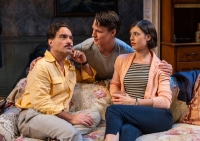
Lookingglass’ Kowalski Ignites a Battle of Wits Between Two Icons
24 September 2026 in Theatre in ReviewLookingglass Theatre’s production of Kowalski offers a gripping, fictionalized glimpse into the first meeting between two theater greats: Tennessee Williams…

Writers Theatre continues its 35th Anniversary Season with explosive, high-stakes boxing drama The Royale October 22 – November 29
23 September 2026 in Theatre in ReviewWriters Theatre, under the leadership of Executive Director Kathryn M. Lipuma and Alexandra C. and John D. Nichols Artistic Director Braden Abraham, continues…
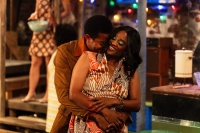
Detroit ’67: A Basement Becomes a City on the Brink
23 September 2026 in Theatre in ReviewDetroit was burning in the summer of 1967, inside one basement, life was still going on. That contrast is at…
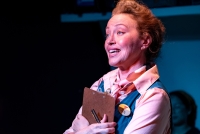
Now Boarding: Bonnie’s Last Flight, a Sky‑High Comedy with Real Heart
23 September 2026 in Theatre in ReviewRivendell Theatre Ensemble closes its milestone 30th season with Bonnie’s Last Flight, a sly, sky‑high comedy set during a flight…

Teatro Vista Productions announces season
22 September 2026 in Upcoming TheatreTeatro Vista Productions, the Midwest's only Latine-led Equity theatre company, led by Executive Director Lorena Diaz and Artistic Director Wendy…

Step Right Up and Ride the Cyclone (The Musical) at Metropolis Arlington Heights
22 September 2026 in Theatre in ReviewIf anyone has ever told you to buckle up and enjoy the ride, they were talking about life—and even if…
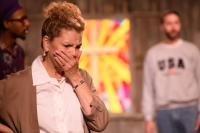
Funny ‘Prayer Circle’ Is Loaded With Laughs
22 September 2026 in Theatre in ReviewErik Gernand is resident playwright at Redtwist Theatre, and his Prayer Circle is absolutely laugh-out-loud funny. The strength of this…

Steppenwolf Presents GRACEFUL WARRIOR: AN EVENING WITH GARY SINISE - Tuesday, November 24, 2026
22 September 2026 in Upcoming TheatreSteppenwolf Theatre Company, the nation's premier ensemble theater company, is pleased to present Graceful Warrior: An Evening with Gary Sinise on Tuesday, November…

Acclaimed Mexodus musical makes Chicago premiere November 7-21 at Studebaker Theater
22 September 2026 in Upcoming TheatreStudebaker Theater, P3 Productions and Audible, in collaboration with Teatro Vista Productions, present the Chicago premiere of the groundbreaking, award-winning new hip-hop musical Mexodus, written and performed…

Arts in the Dark Parade moves to Columbus Drive due to dynamic growth, Oct. 24
21 September 2026 in Theatre BuzzLUMA8 and the City of Chicago return with the 12th Annual Arts in the Dark Halloween Parade, a family-friendly celebration…

American Blues Theater hosts its annual costumed fundraiser HALLOWEEN BOO BASH October 25th
21 September 2026 in Theatre BuzzAmerican Blues Theater, under the continued leadership of Executive Artistic Director Gwendolyn Whiteside, presents Halloween Boo Bash, its annual costumed fundraiser benefiting artists' wages…
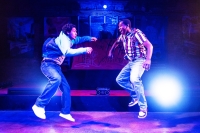
Definition's How We Got On: A Mixtape for the Stage
21 September 2026 in Theatre in ReviewWhat happens when three young people discover hip-hop and realize they might have something to say? Idris Goodwin’s How We…

Open Space Arts Presents BEFORE WE ARE HISTORY October 23 – November 8
21 September 2026 in Upcoming TheatreOpen Space Arts presents BEFORE WE ARE HISTORY, a three-week theatrical exploration of LGBTQ+ theater created during and in response to…
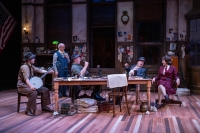
Northlight Delivers a Headline-Making, Hilarious Front Page
20 September 2026 in Theatre in ReviewNorthlight Theatre opened its new venue with Jeffrey Hatcher’s smart, rejuvenated adaptation of The Front Page. Commissioned by Artistic Director…
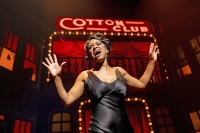
Chicago Shakes' Play On!: With a Syncopated Harlem Beat
20 September 2026 in Theatre in ReviewThere are some productions you watch, and then there are productions that make your heart swoon and your toe tap.…

Overshadowed's Flame of Fire Finds Humanity, Strength, and Forgiveness in a Tragic Chapter of Missionary History
19 September 2026 in Theatre in ReviewOvershadowed Productions’ Flame of Fire revisits one of the most polarizing true stories in mid‑century missionary history, and the result…
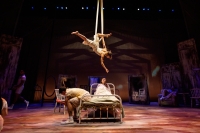
The Attic at Goodman Theatre Redefines Memoir Through Breathtaking Physical Storytelling
19 September 2026 in Theatre in ReviewAt intermission, I sent Ken, Buzz Center Stage’s managing editor, a text: “So thankful I made it!! It’s intermission, and…
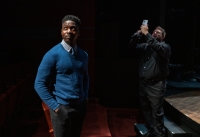
Class is back in session with Victory Gardens’ World Premiere of The Humanities
19 September 2026 in Theatre in ReviewCoincidentally (or not), Victory Gardens’ new play about a controversial campus speaker opens just days after the one-year anniversary of…




Latest Articles
-
 Operation Mincemeat: A Smart, Scrappy Musical That Shines When Its Cast Takes the Wheel
Written by Maddie BurroughsIn the 2019 film Yesterday, a struggling musician wakes up in a world where The Beatles never existed. A similar theatrical case study could be done with every musical that might not exist without Hamilton; Operation Mincemeat should be first…
Operation Mincemeat: A Smart, Scrappy Musical That Shines When Its Cast Takes the Wheel
Written by Maddie BurroughsIn the 2019 film Yesterday, a struggling musician wakes up in a world where The Beatles never existed. A similar theatrical case study could be done with every musical that might not exist without Hamilton; Operation Mincemeat should be first… -
 MAMMA MIA! and HADESTOWN Return to Chicago in Spring 2027
Written by Buzz Center StageBroadway In Chicago is excited to announce two fan-favorite shows are returning to our stages this year: MAMMA MIA! and HADESTOWN. Current subscribers can add these to their season package when renewing by clicking here or calling (312) 977-1717. Group…
MAMMA MIA! and HADESTOWN Return to Chicago in Spring 2027
Written by Buzz Center StageBroadway In Chicago is excited to announce two fan-favorite shows are returning to our stages this year: MAMMA MIA! and HADESTOWN. Current subscribers can add these to their season package when renewing by clicking here or calling (312) 977-1717. Group… -
SANCTUARY STORIES - A JOURNALISM THEATER PROJECT October 9-18 at the Athenaeum Center for Thought and Culture
Written by Buzz Center StageThrough music, documentary video, sound, photos and live actors, “SANCTUARY STORIES: A JOURNALISM THEATER PROJECT” captures in words and images the lives and communities deeply connected with — and affected by — immigration in Chicago. This “living documentary” is a…
-
Red Theater presents the world premiere of CHURCH HURT October 24 - November 21, 2026
Written by Buzz Center StageRed Theater is thrilled to announce the cast and production team of the world premiere of Church Hurt by Brynne Frauenhoffer and directed by Jessica Love, running October 24 - November 21, 2026 at The Edge Off Broadway in Chicago’s…


Does your theatre company want to connect with Buzz Center Stage or would you like to reach out and say "hello"? Message us through facebook or shoot us an email at This email address is being protected from spambots. You need JavaScript enabled to view it..
*This disclaimer informs readers that the views, thoughts, and opinions expressed in the text belong solely to the author, and not necessarily to Buzz Center Stage. Buzz Center Stage is a non-profit, volunteer-based platform that enables, and encourages, staff members to post their own honest thoughts on a particular production.