

Bill Esler
It's Funny What Can Happen on a "Neighborhood Watch," Now Running at Jackalope Theatre

You’ll want to join this “Neighborhood Watch," a fast-paced comedy having its world premiere in Jackalope Theatre’s performance space in the Broadway Armory. Harsh Gagoomal plays Mo Rizvi with deft emotional range, a bearded, swarthy Middle Easterner who has moved into a house in white suburbia, in the weeks just after Donald Trump's return to the presidency.
Unfortunately for Mo—short for Mohammed—his bothersome next door neighbors are the widowed GenX-er Paul (Frank Nall), who wears his excessively liberal credentials on his sleeve (literally, a Bernie Sanders sweatshirt) with a Harris-Walz sign in the yard; and on the other side, Shawn (Victor Holstein) a 30-something ever-Trumper.
The broad comedic interplay between these opposites could lead one to believe ”Neighborhood Watch” is a lighthearted farce. Even the bouncy scene segue music keeps the situation-comedic vibe going.
But playwright Rehana Lew Mirza, who was commissioned to write "Neighborhood Watch" by the National New Play Network has more in store for us, using the laughter to slyly lure the audience into deeper matters, gradually, though not too deep. It's funny, first and foremost. Kudos to Karina Patel, Jackalope's darmaturg, for snagging this lovely script.
Shawn is suspicious as he eyes Mo unpacking household goods—a pressure cooker, electronics, a tank of propane and a mysterious black backpack, laughably obvious memes of terrorism, all in plain view. But ever-nosy Shawn feels compelled to draw Paul’s attention to the “danger” lurking from the new neighbor.
After he blithely disregards Shawn and introduces himself to Mo, we cringe at Paul’s virtue-signalling as he holds Mo hostage to a ham-handed, somewhat oblique “supportive” conversation. Paul is so caught in his conundrum of trying not to offend that he becomes even more offensive. Mo finally figures out this neighbor has cast him in the role of suffering minority, a moment of tokenism that’s laughable too, because it’s so exaggerated. As Harsh Gagoomal conveys Mo’s internal dialog so effectively, we can see him bemused on the inside as he figures out Paul’s designs on establishing a relationship—Paul the white savior, Mo the suffering minority. That’s how unconscious racism exhibits itself in the liberal camp.
Mirza imparts a comic air on all this, reminding me of TV’s “All in the Family,” if Archie Bunker were a liberal, with his Meathead son-in-law the bumbling Shawn next door. The assertive Gloria character would be Becca, Paul’s 22-year-old daughter Becca (Jamie Herb). After Paul advises her to dress more modestly, in deference to what he imagines are Mo’s Islamic religious leanings, Becca goes to meet Mo for herself, and we find both as their truest selves: mutual date material. Sparks fly.
Reporting back later to her dad, Becca gives us a laugh-filled take on how GenZ handle their GenX parents’ social missteps, excoriating him for “man-splaining, then coaching her father with that query I hear frequently enough from my adult son: “What have we learned?”
We also see Paul and Shawn partnering on common ground, as they spy on Becca to see what she’s up to with Mo. Shawn has his own romantic design on Becca, while Paul is just a run-of-the-mill helicopter parent of his generation.
Mirza brings us something deeper as the plot thickens around the core of the drama: the unexpected arrival of Mo’s “cousin” Javed at the end of Act I. Fresh out of federal jail, and now a devoted Muslim, Javid’s domineering relationship to Mo fills Act II. Avoiding spoilers, we learn there is much more between Mo and Javed than we might have guessed. We also get a small recount of the emotional dynamics involved in Javed’s journey to and from extremism, as he alights on a deeply held spiritual connection to Islam.
In “Neighborhood Watch,” Mirza scores light-hearted laughs at the expense of white liberal culture and the racism of a different sort that can thrive among. Stereotypes abound. And it’s funny. Comedy is all in the timing and director (and casting director) Kaiser Ahmed nails it. Nothing drags.
Also notable are the sets (Tianxuan Chen) and in particular the lighting (Maaz Ahmed), who instead of merely darkening areas that are inactive, casts them in a bluish light, a small thing perhaps but I thought it innovative.
“Neighborhood Watch” has been extended through July 12 at Broadway Armory Park, 5917 N Broadway in Chicago
The Title Says it All in Conspirators Remarkable ‘Chicago Cop Macbeth’

It was a dark and stormy night as I motored to The Conspirators “Chicago Cop Macbeth,” with a fog of dust giving the streets an eerie feel. As the lights came up at the Otherworld Theater, the storm continued, the three witches of MacBeth gathered tightly around a fiery oil drum as thunder and lightning filled the room along with their chanting of Shakespeare’s famous opening lines, Fair is foul, and foul is fair: Hover through the fog and filthy air.
But this was different than the usual scene of the Bard’s classic iambic pentameter, for these witches were dressed as Chicago police in yje blue shirts of the department’s lower ranks, the British Midland accents replaced by one of the city’s most beloved native dialects, Bridgeport English.
The show’s style coach Sid Feldman, adapter and director William Bullion and ‘Script Doctor” Aili Huber have tailored Shakespeare’s “Macbeth” to place it close to home. The tale of the Scottish lord who took the royal throne through murder and mayhem is now set as a struggle among district police commanders to capture the seat of the superintendent. Action moves from the Scottish highlands and heath, to the Police District 5, Rogers Park District, and Daniel Burnham Forest Preserves.

Lt. Cmdr. Lady Macbeth (Clara Byczkowski) urges Cmdr. Macbeth (Travis Barnhart) into action
Eschewing emotional naturalism in their performances, The Conspirators are known for their unique acting format, “The Style,” a type of Commedia dell’ Arte seasoned with bits of Kabuki, Bugs Bunny, grotesque make-up and stylized movement. Lines are delivered in bite-sized chunks. These are punctuated by a percussionist, in this performance Tom Jacek, who brought forth a more subtle commentary perfectly adapted to the dramatic mystery and power of “Chicago Cop Macbeth.”
Hearing Shakespeare this way makes it come alive, and be heard differently—perhaps like hearing the lines recited as rap. Though the emotional core of Shakespeare’s story recedes compared to more conventional approaches, the show is arresting in another way, for the language. To hear those lines, sometimes spoken into shoulder-mounted walkie-talkies, is jolting. The transformation by local touches brought lots of laughter:
Macbeth’s discomfort holding a crown he has murdered to win—Now does he feel his title hang loose about him, like a giant's robe upon a dwarfish thief—becomes “hangs loosely around him, like a Bear’s jersey.”
Quite striking is the line We will speak further, as Macbeth and Lady Macbeth plot to kill King Duncan. Spoken in Chicago Bridgeport, it sounds like something whispered between two lawyers at the back of a Cook County courtroom—as it certainly still is.

Supt. Macbeth (Travis Barnhart) banishes the Ghost of Cmdr. Banquo (Collan Simmons, in center)
Most surprising was the revelation of The Conspirators as capable, competent Shakespearean performers.For most Conspirators shows, written as original comedic pieces, the actors are not individualized, performing as many moving components in a series of hilarious scenes. Here, as the tightly adapted Shakespeare demands, we have Chicago Police versions of the Bard’s famous characters: Cmdr. Macbeth (Travis Barnhardt), Lt. Cmdr. Lady Macbeth (Clara Byczkowski), Supt. Duncan (Zach Foley), Lt. Cmdr. Malcolm (Demetri Magas), Cmdr. Banquo (Collan Simmons), Cmdr. MacDuff (Corin Wiggins) and many others.

Cmdr. MacDuff (Corin Wiggins) and a long line of Cmdr. Banquo’s descendants.
Of the standout performances, Travis Barnhardt must be commended as Cmdr. Macbeth, playing the role with occasionally lengthy stretches of Elizabethan English deftly converted to Chicago-ese. In some respects, Barnhardt’s Macbeth is the straight man to the sometimes comedic follies of the officers around him. Emily Ruth, Jacob Reno, and Eva Andrews as the Witches are superb: “Double, double toil and trouble; fire burn and cauldron bubble.” Ruth also appears continuously as a desk sergeant and owns the stage in every one of their scenes. And Corin Wiggins as Cmdr. MacDuff is truly dynamic.
On a personal note, “Macbeth” carries a reputation for bad luck, and actors avoid naming it, calling it the Scottish play. The morning after seeing “Chicago Cop Macbeth,” I discovered a tree had fallen on my car parked near Damen and Rice. It will be in the shop three weeks.
The Conspirators “Chicago Cop Macbeth” runs through June 8, 2025 at Otherworld Theatre, 3914 N. Clark in Chicago.
*This review is also featured on https://www.theatreinchicago.com/!
Riots of Laughter Greet World Premiere of 'R.U.R. [Rossum’s Universal Robots]'

Riots of laughter greeted the City Lit Theater world premiere of “R.U.R. [Rossum’s Universal Robots]” Wait. Could this be the same 1920 science fiction play by Czech Karel Čapek? His 1937 science fiction piece at Trap Door Theater “The White Plague” was a serious treatment of public reaction to a very AIDS-like disease seemed to anticipate current history. He was a serious writer, not a comedian.
Yes, this is Čapek’s “R.U.R.,” credited for putting the word “robot” in our lexicon. And this story revolves around that same scientific genius who has figured out how to make advanced automatons, some of which we would call androids.
But still suspicious, I flipped to Čapek’s original script and found a fast-paced 1930s melodrama that, played straight, would probably have come across as ludicrous. Faced with generating unintended laughter from the original, City Lit Theater opted for a comic version freely adapted by Bo List, one that maintains all the major plot points of the original, but plays them for like a screwball comedy. well directed by Brian Pastor.
Harry Rossum (Bryan Breau) has inherited an island factory where robots are churned out by the millions, and exported around the globe, intended mostly to supplant servants and factory workers. Harry Rossum's late father, a mad inventor, created the robot formulae, but his son has also innovated, creating the first cordless phone - it weighs 80 lbs. - no problem when you have a robot available to carry it for you.

Robot Radius (Sean William Kelly) ferries an 80-lb. portable phone wherever its inventor Harry Rossum (Bryan Breau) needs it.
As robots crowd out humans there is, needless to say, a public reaction. Rossum’s factory receives a visit by two advocates on the societal concerns: Nana (Shawn Tucker) who thinks robots should be removed from the globe; and Helena Glory (Madelyn Loehr) who believes the sentient robots should be given rights.
The playwright Bo List has incorporated AI into the storyline, and we meet more advanced, thinking robots like Sulla (Alex George) and Marius (Brendan Hutt) who learn on the go. Helena also happens to be the daughter of the mythical country’s president, and Harry is smitten with her. Romance ensues, and the comedy kicks in.
Unfortunately for the automatons, they have a limited lifespan and cease operating under this planned obsolescence after two years. Eventually Sulla and Marius lead a robot rebellion, seeking the secret formula that would allow robots to replicate themselves. Humor abounds.
Some of the jokes are inherent to the retro-science fiction premise. Robots operate typewriters, with precision typing at ungodly speeds. Or robots communicating with each other via telegram. In one gag that is flogged to death onstage, humans require a long explanation of why an intercepted robot telegram closes with LOL. The robots demonstrate what it means by laughing mechanically in unison. While I found some of the gags sophomoric, the conceptual humor had me laughing frequently.
Scenic design by Jeremiah Barr is quite successful, as are costumes for robots and humans, by Beth Laske-Miller.
“R.U.R. [Rossum’s Universal Robots]” runs through June 15, 2025 at City Lit Theater in the Edgewater Presbyterian Church, 1020 W. Bryn Mawr in Chicago.
Brendan Hutt (left) is Marius and Alex George is Sulla in City Lit Theater's "R.U.R. [Rossum’s Universal Robots]” running through June 15, 2025.
*This review is also featured on https://www.theatreinchicago.com/!
Trap Door's 'Galileo,' Beautifully Produced, Is a Knowing Parable for Our Times

“Galileo” written in 1938 by German playwright Bertolt Brecht, tells the straightforward story of the 17th century physicist and astronomer’s run-in with church authorities for asserting that the earth revolved around the sun. For this Galileo, played with Brechtian finesse by Trap Door’s David Lovejoy, was hauled before the Roman Inquisition, and threatened with torture until he recanted.
Brecht’s play centers on how this conflict played out in Galileo’s personal and professional life, and his final years under house arrest under the watchful eyes of the authorities. Galileo was torn between unfettered scientific assessment of the world, and his need to make a living. Even before the play opens, director Max Truax has Lovejoy’s Galileo seated, nearly naked, facing away from the audience posing in contemplation, reminiscent of Rodin’s famous sculpture. Throughout the scenes that follow, Galileo’s nakedness seemed to represent the periods when he was thinking most freely. He seemed to be dressed when he was engaging the public or the authorities.
But the style of Brecht’s script for “Galileo” is not naturalistic - this version of the script was the second, written in English with Charles Laughton who starred in it in 1947 - and the audience is distanced from the characters who dwell with him: Galileo’s daughter Virginia (Genevieve Corkery), his protege Andrea (Shail Modi), his student Ludovico (Caleb Lee Jenkins), and a character, the Inquisitor, who is present throughout. Brecht wanted audiences to be unattached to the emotions of the characters, so they could focus intellectually on the story and the social values he wanted to convey, a style known as Epic.
Lines are repeated multiple times with different emphases. At certain points, the actors address the audience directly, breaking the fourth wall, said to be another technique favored by Brecht. The Inquisitor (Joan Naid) who is blindfolded in early scenes, at times seems more like a spouse to Galileo in the household.
Lovejoy’s performance of Galileo is described by Trap Door as “a humanizing portrait,” and he is in this respect distinct from the other characters on stage. One example: when his daughter Virginia’s betrothal is threatened by Galileo’s branding as a heretic for his work, she registers no emotion. We simply hear the facts of the matter. Lovejoy’s performance is intense, and a remarkable achievement overall: and he is on stage every minute of the two hour show. Also notable is Modi as Andrea, a character with whom I was able to connect.
I can’t say I am a fan of Brecht, and am always surprised that he continues to be popular among troupes and actors. For me Brecht takes a lot of work to appreciate and enjoy. But “Galileo” has remarkable currency for our times, as the retreat from modernism finds factual science and the age of reason under attack by the authorities. For this concern alone the Trap Door production of “Galileo” is valuable. Kudos to Merje Veski for stage design and Jonathan Quigley for projection design that gives us synopses of historical contexts at key moments.
“Galileo” runs through June 14, 2025 at Trap Door Theatre, 1655 W Cortland St. inChicago. Tickets are now on sale at trapdoortheatre.com
*Extended through June 28th
Gusto Performances in ‘Spring Awakening,’ Vibrant Staging of 1906 Basis of Broadway Musical

“Spring Awakenings,” now playing at Chicago’s Greenhouse Theater Center, is not the Tony-winning 2006 Broadway musical “Spring Awakening,” but an adaptation of its original basis, an 1891 German play by Frank Wedekind that was first performed in 1906. Translated by Francis J. Ziegler, and directed and adapted by Lazy Susan Theatre Co. company member Matthew Masino, it is a fervent and vibrant production with a cast clearly filled with passion for what might be seen as something of a theatrical novelty.
An exploration of the angst of sexual awakenings of teenagers, it was also a social commentary on the damaging effects of sexual repression, those things we haven’t liked to talk about - puberty, erotic dreams, BDSM, pregnancy, abortion - all on stage. And other things, too - teen suicide, the stress of scholastic competition, and societally enforced sexual repressiveness.
Measured against this window into the past, we must have learned something over the decades. At least we’ve been talking about these matters more.

Though not a musical, it is laced with song, and actor performers on cello (Nicholas Ford Kinney, and in the role of Georg), guitar (Grace Trivax, and in the role of Martha), flute (Phoebe Webstbrooks, also playing Otto) and piano (Pierce Howard, and in the role of Hänschen). Music for the show is composed by Michael Van Bodegom-Smith, with musical direction by Dominic Rinker.
Remarkable in their performances and the core of the drama are the trio of Isabelle Grima as Wendla, Jake Griffith as Melchior, and Bryce Lederer as Moritz. As the show runs on (two hours, no intermission) one begins to realize that Lederer has the most demanding role, and he really delivers. His Moritz is central to the storyline, heavily laced with tragic turns.
Moritz confides to his classmate Melchior that he struggles with confusing dreams. The more seasoned and knowledgeable Melchior quickly tells him essentials of the facts of life, explaining that these are erotic dreams, a natural companion to sexual development. Wendla, who has a thing for Moritz, asks her mother to explain where babies come from, and is met with obfuscation. Uninformed, she soon enough ends up in the hay with Melchior, and pregnant.
Set in Germany—young men wear short pants, young women just trading girlish skirts for long dresses—these school chums are a bonded group, and display real affection for each other. Characters are fully fleshed out in the charming production, even lesser roles like Ryan Vu’s Ernst, Quinn Skelly’s Rupert, both so good in their performances. A real standout is Hannah Loessberg as Thea.
Other than its historic theatrical interest, Is there a message in this show? Perhaps. With the rise in illiberalism fueled by drastic governmental shifts, it’s beneficial to look at the harms we suffer when social repressiveness suppresses openness to talk about taboo subjects. And this show is just plain fun, as well.
“Spring Awakenings” runs through May 11, 2025 at Greenhouse Theater Center.
‘Kairos’ Is One of the Most Enjoyable and Provocative Shows in Chicago

Lisa Sanaye Dring’s play “Kairos,” which just opened at The Edge Off Broadway theater, is one of the most thought-provoking and enjoyable productions I have seen lately. Set in the near future, the 90-minute play (no intermission) is as good anything you might see in streaming shows ("Black Mirror" comes to mind.) Directed by Clare Brennan, “Kairos” is in the midst of its rolling world premiere with the National New Play Network.
As the play opens, David (Johnard Washington is really good), a somewhat detached and scholarly fellow, and the all-business Gina (Tamsen Glaser) meet one rainy night via a mall parking lot fender bender. David is only lightly concerned about his car's damage, as he’s smitten with Gina, who blames him for the accident. During a practical exchange about insurance, police reports and such, Gina discovers she is charmed by David as well. “Here’s my number,” she says. “Not for the accident. For sex….maybe?”
The scenes cycle rapidly through their evolving romance, and they discover more and more appeal in each other. But this fast-paced affair is only a prelude to the core of the story. A few weeks in, they are lounging around, when arresting news crosses their screens: medical science has discovered a treatment, dubbed “Prometheus,” promising eternal life.
What a remarkable premise for a drama. A developing relationship meets a decision about living everlastingly. Way beyond, “Should we get married?” That’s only until death do us part.
Because of its likely appeal, the Prometheus treatment is offered by lottery, and is restricted to those aged 25 to 34, who are also, once treated, prohibited from bearing children. The playwright has upped the ante with that. Candidates apply online, and once selected, must undergo a psychological screening.
David wants in immediately, while Gina figures she’ll just see if she qualifies, and then decide. Their relationship progresses while they await the news, with the usual ups and downs, and matters like meeting family playing out in the background.
As we await the lottery results, we get a feel for the likelihood of David and Gina's relationship surviving on its own terms. David seems more in touch with his feelings, and a bit more empathic. Gina is more self-centered, seemingly waving away the life challenges her partner encounters. When David’s father leaves his mother suddenly after 40 years, he is distraught. Gina doesn’t quite get it. “I’m sorry about your father,” she says, “but he can’t be where his heart is not.”
At the risk of a spoiler, Gina wins the lottery first. I felt my heart racing as she prepared to open the communication. David still hasn’t heard. And when he too is eligible for Prometheus, there is instant elation. “We’re not going to get old together!” he exclaims.
Soon enough we find out it’s not that simple. These two weren’t quite ready for marriage, let alone eternal life. And David must still undergo a psychological exam, which we gather Gina has passed.
The world around them also shifts as society spins into an upheaval, and protests against Prometheus arise. The world is split between “agers,” and those who, because of Prometheus, won’t age.
We soon see fissures in their relationship. David becomes depressed, partly about his parents’ divorce, and we suspect, also about this massive life change. Gina prods him to pull himself together for his psych exam: “They might not want immortal sad boys running around.” I think the heft of the play would be greater if there had been a little more depth to the emotional dynamics of the relationship. It felt a little too once-over-lightly to be convincing. But the storyline is so interesting, it’s not consequential.
“Kairos,” the Greek term for “the right time,” when an alignment of circumstances presents an opportunity, is a recurrent theme in the play, from their very first encounter in the mall parking lot, to opportunity for Prometheus as their relationship gets rooted. An epilogue to the play, dated 2068 A.D., lets us know how things turned out for Gina and David. Produced by Red Theater “Kairos” runs through May 18 at The Edge Off Broadway in Chicago.
*This review is also featured on https://www.theatreinchicago.com/!
David Mamet's 'Henry Johnson' in High Powered Premiere at Victory Gardens Biograph

“Henry Johnson,” David Mamet’s new play running at the vintage Biograph Theatre, is like many of his works, enigmatic and demanding of his audience. With Mamet one must pay close attention to the dialog, packed with foreshadowing and reveals. Miss a line or even a word, and you’ll miss out.
This focus on the dialog is the essence of what Mamet’s works are about - plumbing the interior workings of the characters, as they face their lives. It also allows Mamet to examine in depth the forces at play in any human interaction, which in my take the playwright sees as transactional.
Expectations were clearly high for the Midwest premier of “Henry Johnson” by the Pulitzer winning Chicago playwright (“Glengarry Glen Ross,” “American Buffalo”) and screenwriter (“The Untouchables,” “Hoffa,” “The Postman Always Rings Twice”).
The biggest letters are Mamet’s name on the marquee at the Biograph. This is Victory Gardens Theater's home, where it is celebrating 50 years with this show. Its legendary founder, Dennis Zacek, takes executive producer credits on the production.
The promise of a rare new stage work by Mamet (as well as its planned release this summer as a film starring Shia LeBoeuf) drew a strong team of pros as well:
Directed by Edward Torres (co-founder of Teatro Vista), it stars Thomas Gibson (TV’s “Criminal Minds”), Keith Kupferer (“Ghostlight”) as a prison guard, Al'Jaleel McGhee (“A Soldier’s Play” Broadway tour) as Mr. Barnes and “Chicago PD” character Daniil Krimer as Henry.
“Henry Johnson” has what people come to David Mamet for - the thinking script, the demands on audiences to fill in the dots, the mystery, the unexpected reversals. For me, what is most intriguing about “Henry Johnson” is how Mamet explores a character, Henry, a beta male who is readily susceptible to being dominated by alpha male personalities.
It opens as Mr. Barnes, Henry’s boss, questions him on his unusual request: to find a job for a parolee that Henry once knew in college. McGhee’s Barnes digs into Henry’s motivation, asking him “What attracted you?” Henry’s answer: “He had this power over women,” relating how he could pick up women in bars and go home with them easily.
Barnes is hard driving, suggesting to Henry that he is under the spell of this one-time college buddy (who never appears in the play), now a convicted felon. Barnes gets Henry to state he is not physically attracted to this guy, just under his thumb.
Henry can accuretly relate back to Barnes his assessment of him - that Henry is putting the welfare of a past friend ahead of the interests of the company. Henry can hear it, but presumably he is so much in thrall to this “friend” he cannot be persuaded to discard him.
“You saw him after college?” Barnes asks.
Henry: “Before he went to prison.”
Barnes: “He was grooming you.”
The unseen friend was also a steady winner in card games, inexplicably lucky. Barnes ventures that the other men, also dominated by the friend’s charisma, let him win. “They were paying him rent.” In my experience, this is really how the dynamics of unhealthy male social hierarchy can work. When Barnes asks what he thought about his friend’s conviction, Henry replies, “I had no opinion. I thought it was my responsibility to have no opinion.”
In an abrupt change of scene, we now find Henry newly arrived at a prison cell - Barnes caught him embezzling, presumably for this unseen friend, and the audience must conclude he’s been convicted. Henry’s cellmate, Gene (Thomas Gibson) digs into Henry enough to determine his untoward fealty to his friend. Then he lectures him continuously, and Henry offers only desultory replies. As with Barnes, Henry is able to relate back to Gene, “You think my interest {in him] is an addiction.”
The setting shifts to the prison library, and the guard in charge is played by Kupferer. And then finally, a climactic scene, also in the prison library, where Mamet ties up the story for us, in a shocking end..
True to Mamet, the dialog doesn’t lead us through a plot - but an examination of where the characters are emotionally at key points along a timeline. Abrupt shifts in the setting are unexplained - Mamet expects us to figure it out, and we like him for that - but he’s not giving much to go on in each quadrant of the play: an inquiry in an office; a prison cell; a prison library; and a closing setting that spoiler concerns will leave undescribed.
The script seems less a play, than an extended treatment for a screenplay. The dialog is less compelling than Mamet’s signature works, which take a lot of rehearsal to refine the playwright’s intended cadences. Kupferer and McGhee come closest to getting this down. With all that, it’s Mamet, and so “Henry Johnson” comes highly recommended. It runs through May 4 at Victory Gardens Theater.
*This review is also featured on https://www.theatreinchicago.com/!
Stellar Performances in “Prayer for the French Republic”

Early in the first act I whispered to my companion and said “I love this!” Extremely well written by Joshua Hartman with stellar performances directed by Jeremy Wechsler, “Prayer for the French Republic” (a Northlight Theatre Theatre Wit co-production) attempts to reveal the soul-searching and angst among a Jewish family in Paris amid the recent rise in antisemitism in their country.
After generations of security in the comfort of acceptance by their countrymen, the Salomon family encounters violent attacks by newly emergent antisemitic factions in France. How can this be happening?
In three acts we see the sweep of history across five generations of Salomons, who manufacture and sell pianos.
The opening scene is in a Paris apartment in 2016, where Marcelle Salomon (Janet Ulrich Brooks is sensational) welcomes a newly arrived American cousin, Molly (Maya Lou Hlava is perfect, brimming with Francophile excitement). We are given to understand their conversation, and the entire play, is all in French—though delivered in English.
Raised as a secular Jew and not very observant, Molly is something of a renegade. “My parents didn’t want me to come, because of the, you know, terrorism.” Despite her fluency, Molly is largely ignorant of French culture, but it’s love at first sight, expressed largely by her preternatural fixation on croissants. A little cringeworthy, maybe, but Hlava perfectly captures the tone of a good hearted American in Paris. I've been that way.
After Marcelle delivers a comical machine-gun paced recitation of the family tree outlining their familial connection—one that has Molly nodding but bewildered—Marcelle goes on to explain that her husband, Charles Bertharnou (Rom Barkhorder) is a Sephardic Jew, his family having emigrated from North Africa as France withdrew from its colonies in the 1960s. And the added horror that Nazis did away with 25 percent of the Jewish population during the war.

Larence Grimm as Patrick Salomon in "Prayer for the French Republic."
“Most Jews in France are Sephardic,” explains Marcelle. “Why is that,” asks Molly in her abject ignorance. Marcelle's brother, Patrick (Larence Grimm), appears periodically as aloof narrator, and in the family drama as well. He has shed his Judaic heritage even as his nephew Daniel leads his family to renew their embrace of it.
The action is interrupted with tragedy. Marcelle’s husband returns with their son Daniel (Max Stewart in a magnetic performance), bloodied by an attack on the street. Suddenly, Molly, the secular Jew, is confronted with a violent anti-semitism that she has not experienced before. In the course of the play, she will be adjacent to the profound impact this has on the Salomon family—her character something of a device, the naive observer, for the script to examine these challenging issues.
Playwright Hartman then jumps through time artfully, with a vignette of 1944 as an earlier generation of Salomons weathers the Vichy government’s persecution of Jews under Hitler’s dominion. Adolphe and Irma Salomon (Torrey Hanson and Kathy Scambiaterra) are the perfect odd couple, whose sons Lucien (Alex Weisman) and Young Pierre (Nathan Becker) have fled without warning. Adolphe and Irma themselves are spared by a sympathetic policeman, and they suffer the war physically unscathed, selling pianos now to German Nazis, though beset by angst over the welfare of their sons.

Rae Gray as Elodie and Janet Ulrich Brooks as her mother Marcelle.
Then we’re back to 2017, where Rae Gray turns in a compelling performance as Elodie, Daniel’s manic depressive sister—a familiar and haunting presence in the Paris apartment, she sleeps until noon and shrugs off her mother’s hectoring diatribes urging her to get a life. In one manic moment, Gray launches into a monologue always nearing but almost never quite reaching its concluding "My point is" that rivals the showstoppers familiar at the Steppenwolf stage. Accoloades are due the playwright, and Gray, for pulling this off so very, very well.
Meanwhile the family has been ruminating on the cloud of antisemitic fervor sweeping across their homeland. Charles weighs emigrating, while Daniel and Molly have other things on their minds: they have fallen in love.
All this comes to resolution in Act 3, where the promise of the first two acts is delivered upon, unsatisfyingly in my view, but it pleased the audience, which rose to its feet as the curtain dropped.
What’s not to like? The set for an upscale Parisian apartment didn’t measure up, nor the language and demeanor. to my mind. did not evoke the refinement one might expect - much more Manhattan than Paris. And the storyline unravels at the end as the script devolves into more preachy and polemic than the thinking and convincing leading up to the final act.
Strings were tied up perhaps too neatly in a packaged ending. Daniel might have made a different choice than what seems to have been foreordained by the playwright. And about the piano: it seemed out of tune. And would the fifth generation owners of a piano manufacturer be reluctant to ship an instrument due to weight? I think not.
Nevertheless, this show is recommended for the pure joy of excellent performances, and the intellectual and emotional processes that lead to the resolution, unsatisfying as it might have been for me. “Prayer for the French Republic, co-produced by Northlight Theatre and Chicago’s Theater Wit, runs through May 18 at Northlight Theatre in Skokie, IL.
*Extended through May 25th
*This review is also featured on https://www.theatreinchicago.com/!
Writers Theater Excels in Brian Friel's Funny, Complicated 'Translations'

Brian Friel’s “Translations,” now playing at Writers Theatre in Glencoe, IL, shows off the renowned Irish playwright’s signature skill in creating a stage full of memorable characters, 10 in this case, each with depth sufficient to fuel their dramatic paths.
“Translations” as Friel tells us, “has to do with language and only language.” Though written and played almost entirely in English, the Irish speak with brogues to “represent” that they are actually speaking in Irish; the British speak in a more formal King’s English. On stage, under the accomplished direction of Braden Abraham and dialect coach Eva Breneman, it becomes clear that Irish is being spoken, and when the few English speakers appear, that the two groups do not understand each other.
Friel treats us to a compelling story line—a love triangle—against a backdrop of an overwhelming British culture, bulldozing its way across the neighboring emerald isle. Set in 1833 in the mythical town of Baile Beag (Anglicized as “Ballybeg”), the action takes place in a “hedge school,” a form of resistance to this British cultural hegemony.
Hedge schools were illegal underground tutoring centers where the Irish adults would go to study ancient Greek and Roman classics, translating them and discussing them in their native Irish tongue.
Indeed, the play is very much about translated language. At the hedge school, we hear Hugh (Kevin Gudahl), a teacher at the hedge school and student Jimmy Jack (Jonathan Weir) reading Homer and Virgil and discussing comparative renderings in Irish. The only English word Jimmy Jack has bothered to learn is “bosom.”
English military cartographers have arrived in Baile Beag to map out the area, and set about developing Anglicized versions of the Irish names for the notable geographic features, rivers, valleys, streams, hills, etc. One character, Owen (Casey Hoekstra) who was born in Baile Beag but left years ago, has returned on retainer to the British as a translator whenever the British want to make themselves understood, or to hear from the locals. Owen also helps Lieutenant Yolland (Erik Hellman), known as “George” for most of the play, in the Anglicizing process.
In one incisive scene Owen explains to George the etymology of a place name for a crossroads:
“We call that crossroads Tobair Vree. And why do we call it Tobair Vree? I’ll tell you why. Tobair means ‘a well.’ But what does Vree mean? It’s a corruption of Brian—an erosion of Tobair Bhriain. Because a hundred-and-fifty years ago there used to be a well there, not at the crossroads, mind you—that would be too simple—but in a field close to the crossroads. And an old man called Brian, whose face was disfigured by an enormous growth, got it into his head that the water in that well was blessed; and every day for seven months he went there and bathed his face in it. But the growth didn’t go away; and one morning Brian was found drowned in that well . And ever since that crossroads is known as Tobair Vree—even though that well has long since dried up.”
With the weightiness of its backstory, though, “Translations” is primarily entertaining and very funny. “Honest to God,” says one of the hedge school students, Maire (Julia Rowley), “some people aren’t happy unless they are miserable.” The characters are witty, and concerned with the life at hand, not the downside of British dominance.
In the course of the play, our British cartographer, George, falls for Maire, but neither can understand each other at first. We watch them learning bits of each other's languages. This relationship is also complicated by the presence of another hedge school teacher, Manus (Andrew Mueller), who expects Maire to marry him.
The scenes in which George expresses his ardor for Maire in language unintelligible to her are priceless. Over several meetings, they gradually learn some of each other’s language. It’s also notable that Maire abandons the hedge schoo, seeing her future in speaking English and emigrating to England. For Maire, George is her ticket to another life. George, on the other hand, has fallen for Ireland, and sees his future there, with Maire. Neither understands the other's motivation.
At one point, we hear Owen translating an address by Captain Landry (Gregory Linington) to the gathered hedge school students. Since Owen’s “Irish” translation is rendered in English by the playwright’s design, we see a complete disconnect between what Captain Landry states, and the way Owen delivers to the students.
Ultimately there are clashes borne of the magisterial power of the English over the Irish, and this forms a fiery underlay to the human drama playing out.
Set by Andrew Boyce and costumes by James Pytal are excellent. Kudos to dramaturg Bobby Kennedy for his work in identifying this lesser known Friel script. (The playwright’s best known work is probably “Dancing at Lughnasa,” brought to film with Meryl Streep in 1998.) A shout-out for the work of casting director Katie Galetti, CSA, who cast a wide net for the talent on stage. Performances by Andrew Mueller as Manus and Casey Hoekstra as Owen (the two are brothers) are particularly noteworthy, as was Julia Rowley as Sarah, a student with a speech impediment. I have to say I loved watching the angry student Bridget (Chloe Baldwin).
“Translations runs through May 4, 2025 at Writers Theater in Glenco, and comes highly recommended.
‘Trial of Themistocles’ Shows Off Best of the Culture of Greece, and Chicago Jurisprudence

Walking into the Harris Theater for the “Trial of Themistocles,” I was expecting something translated from ancient Greek, togas, masks, maybe a chorus, and a scholarly script that would take some work to wade through.
Instead I found the latest installment of a delightful Trials Series produced since 2013 by the Chicago-based National Hellenic Museum on Halsted St. This program is part of the museum’s mission to advance awareness of the foundational contributions Greece has made to world civilization, in architecture, philosophy, mathematics, and—particularly timely—democracy. The Museum’s “Trial” series is actually mock-trials of historic Greek figures conducted by actual Chicago judges and argued by prominent local barristers. The annual event was qualified by the Illinois Attorney Registration & Disciplinary Commission (IARDC) for continuing legal education (CLE) credit. Attorneys attending the event can register for CLE credit on site.
Though scripted in a somewhat light-hearted tone, the “Trial of Themistocles” evokes weighty matters—touchstone societal issues that underpin our mode of government, and our means to maintain a civil society. It was reassuring, even moving, to be among those hundreds in the audience interested in rational thought and with a cosmopolitan, worldly view of history. While we extol the Renaissance and the Age of Enlightenment that followed, these periods were essentially a rediscovery of the wisdom of Greece.
Themistocles was an Athenian citizen, the city where trial by jury originated. He was the military chief who planned Athens’ creation of a large fleet of warships, multi-oared triremes, and led them to victory against the mighty Persian empire at the naval battle of Salamis. As a result, Themistocles’ star rose and he was elected Archon of Athens, the head of the city-state. He was a peoples’ candidate, with more common roots in his family tree, but was not welcomed by the aristocracy.
After he left office, history tells us that political rivals besmirched Themistocles’ reputation, accusing him of collusion with the Persians while leading Athens—even though he had defeated the Persons for Athens’ benefit. His enemies were animated to take him down, and Themistocles was ostracized—another Athenian invention —where he was voted out of town. Themistocles then left for an administrative post in Persia. The Athenians summoned him back to be tried for treason, but in real life he died before the trial took place.

Katerina Alexopoulos (U.S. Department of Homeland Security) questions Themistocles, played by Jonathan Shaboo, as the judges, jury and other attorneys look on in the National Hellenic Museum's Trial of Themistocles
In the “Trial of Themistocles,” hosted by former TV news anchor Andrea Darlas, only two professional actors were on stage: in the roles of Athenian politician and naval leader Themistocles (who died in 460 B.C.E.) played by Jonathan Shaboo; and the witness for the prosecution, Arsenia, played by comedian Megan Goldish. In her day job, she happens to be the Honorable Megan Goldish, a Cook County Circuit Court Judge.
All this was presided over by a panel of real-life area judges, and with a 12-person jury of scholars, lawyers and media personalities from NBC, Axios, WVON, and including Georgia Tasiopoulou, Consul General at the Greek Consulate in Chicago. Though the Trial series is a one-night-only performance, it was filmed by WTTW for later broadcast. The 2016 broadcast of the “Trial of Antigone” won an Emmy for the local National Public Television affiliate.
Our streaming world is filled with police procedurals and legal shows with actors playing lawyers. In the “Trial of Themistocles,” we got a chance to see how the real deal compares with actors, and in their opening arguments, cross examination, and summations delivered by actual lawyers, it turns out they’re as good as the actors imitating them, maybe even better. In the “Trial of Themistocles,” they acquitted themselves very well, as did the judges.
Leading the defense were Patrick M. Collins, a partner at King & Spaulding law firm; Tinos Diamantatos, a seasoned Katerina Alexopoulos, Assistant Chief Counsel for the U.S. Department of Homeland Security. And for the prosecution, Sarah King, president of the Women’s Bar Association of Illinois; and Patrick Salvi II, managing partner of Chicago law firm Salvi, Schostok & Pritchard. For the record, I felt Diamantos gave the best oratorical delivery.
All four judges found Themistocles not guilty, including Justice Joy V. Cunningham (Illinois Supreme Court), Hon. Georgia N. Alexakis (U.S. District Court for the Northern District of Illinois), Hon. Anthony C. Kyriakopoulos (Circuit Court of Cook County) and Hon. Jeffery Chrones (Circuit Court of Cook County). Listening to the judges’ reasoned findings dismissing the charges against Themistocles, it was apparent that their opinions were infused with the master principles enshrined in U.S. law. The 12-member panel of esteemed jurors on stage—composed of civic leaders, academics and media personalities—found Themistocles not guilty by a margin of 11-1. Likewise the audience voted, overwhelmingly for acquittal.
The Museum says its NHM Trial Series “highlights the enduring relevance and value of Greek thought and history.” I couldn’t agree more.
The National Hellenic Museum Has a mission to share Greek history, art, culture and the Greek American story, it also displays its extensive collection of more than 10,000 physical artifacts. Located in Chicago’s historic Greektown neighborhood since 2011, Museum hours are Thursday through Sunday from 10 a.m.-4 p.m. nationalhellenicmuseum.org
*This review can also be found at Theater in Chicago.

Audiences Will Fall in Love with Northlight's All the World
22 November 2026 in Theatre in ReviewWhen two actors share the stage show after show, how long can they keep their real feelings from stealing the…

It's a Wonderful Life: A Live Radio Play Remains a Holiday Treasure at Oil Lamp Theater
22 November 2026 in Theatre in ReviewThis holiday season, Oil Lamp Theater continues one of its most cherished traditions with the 13th annual production of It's…
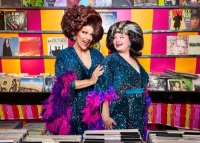
Music Theater Works' HAIRSPRAY starring Ru Paul's Drag Race's Mrs. Kasha Davis comes to North Shore Center for the Performing Arts December 17 - January 3
22 November 2026 in Upcoming TheatreMusic Theater Works is proud to announce the cast and creative team for the final production of its 2026 season,…

Shattered Globe Theatre Presents THE WATERFALL - January 22 – February 27, 2027 at Theater Wit - Midwest Premiere!
22 November 2026 in Upcoming TheatreShattered Globe Theatre is pleased to continue its 36th Season with the Midwest premiere of Phanésia Pharel's emotionally rich two-hander…

Redtwist Theatre presents world premiere of FLYING MONKEYS, directed by Robert Falls December 6 - January 17
21 November 2026 in Upcoming TheatreAward-winning Redtwist Theatre announces the cast and creative team for this added special engagement to its 2026 - 2027 season,…

CELESTIA: A Heavenly Event
21 November 2026 in Theatre in ReviewIn 1871 our broad city burned in the Great Chicago Fire. In 1875 St. Vincent de Paul church rose in…
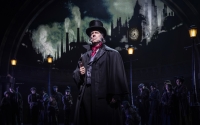
Paramount's A Christmas Carol Stands Among the Season's Finest Gifts
21 November 2026 in Theatre in ReviewFew holiday stories are as deeply woven into the fabric of the season as A Christmas Carol, yet Paramount Theatre's…

Write Club is A Performance Event Casting Literature as Blood Sport
20 November 2026 in Theatre in ReviewWrite Club Chicago stages a monthly competitive reading at the Gman Tavern, 3740 N. Clark St., in the shadow of…
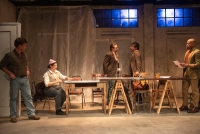
Jackalope’s ‘Engines and Instruments of Flight’ Gives Wings to the Legend of Tony Kushner
18 November 2026 in Theatre in ReviewEngines and Instruments of Flight: A Fantasia in Three Acts by local playwright Calamity West is everything you’ve ever wanted…

Trap Door Theatre Presents: The False Servant, Written by Pierre de Marivaux, Translated by Martin Crimp, Directed by Kay Martinovich. Opens January 14th, 2027
18 November 2026 in Upcoming TheatreTrap Door Theatre is thrilled to begin its mainstage work of their 33rd season with Martin Crimp's take on the…

Steppenwolf Theatre Presents JESSIE MUELLER WITH SETH RUDETSKY – December 18 & 19
18 November 2026 in Upcoming TheatreSteppenwolf Theatre Company and Mark Cortale welcome back Tony Award winner Jessie Mueller (Beautiful: The Carole King Musical, Waitress) for a…
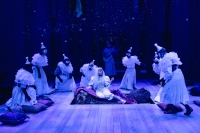
A Midsummer Night’s Dream: Chicago Shakespeare’s Circus of Love and Mischief
16 November 2026 in Theatre in ReviewChicago Shakespeare Theater celebrates its 40th Anniversary season with the second production of its ambitious repertory. A Midsummer Night’s Dream…

THEATER UNSPEAKABLE ANNOUNCES MIME OR NOTHING, FEBRUARY 5 - 28, 2027
16 November 2026 in Upcoming TheatreTheater Unspeakable is proud to announce the cast and creative team for the Midwest Premiere of Mime or Nothing, February…

'Oh, Buddy' a Lighthearted Absurdist Look at Transgender Issues in the Workplace
16 November 2026 in Theatre in ReviewLeave it to Trap Door Theatre to find an absurdist play, their milieu, that’s a funny, fresh take on office…

BrightSide Theatre announces cast and creative team for THE SECRET GARDEN IN CONCERT, January 8 -17, 2027
16 November 2026 in Upcoming TheatreBrightSide Theatre has announced the cast and creative team for its concert performance of THE SECRET GARDEN. The musical, based…

The Beatrix Potter Holiday Party at Chicago Children’s Theatre’s returns for the holidays, December 5-27
16 November 2026 in Upcoming TheatreChicago Children’s Theatre’s 21st Birthday Season continues with its annual holiday rite of passage for Chicago toddlers, The Beatrix Potter…

Filament Theatre announces 2026/27 Season With returning interactive family favorites: Fort-building fun with FORTS and performance installation for babies RAIN
16 November 2026 in Upcoming TheatreFilament Theatre (4041 N. Milwaukee Avenue in Portage Park), the Northwest Side’s premier theater for young audiences, is delighted to…
‘Our Town’ Finds Big Feelings in an Ordinary Small Town
15 November 2026 in Theatre in ReviewI’ll admit I had never seen, read, or even heard of Our Town before opening weekend. All I knew going…
The Latest 'Dante 360' Leads to Paradise, Particularly for Dante-philes
14 November 2026 in Theatre in ReviewDante 360 Virgil Edition is the latest iteration of a performance work first launched in 2021. Directed by Peggy Garvey,…
Citadel Theatre Captures the Magic of Old-Time Radio in It's a Wonderful Life: A Live Radio Play
14 November 2026 in Theatre in ReviewThere is something undeniably captivating about witnessing the magic of old-time radio brought to life on stage. In an era…
Genuine Heart Meets Classic Charm in Drury Lane’s Sunny Holiday Revival of Annie
13 November 2026 in Theatre in ReviewAlmost fifty years after she first sang her way into Broadway history, the sun is still shining bright in Oakbrook…
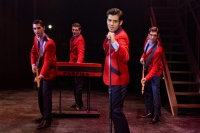
Beggin' For Something: Jersey Boys Falls Flat at CIBC
12 November 2026 in Theatre in ReviewWhen I was growing up in Southern California, the radio dial of our family car was always tuned to one…
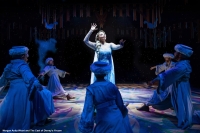
Warm Hearts in a Wintry Arendelle: Disney's Frozen the Musical Shines at Marriott Theatre
12 November 2026 in Theatre in ReviewDisney's Frozen the Musical arrives at Marriott Theatre's intimate in-the-round stage with a story most audience members already know, though…

Theater of the Mind: Not Your Typical Juggernaut
10 November 2026 in Theatre in ReviewAt this stage of his career, David Byrne’s name alone fills concert halls and theaters. The “singer, songwriter, musician, record…

Redtwist Theatre Announces its Cast and Creative Team for Robert Falls' Directed FLYING MONKEYS - Dec 6 - Jan 17
10 November 2026 in Upcoming TheatreAward-winning Redtwist Theatre announces the cast and creative team for this added special engagement to its 2026 - 2027 season,…
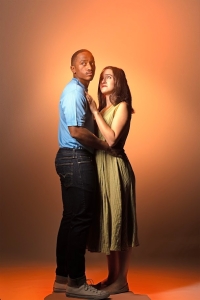
Romeo y Julieta - A bilingual adaptation of Shakespeare's classic is transported to 1960s Miami - January 29 – March 14, 2027
10 November 2026 in Upcoming TheatreChicago Shakespeare Theater (CST) announces the cast and creative team for Romeo y Julieta, Karen Zacarías and Henry Godinez's bilingual…

The Second City announces casting for the 5th annual Black Excellence Revue - February 5 – March 13, 2027
10 November 2026 in Upcoming TheatreFive years in, The Second City's Black Excellence Revue continues to bring bold comedy, fresh perspectives and an unmistakable sense…
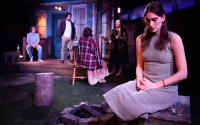
An Incredibly Good Snapshot of Our Social Discourse in 'Heroes of the Fourth Turning'
10 November 2026 in Theatre in ReviewSettling in for A Red Orchid Theatre’s Heroes of the Fourth Turning, I knew next to nothing, having no familiarity…
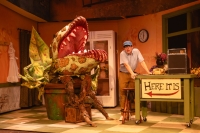
Porchlight’s Out of This World “Little Shop of Horrors” lands at Biograph Theater
10 November 2026 in Theatre in ReviewFew musicals are as fun to sing (and watch) as “Little Shop of Horrors”. It’s not a huge surprise that…
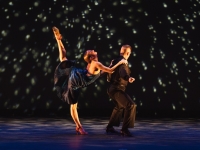
Giordano’s delectable Untamed Passion lights the fire of true love
10 November 2026 in Dance in ReviewFew dance companies can claim both the history and continued relevance of Giordano Dance Chicago. More than sixty years after…




Latest Articles
-
Write Club is A Performance Event Casting Literature as Blood Sport
Written by Bill EslerWrite Club Chicago stages a monthly competitive reading at the Gman Tavern, 3740 N. Clark St., in the shadow of Cabaret Metro and Wrigley Field. But this is no staid, literary event. Nor is it a drunkfest full of zoned…
-
 Music Theater Works' HAIRSPRAY starring Ru Paul's Drag Race's Mrs. Kasha Davis comes to North Shore Center for the Performing Arts December 17 - January 3
Written by Buzz Center StageMusic Theater Works is proud to announce the cast and creative team for the final production of its 2026 season, Hairspray, in the George Van Dusen Theatre, at the North Shore Center for the Performing Arts in Skokie, 9501 Skokie…
-
Redtwist Theatre presents world premiere of FLYING MONKEYS, directed by Robert Falls December 6 - January 17
Written by Buzz Center StageAward-winning Redtwist Theatre announces the cast and creative team for this added special engagement to its 2026 - 2027 season, the world premiere of Flying Monkeys, produced in collaboration with the New Theatre Project, December 6 - January 17, 2027,…
-
Shattered Globe Theatre Presents THE WATERFALL - January 22 – February 27, 2027 at Theater Wit - Midwest Premiere!
Written by Buzz Center StageShattered Globe Theatre is pleased to continue its 36th Season with the Midwest premiere of Phanésia Pharel's emotionally rich two-hander The Waterfall, directed by Jasmine B. Gunter and featuring Shanésia Davis and Jaeda LaVonne. The Waterfall will play January 22 –…


Does your theatre company want to connect with Buzz Center Stage or would you like to reach out and say "hello"? Message us through facebook or shoot us an email at This email address is being protected from spambots. You need JavaScript enabled to view it..
*This disclaimer informs readers that the views, thoughts, and opinions expressed in the text belong solely to the author, and not necessarily to Buzz Center Stage. Buzz Center Stage is a non-profit, volunteer-based platform that enables, and encourages, staff members to post their own honest thoughts on a particular production.