
Displaying items by tag: Performing Arts
3Arts Celebrates the Artists Who Make Chicago Shine: 2026 Awards Celebration honors the creative voices shaping Chicago’s cultural landscape.
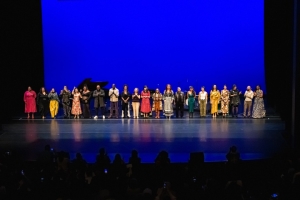
On Monday, October 26, 2026, the Harris Theater for Music and Dance became a gathering place for Chicago’s artistic community as 3Arts celebrated the artists whose creativity, commitment, and vision enrich the cultural life of our city and state. The 2026 3Arts Awards Celebration was more than an awards ceremony. It was an evening devoted to recognizing the people who make art possible, nurture the next generation of artists, and remind us why the arts remain essential to our communities.
The evening began with a welcoming reception featuring delicious canapés, drinks, and lively conversation. Honorees mingled with guests and fellow members of Chicago’s arts community, creating an atmosphere of genuine camaraderie. There was a palpable sense of excitement in the room, but also something more meaningful: an appreciation for the artistic labor being celebrated and the people behind it.
Guests were eventually ushered into the auditorium, where the formal celebration opened with How I Found My Feet Again, choreographed and performed by Keyierra Collins, a 2020 3Arts Awardee. The performance offered an inspiring introduction to an evening centered on artistic expression, perseverance, and the power of creativity.
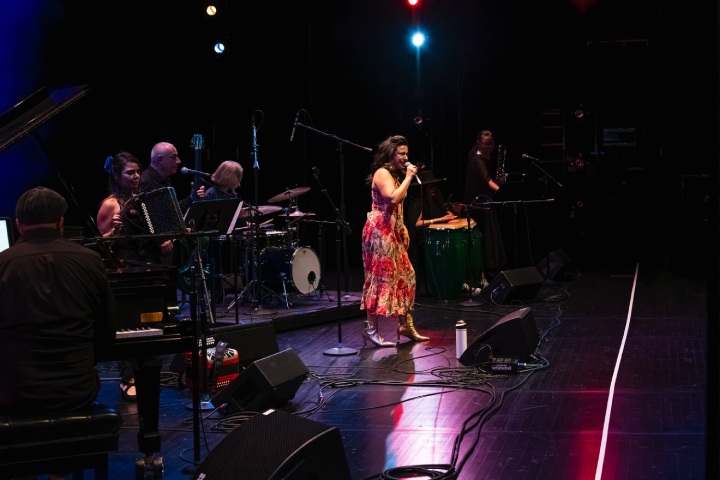
Photos by Richard Rankin
Celebrating Chicago’s Artists
The program recognized eleven recipients of the 2026 3Arts Awards, each receiving $30,000 in unrestricted funding to support their artistic practice.
The awardees represented a remarkable range of disciplines. In Dance, the honorees were Kara Brody and Silvita Diaz Brown. Music was represented by Tahirah Whittington and Marvin Tate. In Teaching Arts, the recipients were John Chapman and Wisdom Baty. The Theater awardees were Ana Santos and Tina Fakhrid-Deen, while Visual Arts was represented by Luca Cruzat, Diana Solís, and Sandie (Chun-shan) Yi.
Together, these artists demonstrate the breadth of creative work happening throughout the Chicago region. Their disciplines may differ, but their recognition reflects a shared commitment to making art that engages, challenges, educates, and inspires.
The celebration also recognized ten recipients of the Next Level Awards, which provide $50,000 in unrestricted funding to artists who have previously received a 3Arts Award. The program reflects an important understanding: supporting artists should not be a one-time gesture but an ongoing investment in their creative development.
The Next Level Awardees in Visual Arts were Cecilia Beaven, Brenda Torres-Figueroa, and Farah Salem. Teaching Arts recipients were Stephanie Manriquez, Lional “Brother El” Freeman, Sydney Chatman, Meagan McNeal, and Wanees Zarour. Sandra Delgado received a Next Level Award in Music, and Miranda Gonzalez was honored in Theater.
By investing in artists at different stages of their careers, 3Arts recognizes that creativity needs room to grow. Financial support gives artists the freedom to experiment, take risks, pursue new projects, and continue contributing to the cultural life of their communities.
The evening also acknowledged the recipients of the Make a Wave Awards, an artist-to-artist program through which previous 3Arts Awardees select fellow artists to receive $2,000 grants. This peer-driven approach reinforces the spirit of generosity and mutual support that makes Chicago’s artistic community so vital.
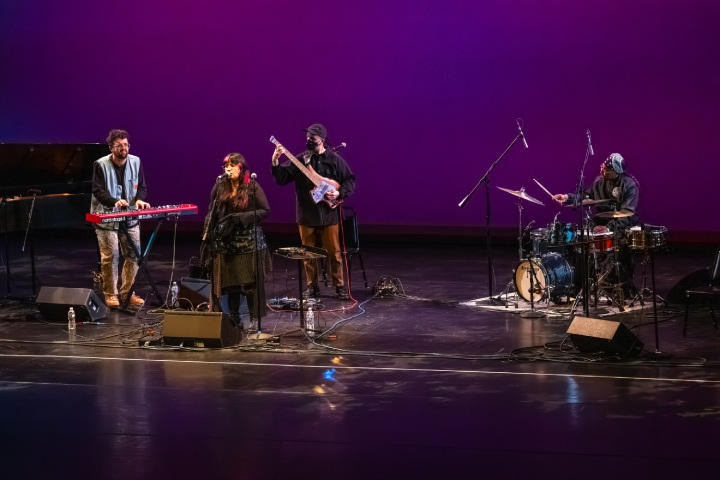
Photos by Richard Rankin
The People Behind the Celebration
The evening’s presenters and organizers helped guide the celebration. Sidney Mori Burnett, 3Arts Director of Programs, Lauren Steinberg, Manager of Programs,and Shariba Rivers, a former awardee represented the organization’s commitment to supporting artists. Executive Director Cat Tager joined William Estrada, a 2024 Next Level Awardee, in helping bring attention to the artists being honored. Event co-chairs Alicia Del Real and Remberto Del Real, a 3Arts board member, also contributed to the evening’s proceedings. DJ Lady D served as an event co-chair.
Their participation underscored that supporting the arts is a collective undertaking. Behind every award is an organization, a network of supporters, and a community that believes artists deserve the resources and recognition necessary to sustain their work.
The musical interludes added another dimension to the celebration. Sparkimami, a jazz fusion band, brought an energetic presence to the program, while The Sandra Delgado Experience, featuring Sandra Delgado on vocals, captured the festive spirit of the evening. With its ensemble of musicians, the performance offered a joyful reminder that music can transform a formal ceremony into a shared celebration.
An Evening of Art, Community, and Generosity
After the honorees had been acknowledged, guests returned to the party room for dinner. The buffet offered a satisfying selection of dishes, including fresh garden salad, roasted sweet potatoes, lentil cakes, pumpkin ravioli, and smothered chicken. Dessert followed with chocolate-covered pretzels, pâte de fruits, and assorted cookies.
The meal was another opportunity for guests to continue conversations, congratulate the awardees, and celebrate the artistic community that had gathered under one roof. There was something fitting about ending the evening around a shared meal after spending the night recognizing the work that brings people together.
What distinguished the 2026 3Arts Awards Celebration was not simply the number of artists honored or the financial support distributed. It was the recognition that artists contribute to the life of a city in ways that extend far beyond the stage, gallery, classroom, or rehearsal room. They preserve histories, challenge assumptions, cultivate imagination, and help us understand one another.
In a city as culturally rich as Chicago, that work deserves to be celebrated—and supported.
The evening at the Harris Theater accomplished both with warmth and generosity. From Keyierra Collins’s opening performance to the musical interludes, the recognition of the awardees, and the convivial after-party, the celebration honored not only individual achievement but also the collective spirit that sustains the arts.
Help Keep Chicago’s Arts Thriving
The celebration also serves as a reminder that supporting artists is a responsibility we all share. The talent celebrated that evening does not flourish on creativity alone. Artists need resources, opportunities, and the freedom to develop their work. Through its awards and programs, 3Arts helps provide that support, investing in artists across the performing, teaching, and visual arts.
You can help keep Chicago’s artistic community thriving. If you believe artists deserve the opportunity to create, teach, experiment, and inspire future generations, consider making a donation to 3Arts. Every contribution helps sustain an organization committed to supporting artists and strengthening the cultural life of our city.
To learn more or to make a contribution, visit 3Arts.org/support.
The 2026 3Arts Awards Celebration was a wonderful tribute to the artists who make Chicago a more vibrant, thoughtful, and imaginative place to live. The next step is to ensure that their work continues—not just through applause and recognition, but through the ongoing generosity of a community that understands the value of the arts.
Porchlight Music Theatre Announces its 2026 - 2027 Season

|
|
|
|
|
|
|
|
|
|
|
|
|
|
|
|
|
|
Marriott’s Heartbreak Hotel: The Rise, the Rebirth, the Return

Marriott Theatre’s Heartbreak Hotel takes on the tricky task of charting Elvis Presley’s early ascent, walking the line between the mythic figure we think we know and the unpolished young man still figuring out who he was becoming. What emerges is a brisk, music‑driven portrait that leans into the volatility of those formative years - the industry pressures that boxed him in, the personal crossroads that pushed him forward, and the creative sparks that hinted at the cultural earthquake to come. It’s a show less interested in polishing the legend than in capturing the restless drive of a talent on the verge of rewriting American music.
Heartbreak Hotel traces Elvis Presley’s early rise with a pace that stays brisk without ever feeling hurried, using a clever device: a ’68 Comeback‑era Elvis looking back on his younger selves. At times the man, the teen, and the 11‑year‑old boy share the stage simultaneously - singing, reminiscing, harmonizing - embodying a life moving faster than any one version of him can fully grasp. The musical follows Elvis from the tentative spark of his Sun Studio sessions into the glare of national attention, tracing how each new opportunity brings both momentum and complication. Producers, handlers, and well‑meaning advisors orbit him constantly, each with a different vision of who he should become, and the show uses those interactions to underline just how precarious his initial ascent really was.
As the demands of fame tighten around him, the story frames Elvis’s evolution as a series of choices - some instinctive, some imposed, all shaping the performer he’s still learning to be. Rather than digging for psychological depth, the plot focuses on the push‑and‑pull between artistic hunger and commercial pressure, capturing the uneasy transition from raw talent to cultural commodity. It’s a portrait of a young man standing at the edge of a seismic career, long before the iconography calcifies and the legend overtakes the life.
At the center of Heartbreak Hotel is Tyler Hanes playing Elvis Presley, who carries the show with a mix of youthful swagger and genuine vulnerability. His performance hinges not just on vocal accuracy but on capturing the restless, slightly bewildered energy of a young man being swept into stardom. His renditions of “Blue Suede Shoes” and “Heartbreak Hotel” land with the right mix of polish and rawness, and his quieter moments - particularly the early Sun Studio sequences and those paired with Priscilla - give the production its emotional grounding.
The show’s Colonel Tom Parker, portrayed by Rob Lindley, is the necessary counterweight: charming, calculating, and always two steps ahead. Lindley brings a slick, almost Vaudevillian charisma that keeps the character from slipping into caricature (although Parker may have been a caricature of himself anyway). His scenes pop with tension, especially in numbers where he orchestrates Elvis’s next move with a smile that never quite reaches his eyes.

Tyler Hanes as Elvis Presley (center) with ensemble in Heartbreak Hotel at Marriott Theatre.
The Sun Studio ensemble - the musicians, producers, and collaborators - provide some of the production’s most engaging textures. Jackson Evans, as Sam Phillips, is heavily featured in the first act and delivers one of the show’s standout performances, offering a steady, clear‑eyed presence that anchors the opening chapters with real artistic purpose. The play digs into Phillips’s instinct for raw talent - his uncanny ability to spot greatness beforehand - and makes clear that his relentless championing of Elvis is what first carried the young singer’s sound across Memphis and into the broader South. His work with the band digs deep and gives us an idea of Phillips’s impact in shaping a new kind of rock ‘n’ roll sound. Their group numbers in the studio, including “That’s All Right,” have an infectious looseness that contrasts sharply with the more commercialized performances later in the show.
The supporting cast adds essential color. Colton Sims offers a sharp, unaffected turn as Teen Elvis, capturing the raw spark before the polish sets in, and Charles Adler Bischoof, as young Elvis, brings a bright, unguarded innocence that reminds the audience just how early the legend began.
Elizabeth Telford lends Gladys Presley a quiet emotional weight, centering the story whenever she’s onstage. Anna Louise Bramlett brings an earnest warmth to Dixie, while Amanda Walker gives Priscilla a steady, grounded presence that subtly deepens the story.
In one of Heartbreak’s most exciting moments, Alexandra Palkovic takes control of the stage delivering a sleek, charismatic jolt as Ann-Margret, hinting at the whirlwind to come. Palkovic dances with real fire, echoing Ann‑Margret’s signature style with crisp precision and an infectious burst of energy. Palkovic later joins Hanes in one of the most touching moments when the two perform a beautiful rendition together of “You’re the Boss.” The addition of a full Ann‑Margret song‑and‑dance number feels especially meaningful, since her on‑screen chemistry with Elvis has always struck me as one of the high points of his physical and emotional vitality.

Tyler Hanes as Elvis Presley and Alexandra Palkovic as Ann-Margret.
Karl Hamilton gives Vernon Presley a quiet, understated presence, and Naiqui Macabroad stands out in his multi‑role track - Johnny Bragg, Chuck, Jackie Brenston, and the producer for both Steve Allen and Ed Sullivan - slipping between characters with crisp versatility and welcome bursts of personality. Fredrick Webb Jr. also makes a strong impression in multiple roles, notably as Roy Brown, Otis Redding, Fats Domino, and throughout the ensemble.
Going back to the musicians, the live band is one of the show’s more memorable assets. With Jake Busse as Bill Black, Zac Richey as Scotty Moore, and Trevor Lindley Craft as Ronnie (pre-DJ Fontana days) forming the tight onstage trio, the musicians anchor the production with a sound that feels both authentic and freshly charged. Lindley Craft doubles as Frank Sinatra. He and Hanes deliver one of the evening’s highlights as they recreate the famous duet from Elvis’s post‑Army appearance on The Frank Sinatra Show - a stylish medley of “Love Me Tender” and “Witchcraft” that lands with effortless charm.
Melanie Brezil also brings a radiant spark to Sister Rosetta Tharpe, delivering her featured moment with bright, joyful command on both vocals and guitar.
Together, the band’s instrumental work and the ensemble’s rich harmonies elevate the musical landscape. A mid‑show gospel sequence of “Peace in the Valley” – another one of this staging’s big moments - showcases the ensemble’s vocal power and reminds the audience of the musical traditions that shaped Presley long before fame did.
Marriott’s in‑the‑round setup gives Heartbreak Hotel an expansive energy, with action unfolding on all sides. The cast’s aisle work draws the audience in, creating a surprisingly immersive sense of scale, and the smart use of media and projections amplifies that impact even further. A staging in this intimate space gives the storytelling room to gather real thrust. That quality becomes especially clear as the sequences build toward the emotional high point, when Elvis finally sheds the cookie‑cutter movie image he’d long outgrown and reclaims his artistry in the ’68 Comeback Special, reestablishing his place as the King of Rock ’n’ Roll.
I’ve always been drawn to stories orbiting Elvis Presley, and Heartbreak Hotel earns its place among them by honoring the legend without embalming him in nostalgia. Elvis wasn’t just a chart‑topper; he was a cultural accelerant, the artist who fused gospel, blues, country, and rhythm‑and‑blues into a sound that detonated across America and permanently rewired its musical DNA. His influence stretched far beyond the stage - reshaping fashion, performance style, youth identity, and the very idea of what a pop star could be. Productions like this one matter because they keep that seismic legacy in motion, passing it from one generation to the next not as a museum relic, but as a living, breathing force that still shapes the music we hear today.
When referring to rock 'n' roll, John Lennon said it himself, “Before Elvis, there was nothing.” Heartbreak Hotel echoes that sentiment.
Directed and choreographed by Deidre Goodwin, this musical bears the imprint of an artist who understands how to propel a story without letting the spectacle swallow it. Her direction shapes the evening with a steady, purposeful rhythm, keeping the focus tight even as the musical numbers expand outward. Goodwin’s fantastic choreography blends period flavor with a clean, contemporary precision, giving the show a kinetic pulse that feels both rooted in its era and alive in the present. It’s her sense of balance - between nostalgia and freshness, between narrative drive and musical release - that ultimately gives the production its lift.
Elvis devotees will find plenty to appreciate in Heartbreak Hotel, which treats the King’s formative years and artistic rebirth with genuine affection and a clear understanding of his musical legacy. But the show’s appeal stretches well beyond Presley fandom; anyone who loves American music - from gospel and blues to early rock and soul - will recognize the joy in hearing these sounds brought to life by a superbly talented cast and band. Heartbreak Hotel runs through June 2nd at Marriott Theatre and is an exciting musical experience well worth attending.
For tickets and/or more show information, click here.
This review is proudly shared with our friends at www.TheatreInChicago.com.




Latest Articles
-
 CELESTIA: A Heavenly Event
Written by Mary Beth EukerIn 1871 our broad city burned in the Great Chicago Fire. In 1875 St. Vincent de Paul church rose in Lincoln Park. It was constructed of Indiana limestone and still stands proudly at the corner of Webster and Sheffield like…
-
 Paramount's A Christmas Carol Stands Among the Season's Finest Gifts
Written by Ken PayneFew holiday stories are as deeply woven into the fabric of the season as A Christmas Carol, yet Paramount Theatre's lavish production in Aurora finds fresh magic within Charles Dickens' familiar classic. Combining spectacular stagecraft, heartfelt performances, and an infectious…
-
 Jackalope’s ‘Engines and Instruments of Flight’ Gives Wings to the Legend of Tony Kushner
Written by John AccroccoEngines and Instruments of Flight: A Fantasia in Three Acts by local playwright Calamity West is everything you’ve ever wanted to know about Angels in America but have been too afraid to ask Tony Kushner. Jackalope Theatre gives this fascinating…
-
 Steppenwolf Theatre Presents JESSIE MUELLER WITH SETH RUDETSKY – December 18 & 19
Written by Buzz Center StageSteppenwolf Theatre Company and Mark Cortale welcome back Tony Award winner Jessie Mueller (Beautiful: The Carole King Musical, Waitress) for a special holiday engagement. Catch the Broadway star live in Chicago before she heads back to New York next spring in the…


Does your theatre company want to connect with Buzz Center Stage or would you like to reach out and say "hello"? Message us through facebook or shoot us an email at This email address is being protected from spambots. You need JavaScript enabled to view it..
*This disclaimer informs readers that the views, thoughts, and opinions expressed in the text belong solely to the author, and not necessarily to Buzz Center Stage. Buzz Center Stage is a non-profit, volunteer-based platform that enables, and encourages, staff members to post their own honest thoughts on a particular production.