
Displaying items by tag: Reba Hervas
Overshadowed's Flame of Fire Finds Humanity, Strength, and Forgiveness in a Tragic Chapter of Missionary History
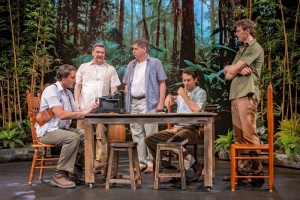
Overshadowed Productions’ Flame of Fire revisits one of the most polarizing true stories in mid‑century missionary history, and the result is a tense, deeply human portrait of faith, conviction, and consequence. Written by Artistic Director Reba Hervas, the play draws not only from the well‑known documentary Beyond the Gates of Splendor and Elisabeth Elliot’s landmark book Through Gates of Splendor, but also from factual accounts, personal testimonies, and historical insights provided by Wheaton College scholars. The play traces the 1956 Operation Auca mission, in which five young missionaries - Jim Elliot, Nate Saint, Pete Fleming, Ed McCully, and Roger Youderian - travel into the Ecuadorian jungle determined to make peaceful contact with the isolated Huaorani tribe. Their optimism is met with tragedy when all five men are killed, an event that reverberated across the world and became a defining moment in evangelical culture. But Flame of Fire doesn’t stop at the violence. It follows the wives and families who later returned to the same tribe, choosing forgiveness over fear and reshaping the narrative into one of radical grace. Hervas frames the story with a clear‑eyed awareness of its complexities, allowing audiences to sit with both the aspiration and the cost. The production leans into the emotional weight of the material without sensationalizing it, offering a thoughtful, layered retelling of a chapter that still resonates today.
The play opens in 1945, grounding the audience in a postwar world where hope and hardship collide, and where five young men feel an urgent, almost electric calling to spread the gospel to places untouched by Western faith. Flame of Fire takes its time introducing each missionary as he meets the woman who will become his partner in life and in purpose, framing these courtships not as sentimental detours but as the emotional backbone of the story. Their marriages are depicted with sincerity and momentum, fueled by a shared passion to carry Christianity into remote corners of the world no one in their circles had ever seen. It’s a gentle beginning that underscores the idealism, devotion, and innocence that will later be tested, making the eventual tragedy feel all the more profound.
Though Jim Elliot is often the first name associated with this story - largely due to Life Magazine’s coverage that reached 30 million readers at the time - Hervas centers the narrative on pilot Nate Saint, portraying him as the driving force behind Operation Auca, its planner, organizer, and steady motivator. By the early 1950s, the missionaries had already arrived in Ecuador and were serving in various regions, ministering to other Indigenous communities and building relationships that laid the groundwork for the efforts that would eventually become Operation Auca. Their work during these years established the practical experience, cultural understanding, and collaborative momentum that shaped the mission long before contact with the Huaorani was ever considered.
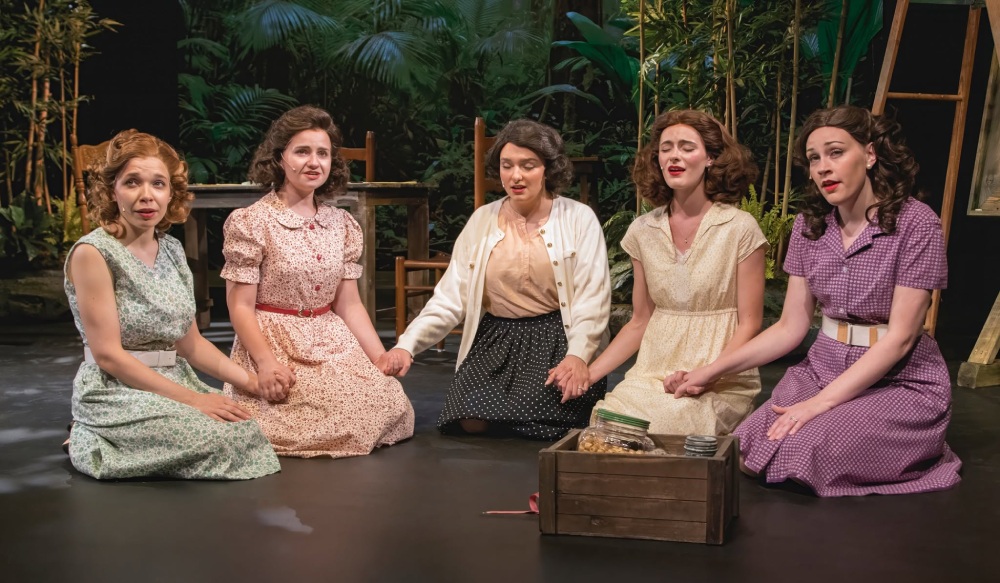
That operation truly begins in 1955 after Saint spots an isolated Indigenous community during one of his flights, a discovery that sets everything that follows into motion. The Huaorani tribe, known for both hostility and intense internal warfare that threatened their own survival, had a population of only about 500 when the missionaries first attempted contact. Their initial introduction came through gifts dropped from Saint’s plane, a cautious gesture meant to build trust from a distance.
Though Saint emerges as the central figure of the mission, Elliot’s influence is still woven throughout the narrative, especially in his declaration that he is God’s “flame of fire,” a metaphor for his calling to spread the gospel with absolute conviction. The play also incorporates several of Elliot’s writings, later collected by his wife Elisabeth after his death, including his well‑known line: “He is no fool who gives what he cannot keep to gain that which he cannot lose.” In the context of the story, the quote underscores Elliot’s belief that sacrificing one’s earthly life in service of faith is not a loss, but an exchange for something eternal - a sentiment that becomes hauntingly resonant as the mission unfolds.
Overshadowed’s ensemble brings sincerity and cohesion to Flame of Fire, with each missionary paired thoughtfully with the woman who shares his calling. Justin McHugh and Leah Johansen anchor much of the story as Jim and Elisabeth Elliot, while Jacob Starr and Emily Starr bring warmth and resolve to Nate and Marjorie Saint. Andrew Dille and Madelyn Jones portray Pete Fleming and Olive Ainslie with gentle conviction, and Alex Kretschmer and Olivia Orsag give Ed and Marilou McCully a grounded, earnest presence. Benjamin Nelson and Betsy Richman round out the group as Roger and Barbara Youderian, offering a steady, heartfelt partnership. Together, the cast forms a unified portrait of faith, devotion, and the human ties that shaped this historic mission.
Jacob Starr’s portrayal of Nate Saint is especially striking. From his first entrance, standing across the stage with the other missionaries, he flashes a wide, earnest smile that feels genuine, full of promise, and quietly selfless. Even though Saint is known as “the man who could fix anything” and often carries himself with a no‑nonsense, mission‑first focus, that smile keeps returning, reminding us of his deep excitement and unwavering joy in the work he feels called to do. And in the moments after his death, when he appears again among the group, the smile remains - a subtle, moving reassurance that he died doing exactly what he believed in most: sharing God’s work with those who had never heard it.
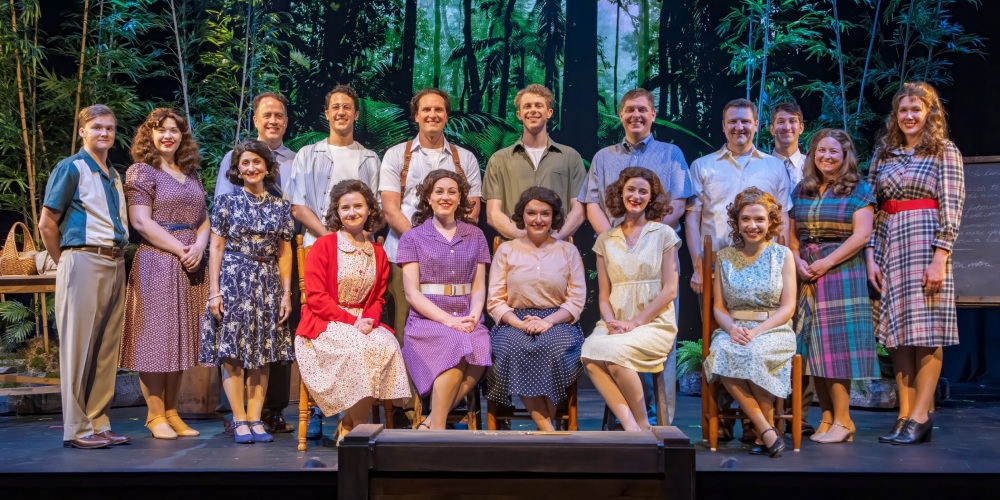
The cast of Flame of Fire by Reba Hervas by Overshadowed Theatrical Productions.
The set design, led by Scenic, Projection, and SFX Designer Yohannan Lee, adds an impressive layer of storytelling to Flame of Fire. Act I moves fluidly through key locations, beginning at Wheaton College where Jim and Elisabeth first meet, then shifting to other formative moments in the missionaries’ early lives. These transitions are made seamless by a massive video board at the rear of the stage, which Lee uses to create crisp, immersive backdrops that keep the narrative visually anchored. But it’s Act II that truly transports the audience: once the story reaches Ecuador, the stage blossoms into a lush rainforest environment. Towering exotic trees, dense shrubs, and textured greenery surround the missionaries’ campsite, blending physical foliage with atmospheric projection work to evoke the depth and isolation of the jungle. The result is a vivid, enveloping world that makes the shift from American college life to the Amazon feel both dramatic and authentic.
Though criticisms have been brought to light in recent years, particularly in cases where missionary work aligned with power, assimilation, or cultural disruption through colonial empires, governments, or corporations, Flame of Fire shows that another side of missionary history exists, revealing a contrasting perspective defined not by dominance but by unselfish people driven by a sincere passion to share the gospel and help communities in need. The missionaries in this story are portrayed as embracing and appreciating Huaorani culture rather than seeking to overwrite it. Their stated purpose, “We are not here to impose, but to show them a new way,” reflects a posture of humility rather than dominance. The production underscores the practical support they offered as well: medical care for infections and injuries, assistance with childbirth, treatment for illnesses, and help navigating crises that had long gone unaddressed. In this telling, their faith is expressed through service as much as through preaching, and their motives are framed as deeply personal rather than political.
The play also widens its scope to reveal the larger forces threatening the Huaorani people in the 1950s. The courage of the wives is made unmistakably clear, returning to the very people who speared their husbands to death with a resolve that feels almost unimaginable. Big oil companies, working with the Ecuadorian government, coveted Huaorani land for new oil fields and expected the tribe’s internal conflicts to wipe them out - and if not, planned to forcibly remove them. That trajectory changed when the missionaries’ wives returned after the killings, some choosing to live among the Huaorani. Their presence helped foster peace, reduce violence, and stabilize the community in ways the play presents as lifesaving. Anthropological research often confirms that the Waodani (the tribe’s self‑name) spearing feuds were unsustainable and that the tribe actively chose to end the killings once introduced to the concept of forgiveness. The population grew instead of disappearing. And in one of the story’s most powerful arcs, the very men who killed their husbands later became Christians themselves, forming lifelong bonds with the missionaries’ families, relationships depicted as genuine, mutual, and rooted in grace. In Flame of Fire, the positive motives of these missionaries are made unmistakably clear, offering a portrait of faith expressed through compassion, reconciliation, and enduring human connection.
Flame of Fire is a moving, meticulously crafted production that balances historical weight with heartfelt storytelling, offering audiences a rare look at the compassion, conviction, and humanity behind a famously tragic chapter of missionary history. Overshadowed Productions brings sincerity, artistry, and emotional clarity to every corner of the stage, creating a piece that resonates long after the final scene. This is a powerful, beautifully rendered play that deserves to be seen, discussed, and remembered. Flame of Fire runs through October 10th and can be experienced at Jubilee Bible Church in Medinah, and comes recommended.
A Thoughtful Evolution of Her Own Making: Overshadowed Theatrical Productions’ My Fair Lady
Overshadowed Theatre Productions brings fresh energy to one of musical theatre’s most enduring classics, offering a spirited and thoughtful take on My Fair Lady. This production leans into the story’s sharp contrasts - class and aspiration, control and independence - and invites audiences to see Eliza Doolittle’s transformation with new clarity. It’s a familiar tale, but Overshadowed’s staging makes it feel newly engaged and unexpectedly resonant.
Taking place in 1912, Edwardian London, My Fair Lady is the story of Eliza Doolittle (Kimberly Nicolosi), a resilient young woman who sells flowers for tuppence and whose Cockney accent marks her as invisible to the upper-class Londoners who pass her by. When she crosses paths with Henry Higgins (John Hacker), a brilliant but insufferably arrogant linguist, he boasts that he can remake her into someone society will accept - someone who can pass as a duchess at an embassy ball. What begins as a bet between scholars becomes a transformation that neither fully anticipates.
As Eliza endures Higgins’ relentless drills and dismissive temperament, she begins to outgrow the very mold he tries to force her into. Her ascent exposes the absurdity of class performance, the fragility of male ego, and the uncomfortable truth that respectability often demands erasing the people who need it most. By the time Eliza steps into high society, she is no longer Higgins’ creation but her own person - one who refuses to be spoken for, spoken over, or spoken down to.
The musical’s enduring tension lies in the question it never answers neatly: whether transformation is liberation or simply another form of confinement. My Fair Lady may dazzle with its elegance, but its heart beats in Eliza’s insistence that dignity is not something granted by others - it’s something claimed.
Lerner and Loewe’s My Fair Lady entered the musical theatre canon in 1956, following its development in 1955–56 and a Broadway premiere led by Julie Andrews and Rex Harrison. The story later reached an even wider audience with the 1964 film adaptation, starring Audrey Hepburn as Eliza and Rex Harrison reprising his stage role as Higgins, released on October 21, 1964.
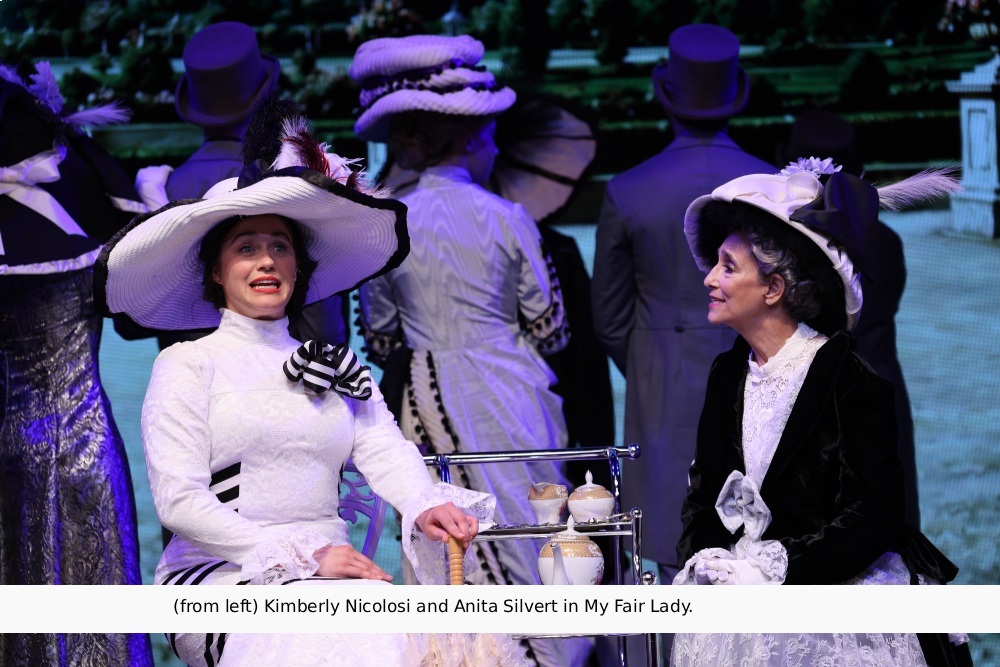
Overshadowed’s current production of this defining musical is anchored by Kimberly Nicolosi, whose Eliza Doolittle grows with steady assurance and a clear emotional arc that makes her transformation feel genuinely earned. Nicolosi is an absolute whirlwind of conviction, with vocals that match her intensity beat for beat, and a charm that makes her Eliza impossible to resist. Opposite her, John Hacker offers a thoughtfully restrained Henry Higgins, capturing both the character’s intellectual rigidity and the subtle shifts that reveal his dependence on Eliza, and his performance brings a compelling, understated complexity to the role. They shape the show’s strongest and most engaging dynamic. Surrounding them, Glen Lindemann brings gentle dignity to Colonel Pickering, while Madeline Frederick’s composed Mrs. Pierce adds welcome stability to Higgins’ household. Brad Holloman provides lively humor as Alfred P. Doolittle, and the Eynsford-Hill family - Sharon Lindemann as Mrs. Eynsford-Hill and Aren Dawson as Freddy - adds a touch of sweetness and refinement. Anita Silvert’s poised Mrs. Higgins offers a calm counterbalance to her son’s bluster, and she delivers a few of the play’s most pointed one-liners with crisp, knowing precision. Under Reba Hervas’ direction, the ensemble works together with easy cohesion, and Hervas guides the production with a steady, confident hand that keeps the storytelling clear, warm, and consistently engaging.
Though wrapped in Edwardian charm, My Fair Lady carries a clear feminist undercurrent, rooted in Eliza’s fight for self-determination. Her journey is not simply one of refinement but of agency - choosing to reshape her life, challenge the limitations imposed by class and gender, and ultimately assert her independence from Higgins’ control. The production highlights how her transformation belongs to her alone, not to the men who presume to mold her, allowing the story’s critique of patriarchal entitlement and its celebration of female autonomy to resonate beneath the musical’s elegance.
The production’s musical backbone shines through beloved highlights such as “Wouldn’t It Be Loverly,” “The Rain in Spain,” “I Could Have Danced All Night,” and “On the Street Where You Live,” each handled with care under Karen Archbold’s attentive music direction. The staging moves with an easy flow thanks to Katy Smith’s well-shaped choreography, which keeps the transitions light and the ensemble well-coordinated. These elements honor the classic craftsmanship of Alan Jay Lerner, who penned the book and lyrics, and Frederick Loewe, whose score remains one of musical theatre’s most enduring treasures.
The set design stands out as one of the production’s most impressive achievements, delivering a level of polish that will surprise audiences unfamiliar with Overshadowed’s work. Thoughtfully constructed and visually cohesive, it creates an environment that supports the storytelling without ever overwhelming it. This marks the first production by the company to utilize a massive video board, and its use is highly successful - enhancing the world of the play with vivid, effective projections that expand each location with striking clarity. The video board works in concert with well-crafted props and scenic pieces that are seamlessly brought in when needed, creating transitions that feel both fluid and purposeful. The scenic and projection work by Yohannan Lee adds depth and atmosphere, giving each setting a sense of place and intention. Complementing the world onstage, Megan Wilburn’s costume design brings the period to life with authenticity, from the tailored silhouettes to the women’s elaborate Edwardian picture hats, which add a flourish of social detail and visual charm. All of these design choices elevate the production with a craftsmanship that feels both ambitious and warmly inviting.
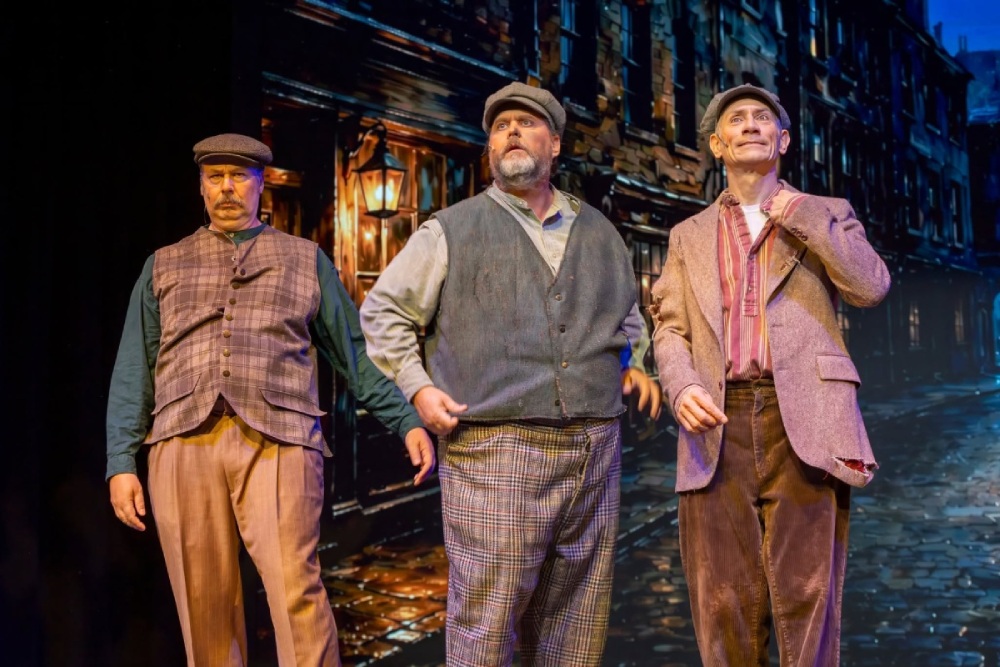
(from left) - Al Gorr, Brad Holloman and Tony Lopez in My Fair Lady.
Stepping back from the production itself, Overshadowed Theatre reveals a company with a purpose that complements the kind of storytelling seen on their stage. I was struck by how deeply rooted their mission is in creating a welcoming, family-friendly space where storytelling and community go hand in hand. Their history reflects a commitment to mentorship and faith-centered values, with an emphasis on giving young performers a place to grow while offering audiences productions that uplift rather than overwhelm. Overshadowed cultivates an environment built on encouragement, accessibility, and shared experience. The company resides within Jubilee Bible Church in Medinah, IL, and the theatre is fully ADA accessible, with vast and easy parking, spacious corridors, and plentiful concessions that make the audience experience comfortable from the moment you arrive.
Audiences can also look forward to a whimsical shift in tone as the company prepares to stage A Midsummer Night’s Dream, bringing Shakespeare’s mischievous magic, tangled romances, and fairy-filled forest to life. Following that, their upcoming season offers a wide range of titles: Flame of Fire (Sep 18–Oct 10, 2026), an original play written and directed by Artistic Director Reba Hervas. Based on the true 1956 story of Operation Auca, the production recounts the lives of missionaries Jim Elliot, Nate Saint, Pete Fleming, Ed McCully, and Roger Youderian, who were killed while attempting peaceful contact with the isolated Huaorani tribe in Ecuador. The play also explores the extraordinary aftermath, as their wives chose to return to the jungle to forgive the tribe and continue living among them. The season continues with It’s a Wonderful Life (Nov 27–Dec 19, 2026), James and the Giant Peach (Jan 22–Feb 6, 2027), The Stranger by Agatha Christie (Mar 12–20 and Apr 1–10, 2027), and Titanic the Musical (July 9–31, 2027). It’s an ambitious slate that blends classic storytelling, family favorites, and dramatic intrigue, promising a season with something for every kind of theatre-goer.
Overshadowed Theatre’s My Fair Lady emerges as a thoughtful production with a clear point of view, delivered with care both onstage and behind the scenes.
Recommended.
For more show information and tickets, visit https://www.overshadowed.org/.



Latest Articles
-
 Operation Mincemeat: A Smart, Scrappy Musical That Shines When Its Cast Takes the Wheel
Written by Maddie BurroughsIn the 2019 film Yesterday, a struggling musician wakes up in a world where The Beatles never existed. A similar theatrical case study could be done with every musical that might not exist without Hamilton; Operation Mincemeat should be first…
Operation Mincemeat: A Smart, Scrappy Musical That Shines When Its Cast Takes the Wheel
Written by Maddie BurroughsIn the 2019 film Yesterday, a struggling musician wakes up in a world where The Beatles never existed. A similar theatrical case study could be done with every musical that might not exist without Hamilton; Operation Mincemeat should be first… -
 MAMMA MIA! and HADESTOWN Return to Chicago in Spring 2027
Written by Buzz Center StageBroadway In Chicago is excited to announce two fan-favorite shows are returning to our stages this year: MAMMA MIA! and HADESTOWN. Current subscribers can add these to their season package when renewing by clicking here or calling (312) 977-1717. Group…
MAMMA MIA! and HADESTOWN Return to Chicago in Spring 2027
Written by Buzz Center StageBroadway In Chicago is excited to announce two fan-favorite shows are returning to our stages this year: MAMMA MIA! and HADESTOWN. Current subscribers can add these to their season package when renewing by clicking here or calling (312) 977-1717. Group… -
SANCTUARY STORIES - A JOURNALISM THEATER PROJECT October 9-18 at the Athenaeum Center for Thought and Culture
Written by Buzz Center StageThrough music, documentary video, sound, photos and live actors, “SANCTUARY STORIES: A JOURNALISM THEATER PROJECT” captures in words and images the lives and communities deeply connected with — and affected by — immigration in Chicago. This “living documentary” is a…
-
Red Theater presents the world premiere of CHURCH HURT October 24 - November 21, 2026
Written by Buzz Center StageRed Theater is thrilled to announce the cast and production team of the world premiere of Church Hurt by Brynne Frauenhoffer and directed by Jessica Love, running October 24 - November 21, 2026 at The Edge Off Broadway in Chicago’s…
Does your theatre company want to connect with Buzz Center Stage or would you like to reach out and say "hello"? Message us through facebook or shoot us an email at This email address is being protected from spambots. You need JavaScript enabled to view it..
*This disclaimer informs readers that the views, thoughts, and opinions expressed in the text belong solely to the author, and not necessarily to Buzz Center Stage. Buzz Center Stage is a non-profit, volunteer-based platform that enables, and encourages, staff members to post their own honest thoughts on a particular production.